
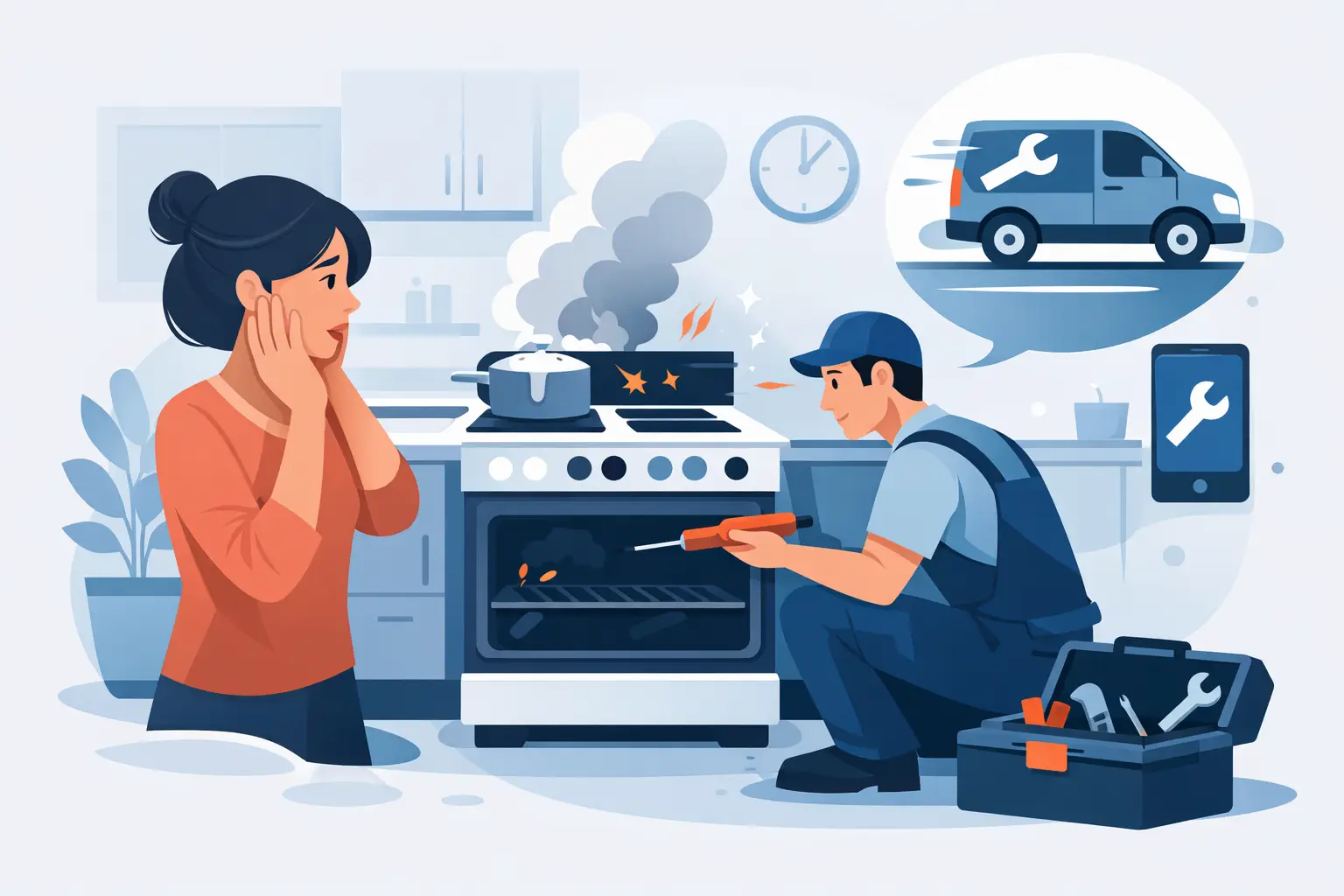
A range failure has a way of showing up at the worst possible time: dinner is halfway started, a pan is on the burner, and the heat suddenly cuts out. Reliable range repair is about more than getting one meal back on track. It restores a kitchen appliance your household relies on every day and helps prevent a small cooking issue from becoming a safety concern.
Some problems are obvious, such as a burner that will not light or an oven that stays cold. Others are frustratingly inconsistent: the display works but the oven heats poorly, one burner runs too hot, or a gas range clicks long after the flame is lit. Knowing what those symptoms can mean helps you decide when a simple check is appropriate and when it is time to schedule professional service.
Signs Your Range Needs Professional Repair
An electric or gas range is made up of several systems that must work together: controls, heating elements or burners, sensors, ignition parts, wiring, and sometimes a cooling fan. A problem in any one of them can affect cooking performance.
A burner that does not heat on an electric range may have a failed surface element, a damaged receptacle, a faulty infinite switch, or a wiring issue beneath the cooktop. If only one burner is affected, the issue may be isolated. If multiple burners fail or the display also goes dark, the repair may involve power supply, control board, or terminal block diagnostics.
On a gas range, a burner that clicks but will not ignite may have a dirty burner cap, clogged burner ports, moisture around the igniter, or a worn spark igniter. A weak or uneven flame can also point to debris in the burner assembly. These are not issues to ignore, especially if the burner smells of gas but does not light promptly.
Oven problems often show up as undercooked food, long preheat times, or temperatures that do not match the setting. Common causes include a failing bake or broil element, a defective igniter in a gas oven, a worn temperature sensor, or an electronic control problem. An oven may technically turn on while still being unable to reach or hold the selected temperature accurately.
Other warning signs deserve a service call as well:
- The range trips a breaker, sparks, or gives off a burning electrical smell.
- You smell gas, hear persistent clicking, or see flames that are yellow, uneven, or lifting away from the burner.
- The oven door will not lock or unlock properly, particularly after a self-clean cycle.
- The control panel is unresponsive, flashes error codes, or changes settings on its own.
- The cooling fan runs constantly, the range overheats, or the exterior surfaces become unusually hot.
These symptoms can have more than one cause. Accurate diagnosis matters because replacing a visible part without testing the system can leave the original problem unresolved.
When to Stop Using a Gas or Electric Range
A range is not an appliance to keep using “carefully” when it presents a possible gas or electrical hazard. Turn off the appliance and arrange service if you smell gas, see arcing or sparks, notice smoke, or find that a burner will not shut off. If there is a strong gas odor, avoid operating switches, open windows if it is safe to do so, leave the area, and contact the gas utility or emergency services as appropriate.
For electric ranges, a breaker that trips repeatedly is a signal that something needs attention. Resetting it again and again can mask a shorted element, damaged wiring, or another fault. Disconnecting power at the breaker is the safer choice until a technician can inspect the unit.
There are a few basic checks homeowners can make without taking apart the appliance. Confirm that the range has power, make sure a gas burner cap is seated correctly after cleaning, and remove visible food debris once the surface is cool. Beyond those simple steps, range repairs can involve live electrical circuits, gas connections, sharp sheet metal, and components that retain heat. A professional diagnosis is the safer and more cost-effective route.
What a Proper Range Repair Visit Looks Like
A good repair starts with listening to the exact failure. Details such as whether the oven works but the cooktop does not, whether the issue began after a power outage, or whether it happens only in bake mode can speed up diagnosis.
The technician should then test the appliance rather than assume the failed part. On an electric range, that may include checking voltage, continuity, element connections, switches, relays, sensors, and wiring. On a gas model, testing can include the igniter, spark module, burner assembly, gas valve operation, flame pattern, and oven safety components.
Once the cause is identified, you should receive a clear explanation of the recommended repair. The right choice depends on the appliance’s age, condition, brand, part availability, and the cost of the repair compared with replacement. A quality range that is otherwise in good condition can often be worth repairing. Conversely, extensive damage, repeated failures, or obsolete control parts may change the calculation.
After completing the repair, the technician should verify operation. That means confirming that burners ignite or heat correctly, the oven reaches temperature, controls respond properly, and the appliance is operating safely. A quick part swap without final testing is not the standard your kitchen deserves.
Luxury Range Repair Requires Brand-Specific Knowledge
Luxury cooking appliances are built differently from many standard ranges. Viking, Thermador, Gaggenau, Monogram, Café, Bosch, KitchenAid, Electrolux, and similar brands may use specialized ignition systems, electronic controls, dual-fuel configurations, convection components, and integrated ventilation features. Their performance depends on correct diagnostics, not trial-and-error part replacement.
For example, a dual-fuel range can have gas burner concerns and separate electric oven issues. A convection oven that bakes unevenly may have a fan motor issue, a sensor problem, a heating circuit fault, or an airflow obstruction. A technician familiar with the platform can narrow down the cause efficiently and protect the appliance from unnecessary work.
That does not mean a standard residential range deserves less care. Whether your kitchen has a dependable freestanding electric range or a high-end built-in cooking system, the goal is the same: safe operation, accurate temperatures, and cooking equipment that works when your household needs it.
Habits That Help Protect Your Range
Routine care will not prevent every failure, but it can reduce avoidable problems. Clean spills after the cooktop has cooled, particularly sugary spills that can damage glass surfaces. Keep burner caps properly positioned, and do not line the oven bottom or drip pans with foil unless the manufacturer specifically permits it. Foil can block airflow, trap heat, and damage heating or control components.
Use the self-clean feature carefully. The extremely high temperatures can place added stress on door locks, thermal fuses, control boards, and other parts, especially on an older range. If your oven has already had heat-related errors or a weak door latch, it is wise to have it evaluated before running a self-clean cycle.
Avoid slamming the oven door or leaning on its open door. Hinges and door alignment affect heat retention, and a door that does not seal well can lead to uneven baking and longer cook times. If a burner, knob, or display begins acting inconsistently, schedule service before the issue becomes a complete failure.
Get Back to a Kitchen That Works
A broken range interrupts more than dinner plans. It can complicate family routines, create safety worries, and put extra pressure on the rest of your kitchen. Hillside Appliance Services provides experienced range diagnostics and repair for gas, electric, and luxury cooking appliances throughout Greater Phoenix.
If your range is not heating, igniting, regulating temperature, or shutting off correctly, do not wait for a minor symptom to become a larger repair. Prompt, professional attention can help bring your kitchen back to the dependable, safe place it needs to be.