
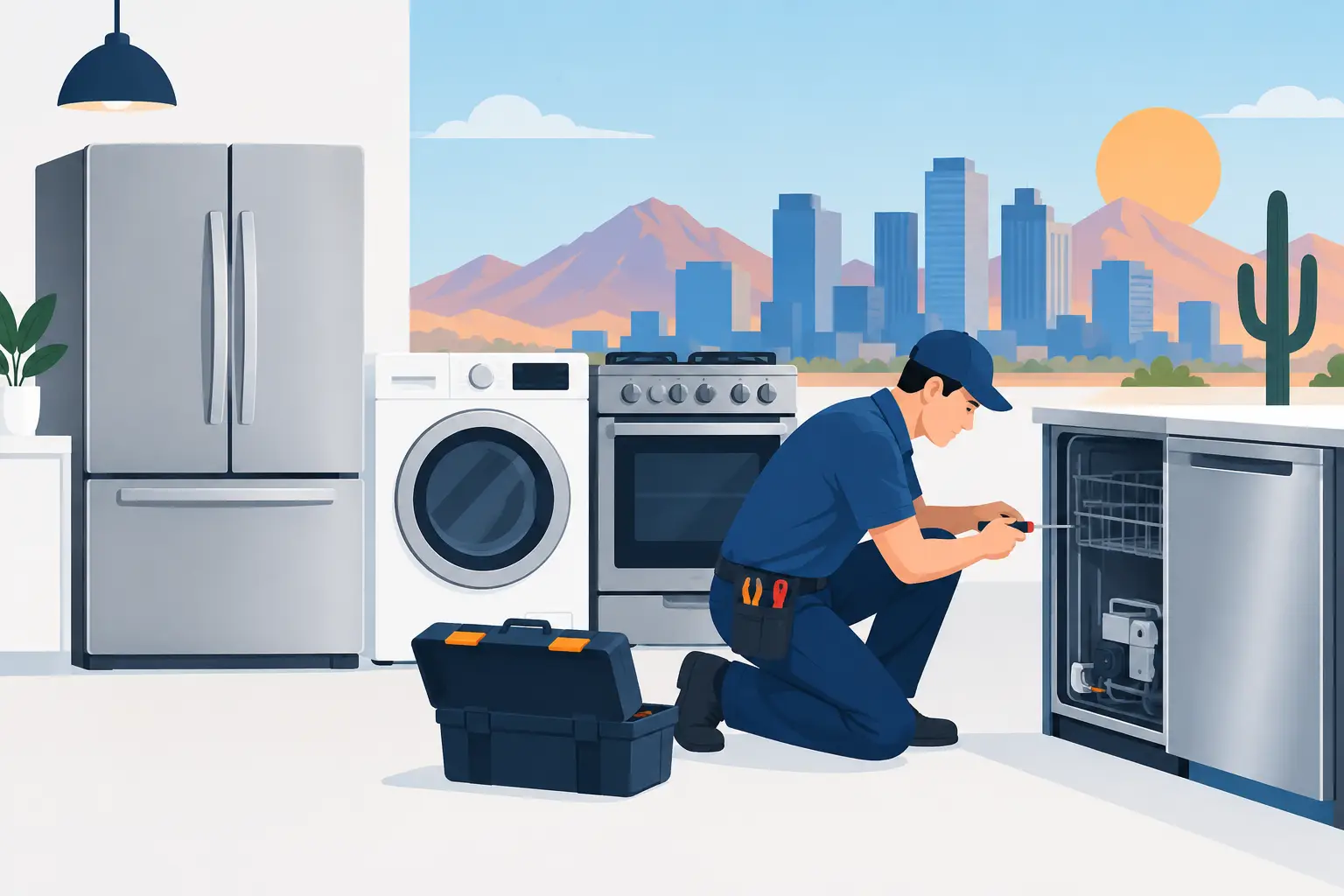
A refrigerator that cannot hold temperature during a Phoenix summer is more than an inconvenience. A dryer that will not heat, a dishwasher leaking beneath the cabinet, or an oven that will not ignite can stop the household routine immediately. This Phoenix appliance repair guide helps you sort out what you can safely check, what needs prompt attention, and when calling a qualified technician is the sensible choice.
Phoenix Appliance Repair Guide: Start With Safety
Before moving an appliance, removing panels, or trying a reset, look for signs that turn a repair issue into a safety issue. A burning odor, sparking, smoke, repeated breaker trips, a gas smell, or water near an electrical connection calls for immediate action. Turn off power at the breaker if it is safe to do so. For a suspected gas leak, leave the area, avoid switches and open flames, and contact the gas utility or emergency services as appropriate.
Water leaks deserve quick attention, too. A slow drip behind a refrigerator or dishwasher can damage flooring, cabinets, and drywall long before it becomes visible in the room. Shut off the appliance water supply when possible, place towels around the affected area, and avoid running the appliance again until the source is identified.
If there is no immediate hazard, begin with the simple checks that do not require disassembly. Confirm the appliance has power, inspect the outlet or breaker, and make sure controls have not been changed accidentally. Check that doors close fully and that water valves are open. These basic steps solve some service calls, but they should not become an excuse to keep restarting an appliance that is making unusual noises or showing clear signs of failure.
Refrigerator and Freezer Problems Need Fast Decisions
Phoenix heat puts refrigeration equipment under real pressure. When a refrigerator is warm, move perishable food to another working refrigerator or an ice-filled cooler as soon as possible. Do not assume the appliance will recover on its own just because the interior light is on. Lights can work while the cooling system, fan motor, compressor circuit, or defrost system is failing.
First, check whether the temperature controls were bumped, whether the doors are sealing, and whether tightly packed food is blocking interior air vents. Vacuuming visible dust from accessible condenser areas can help on certain models, provided the unit is unplugged and the owner instructions allow it. Built-in refrigerators and luxury systems often have more specialized airflow, electronic controls, and installation requirements, so aggressive cleaning or pulling the unit forward can create a bigger problem.
A refrigerator that runs constantly, clicks repeatedly, freezes food in the fresh-food compartment, or leaves water under the crisper drawers should be diagnosed rather than guessed at. Common causes include a blocked defrost drain, failed fan motor, damaged door gasket, faulty sensor, control-board issue, or sealed-system problem. Ice makers can also fail because of a frozen fill tube, water valve issue, worn ice maker assembly, or poor freezer temperature.
Sub-Zero, Thermador, Bosch, KitchenAid, Monogram, Café, Gaggenau, and other premium built-in units deserve brand-specific service. Their panels, controls, evaporator systems, and cabinetry integration are not interchangeable with standard freestanding refrigerators. Accurate diagnosis protects both the appliance and the surrounding kitchen finish.
Kitchen Appliances: Know the Difference Between a Nuisance and a Risk
A dishwasher that leaves dishes dirty may have a clogged filter, blocked spray arm, low water supply, or drainage problem. Cleaning the filter and checking for visible debris is reasonable. However, standing water that will not drain, water leaking at the door, or a unit that trips the breaker needs professional attention. Dishwasher leaks can come from door seals, hoses, pumps, valves, or a failed tub component, and the leak source is not always where the water appears.
For garbage disposals, turn off power before checking for a jam. Never put a hand inside the disposal chamber. If the disposal hums but will not turn, its reset button may trip after overheating, but repeated jams or leaks from the bottom of the unit usually point to a mechanical failure.
With ovens, cooktops, and ranges, inconsistent heating is often a sign of a worn bake element, igniter, temperature sensor, relay, or electronic control issue. Gas ranges require extra caution. A weak igniter can delay burner or oven ignition, while a burner that clicks continuously may have moisture or a faulty ignition component. If you smell gas or see an abnormal flame pattern, stop using the appliance until it has been inspected.
Microwaves should not be opened for DIY repair. Even unplugged units can contain components that retain dangerous electrical charge. If a microwave sparks, fails to heat, has a damaged door, or makes loud buzzing noises, professional evaluation is the safer route.
Laundry Failures Often Give Clear Clues
Washers usually provide clues before they stop completely. A machine that will not drain may have a blocked drain pump, kinked hose, lid-lock issue, or failed control component. A washer that shakes violently may be unlevel, overloaded, or dealing with worn suspension parts. Rebalancing a load and confirming the machine sits firmly on the floor are safe first steps. Continuing to run a washer that bangs hard can damage internal components and the surrounding floor.
Dryers should be treated as both an appliance and a ventilation concern. Clean the lint screen after every load, and make sure the exterior vent flap can open. If clothes take multiple cycles to dry, the dryer feels unusually hot, or there is a burning smell, stop using it. Restricted venting can cause overheating and creates a significant fire risk.
A dryer that tumbles but does not heat may have an airflow restriction, failed heating element, thermostat, thermal fuse, igniter, gas valve component, or electrical supply problem. Electric dryers can sometimes tumble with only part of their required power supply working, which is why a spinning drum does not prove the dryer is operating correctly.
When Repair Is Usually the Better Value
Replacement is not always the automatic answer. Many appliance problems involve a single failed part that can be replaced for far less than the cost and disruption of installing a new unit. Repair is often particularly worthwhile when the appliance is otherwise in good condition, fits a built-in opening, matches existing kitchen equipment, or is a premium model designed for a longer service life.
The decision depends on the diagnosis, appliance age, condition, parts availability, and repair cost relative to replacement. A straightforward drain-pump repair on a reliable washer is different from a major sealed-system repair on an older refrigerator with multiple existing problems. An experienced technician can explain the cause, the recommended repair, and the practical trade-off without pushing a one-size-fits-all answer.
For property managers and foodservice operators, response time matters just as much as repair cost. A failed refrigerator in a rental unit can lead to food loss and an unhappy tenant. Refrigeration or cooking equipment down in a bar or restaurant can interrupt service and affect revenue. Clear symptom details, model information, and the time the failure began can help speed up the diagnostic process.
Help Your Technician Solve the Problem Faster
You do not need to diagnose the appliance yourself, but a few details make the service visit more efficient. Note the brand and model number, the exact error code, when the issue started, and whether the problem is constant or intermittent. Mention recent power outages, plumbing work, unusual noises, leaks, or changes in performance.
Clear a safe path to the appliance and remove food, dishes, or laundry when practical. For built-in refrigeration, ranges, and wall ovens, do not attempt to pull the unit out of its enclosure before service. These appliances may have secured mounting, gas, water, electrical, or ventilation connections that require careful handling.
Hillside Appliance Services brings Valley-area experience to residential, property-management, and commercial appliance problems, including the specialized needs of luxury brands. The goal is not merely to get an appliance running for the moment, but to identify the cause and restore the routine you depend on.
A prompt repair decision can protect food, prevent water damage, reduce safety risks, and save you from the stress of a larger failure. When an appliance is giving you a clear warning, treating it early is usually the easiest path back to a working home.