
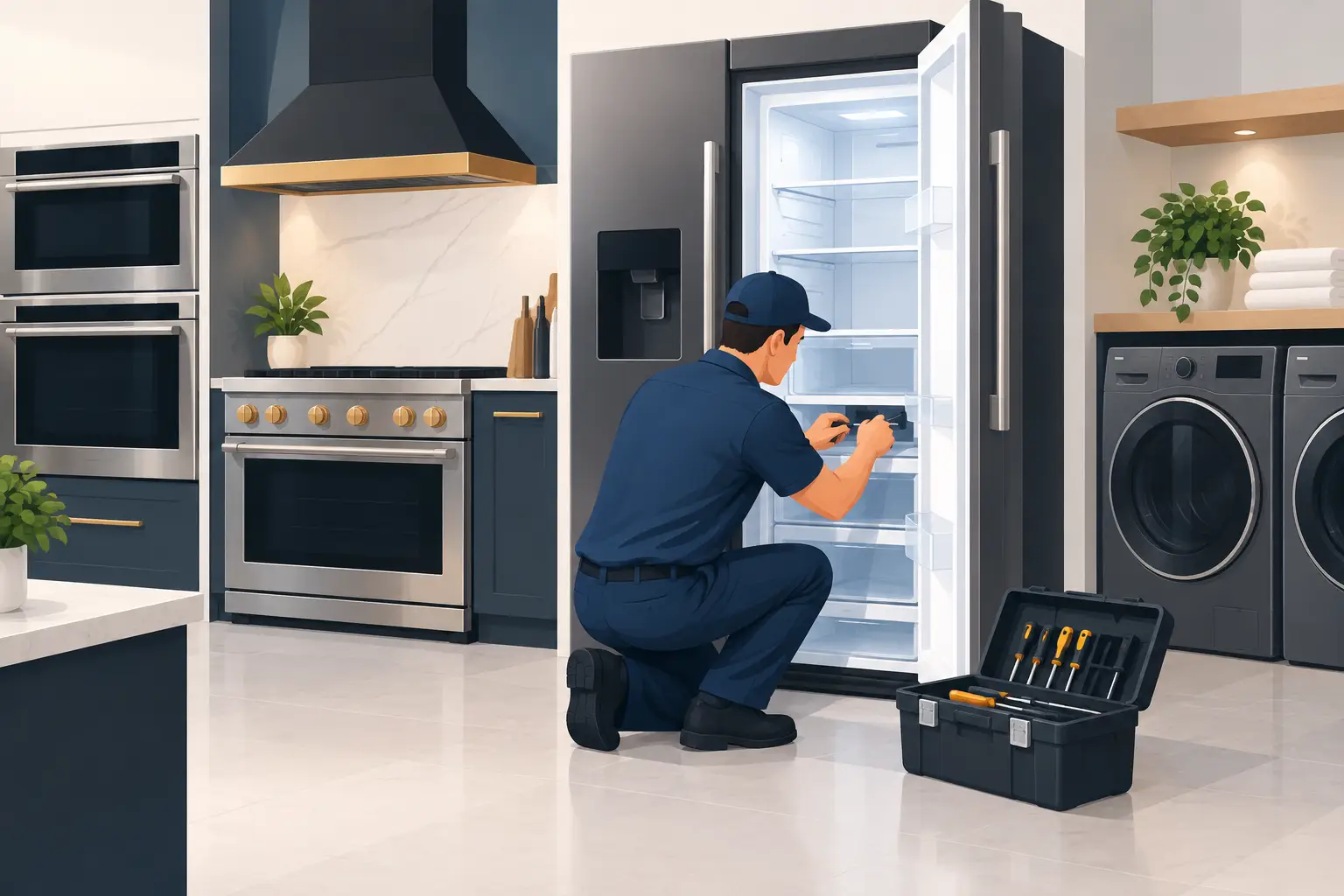
A built-in refrigerator that is running warm, an oven that will not hold temperature, or a washer that stops mid-cycle can disrupt an entire household quickly. Luxury appliances are designed for performance, appearance, and long service life, but they also rely on brand-specific components, controls, and installation details. When something goes wrong, the right diagnosis matters just as much as the repair itself.
For Phoenix-area homeowners, waiting until a small issue becomes a complete failure can mean spoiled food, a missed dinner plan, water damage, or a laundry backlog. A qualified technician can identify what is causing the symptom, explain the repair clearly, and help protect the investment already built into your kitchen or laundry room.
Why Luxury Appliances Require a Different Approach
High-end appliances are not simply standard models with upgraded finishes. Built-in refrigeration, professional-style ranges, steam ovens, panel-ready dishwashers, and advanced laundry systems often use specialized electronics, sealed systems, sensors, motors, and ventilation requirements. Their cabinetry integration can also affect how the appliance is accessed and serviced.
A Sub-Zero refrigerator, for example, may have separate cooling systems for the refrigerator and freezer sections. A Thermador or Viking range may use sophisticated ignition, temperature-sensing, or control components. Bosch, Cove, Gaggenau, Monogram, Café, KitchenAid, and Electrolux models each have their own diagnostic procedures and common failure patterns.
That does not mean every repair has to be complicated or expensive. A dishwasher that will not drain may have a blocked filter, damaged drain pump, or control issue. An oven that heats unevenly may need an element, sensor, igniter, or calibration check. The point is that guessing can lead to unnecessary parts replacement, repeat failures, or damage to a built-in installation.
Warning Signs Your Appliance Needs Service
Luxury equipment often gives early warnings before it stops working completely. Addressing those warnings promptly can reduce inconvenience and may prevent a larger repair later.
Refrigerators, Freezers, and Wine Coolers
Pay attention if your refrigerator is running constantly, the freezer is building excessive frost, food is not staying cold, or an ice maker has slowed down or stopped producing ice. Water under the unit, condensation around the doors, unusual fan noise, and inconsistent temperatures also deserve attention.
With built-in refrigeration, airflow and precise temperatures are critical. A dirty condenser, failing evaporator fan, faulty defrost component, worn door gasket, or sealed-system concern can affect performance. Because a built-in refrigerator is often tightly integrated with cabinetry, proper access and reinstallation matter as much as the diagnosis.
Wine coolers need similar attention. If bottles are no longer being held at the selected temperature, the unit vibrates excessively, or moisture is collecting inside, service can help preserve both the appliance and what it is storing.
Ranges, Ovens, Cooktops, and Ventilation
An oven that takes too long to preheat, burns food on one side, shuts off unexpectedly, or displays an error code should be inspected. On gas ranges, delayed ignition, clicking without a flame, weak burners, or the smell of gas are reasons to stop using the appliance and arrange service promptly. Do not continue trying to light a burner that is not igniting properly.
Electric and induction cooktops can develop issues with heating zones, touch controls, power supply, or communication between components. Ventilation equipment also affects daily cooking. A hood that has weak airflow, excessive noise, or a fan that will not turn on can leave heat, smoke, and grease lingering in the kitchen.
Dishwashers and Laundry Appliances
Standing water in the bottom of a dishwasher, leaks at the door, poor cleaning results, or a cycle that will not finish can point to drainage, circulation, inlet, latch, or control problems. Ignoring a leak is especially risky around custom cabinetry and finished flooring.
Washers and dryers should also be serviced when they begin making banging or grinding noises, leaving clothes too wet, failing to drain, taking too long to dry, or stopping before the cycle ends. Common causes can include worn belts, pumps, rollers, heating components, sensors, and control issues. The exact cause depends on the model and the symptoms, which is why a complete diagnosis is more useful than a quick assumption.
Repair or Replace? Start With the Right Questions
Replacement is sometimes the practical choice, especially when an appliance has severe damage, repeated major failures, or a repair cost that does not make sense for its age and condition. But replacement is not automatically the better answer for high-end equipment.
Built-in refrigerators and premium cooking appliances are often sized, vented, and installed around the surrounding cabinetry. Replacing one can involve more than selecting a new model. It may require adjustments to panels, trim, electrical connections, gas connections, flooring, or ventilation. If a repair can restore safe, dependable operation, it may be the less disruptive option.
The best decision depends on the appliance’s condition, the failed component, parts availability, repair history, and the homeowner’s plans for the kitchen or home. A transparent service visit should give you enough information to make that decision without pressure.
What to Do Before the Technician Arrives
A few simple details can make the appointment more efficient. Note when the problem started, whether it happens during every cycle, and any error message shown on the display. If the appliance is leaking, place towels around the area if it is safe to do so and avoid operating it until the source is identified.
For refrigeration problems, move perishable food to another working refrigerator or cooler if temperatures are rising. For a suspected gas issue, turn the appliance off if you can do so safely, leave the area, and follow appropriate safety guidance. Do not disassemble panels, force a built-in unit out of place, or attempt electrical repairs yourself.
It also helps to have the model number available. On many appliances, it is located inside the door frame, along an interior wall, behind a lower panel, or near the control area. This information helps a technician prepare for the type of equipment in your home, although a full diagnosis is still necessary before confirming the repair.
Choosing Service for Luxury Appliances
The right repair provider should be comfortable working across premium and standard residential brands, not just familiar with the name on the front of the appliance. Ask whether the technician can diagnose built-in refrigeration, gas and electric cooking equipment, dishwashers, and laundry systems. Experience with the equipment category matters because symptoms that look similar can have very different causes.
You should also expect clear communication. A dependable technician explains the issue in plain language, identifies the recommended repair, and lets you know when a return visit or ordered component is necessary. Same-day service can be valuable when available, particularly for refrigeration failures, but accuracy should never be sacrificed for speed.
Hillside Appliance Services brings certified technical experience to luxury brands including Sub-Zero, Viking, True, Bosch, Thermador, Gaggenau, Cove, KitchenAid, Monogram, Café, and Electrolux, while continuing to serve the standard appliances families rely on every day. Whether the equipment is in a home, rental property, bar, or restaurant, the goal is the same: restore dependable operation with as little disruption as possible.
A luxury appliance should make daily life easier, not leave you planning around a malfunction. When the first warning sign appears, timely professional service can help protect your food, your home, your routine, and the appliance you chose for the long term.