
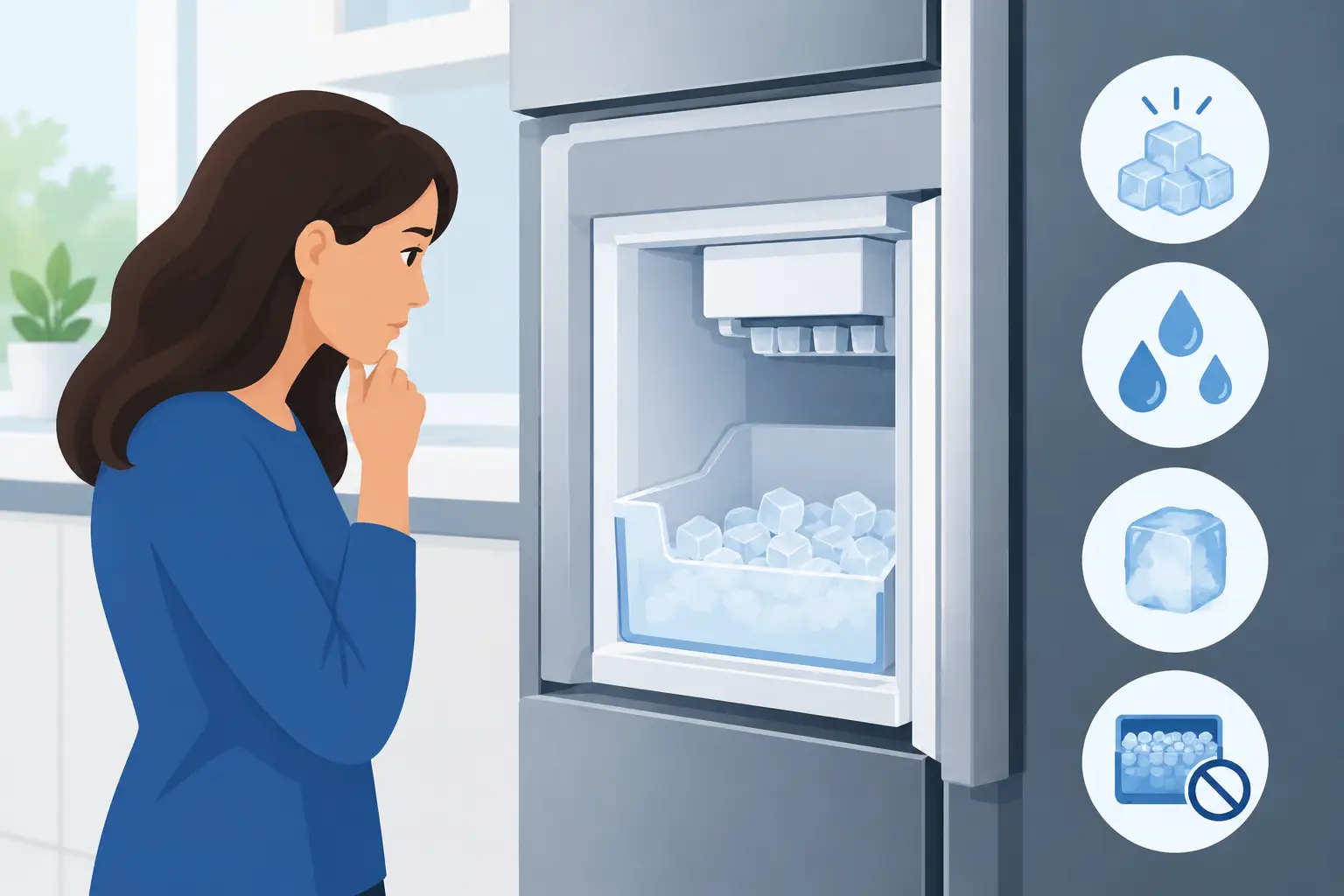
A refrigerator can still seem to be working while its ice maker quietly disrupts the whole kitchen. You open the freezer for a drink, fill a glass, and find an empty bin, tiny cubes, cloudy ice, or a solid frozen clump. Ice maker issues are frustrating because several systems have to work together correctly: water supply, freezer temperature, sensors, valves, moving parts, and controls.
Some problems have a simple cause you can check safely. Others point to a failed component or a refrigerator issue that needs professional diagnosis. Knowing the difference can prevent wasted time, water leaks, and unnecessary strain on an expensive built-in refrigerator.
Ice Maker Issues Often Start With the Ice Itself
The appearance and behavior of the ice offer useful clues. If the ice maker produces no ice at all, the unit may not be getting water, may be switched off, or may not be cold enough to complete a harvest cycle. If it makes only a few cubes, produces hollow cubes, or takes days to fill the bin, restricted water flow is often the first suspect.
Small or hollow cubes usually form when the mold does not receive enough water. A partially closed water shutoff, kinked supply line, clogged refrigerator water filter, or weak inlet valve can all reduce flow. In Phoenix, hard-water mineral buildup can also contribute to poor water delivery over time.
Cloudy ice is usually less urgent. It can result from minerals or trapped air in the water. But ice that smells or tastes unpleasant may mean an overdue filter, absorbed freezer odors, or stale ice that has remained in the bin too long. Empty the bin, wash it with mild soap and water, and allow the maker to produce a fresh batch before assuming a part has failed.
When cubes freeze together in one large mass, the ice maker may be cycling too slowly, the freezer door may not be sealing properly, or warm air may be entering the compartment. A dispenser chute that does not close can let humid air reach the ice bin, causing clumps and frost.
Why an Ice Maker Stops Making Ice
An ice maker does not simply freeze water. It fills a mold, freezes the water, senses the correct temperature, releases the cubes, and repeats the cycle. A failure anywhere along that sequence can stop production.
The freezer is not cold enough
Most ice makers need the freezer to remain around 0°F to operate dependably. If the freezer is noticeably warmer, food may still feel frozen while the ice maker fails to cycle consistently. Frost-covered vents, a blocked air passage, worn door gaskets, a defrost issue, or a refrigeration problem can all affect temperature.
Avoid packing food tightly against air vents. Good airflow matters, particularly in tightly designed built-in models from Sub-Zero, Thermador, Bosch, Gaggenau, Monogram, and other premium brands. If the freezer temperature is unstable, an ice maker replacement alone may not solve the real problem.
Water cannot reach the ice maker
If the refrigerator has a water dispenser, try it. Weak or nonexistent dispenser flow can support the case for a supply, filter, or inlet-valve problem. Strong dispenser flow does not completely rule out an ice maker-specific failure, but it helps narrow the diagnosis.
A new filter can occasionally cause trouble if it is not fully seated or is not the correct type for the refrigerator. Check the manufacturer instructions before removing or reinstalling it. If there is a visible kink in the water line behind the refrigerator, do not force the appliance back against the wall. That can worsen the restriction or create a leak.
The ice maker is off, jammed, or reset incorrectly
Many refrigerators have a shutoff arm, on/off switch, touchscreen setting, or small reset button. The location and reset process vary significantly by brand and model. An ice maker can also stop when a cube jams the ejector arm or when the bin is out of position.
Check that the ice maker is enabled and that the bin is seated correctly. Do not chip at ice with a knife or pry on the ejector fingers. Plastic parts can break easily, and a punctured liner or water line turns a simple repair into a larger one.
A component has failed
The inlet valve, water-fill tube heater, ice mold thermostat, motor module, optical sensor, control board, or wiring can fail without much warning. On newer refrigerators, diagnostic codes and electronic controls add another layer to the repair. Luxury built-in refrigeration often uses model-specific parts and programming, so an accurate diagnosis matters before replacing anything.
Safe Checks Before Scheduling Service
A few basic checks are worthwhile when there is no active leak or electrical concern. Give the refrigerator 24 hours after a filter change, temperature adjustment, or power interruption before expecting normal ice production. Then check the following:
- Confirm the freezer is set near 0°F and the refrigerator doors close fully.
- Make sure the ice maker is turned on and the ice bin is correctly installed.
- Check whether the household water shutoff is fully open and the line behind the refrigerator is not pinched.
- Replace an overdue filter with the correct approved filter, if applicable.
- Remove old clumped ice from the bin and look for obvious frost around the dispenser chute or fill tube.
These steps can resolve a minor setup or maintenance issue. They are not a substitute for repair when the freezer is warm, the refrigerator is leaking, the unit repeatedly freezes up, or the ice maker remains inactive after basic checks.
When a Frozen Fill Tube Is the Real Problem
A frozen fill tube is a common reason an ice maker quits while the rest of the freezer appears normal. The tube carries water from the inlet valve into the ice mold. When it freezes shut, the mold receives little or no water.
The underlying cause matters. A valve that drips after each fill can gradually freeze the tube. Low water pressure, a temperature problem, or a failed fill-tube heater on certain models can also be involved. Thawing the tube may restore ice briefly, but the problem will return if the source is not corrected.
This is one reason repeated DIY resets can be misleading. The ice maker may work for a cycle or two, then stop again because the real fault was never addressed.
Ice Maker Leaks Need Prompt Attention
Water under or behind a refrigerator should not be ignored. A loose connection, cracked water line, failed inlet valve, overflowing ice mold, blocked defrost drain, or damaged filter housing can all create leaks. The source is not always obvious because water can travel along the refrigerator frame before reaching the floor.
If you see active leaking, shut off the refrigerator’s water supply if you can access it safely, protect the flooring, and avoid operating the dispenser. Water near electrical connections or under a built-in refrigerator deserves prompt professional attention. For property managers and foodservice operators, acting quickly also helps limit downtime and damage to adjacent cabinets, flooring, or inventory.
Repair or Replace the Ice Maker?
Replacement is not automatically the best answer. If the refrigerator has a temperature, water-flow, control, or wiring issue, installing a new ice maker may produce the same result. A qualified technician should test the system that supports the ice maker before recommending a part.
That is especially true for high-end built-in refrigerators, where access is more involved and parts can be costly. For an older standard refrigerator, the decision may depend on the appliance’s overall condition, repair cost, and whether other refrigeration problems are present. A clear diagnosis lets you weigh that trade-off instead of guessing.
Hillside Appliance Services helps Greater Phoenix homeowners, property managers, and commercial kitchens pinpoint the cause of ice maker failures across standard and luxury refrigeration brands. When the ice bin stays empty, cubes are melting together, or water is appearing where it should not, timely service can get the refrigerator back to supporting the routine you depend on.