
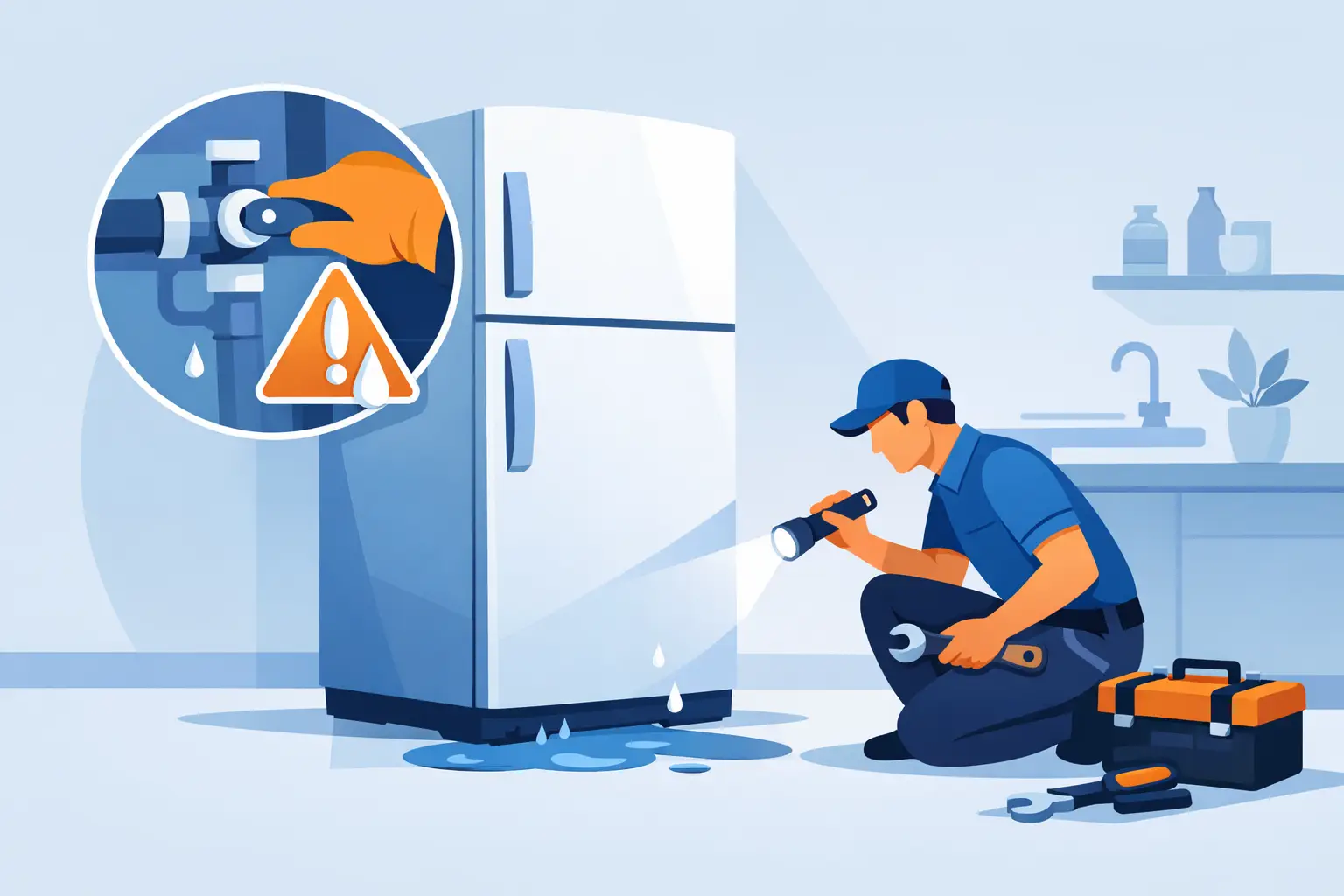
A puddle under the refrigerator can turn from a minor nuisance into damaged flooring, swollen cabinetry, or a slip hazard surprisingly fast. Knowing how to troubleshoot refrigerator leaks helps you narrow down the source before the water spreads – and helps you recognize when a repair should not wait.
Not every leak comes from the same place. Condensation from a door left ajar, a blocked defrost drain, a cracked water line, and an overflowing drain pan can all leave water on the floor. The location, timing, and appearance of the water offer useful clues.
Start Safely Before Checking the Leak
Move food away from the front of the refrigerator, then carefully pull the unit forward only if you can do so without straining the water line or damaging the floor. If there is standing water near the power cord, unplug the refrigerator before inspecting behind or underneath it. Dry the floor first so you can tell whether fresh water is appearing.
If your refrigerator has an ice maker or water dispenser, locate the household shutoff valve and turn off the water supply if you see an active drip from the rear of the appliance. Do not keep tightening fittings or moving a brittle plastic line while the water is on. A small seep can quickly become a larger leak.
Then place a few dry paper towels around likely sources: beneath the front edge, below the back panel, inside the fresh-food compartment, and under the water dispenser area. Fresh wet spots can reveal where the leak begins rather than where the water eventually collects.
How to Troubleshoot Refrigerator Leaks by Location
Where you find the water matters. Water at the front of the refrigerator usually points to a defrost drainage or door-seal issue. Water behind the appliance is more likely connected to the supply line, inlet valve, or a connection serving the ice maker. Water inside the refrigerator often relates to airflow, condensation, or a blocked drain.
Water under the front of the refrigerator
A clogged defrost drain is one of the most common causes of water beneath a refrigerator. During normal defrost cycles, melted frost drains through a small passage to a pan below the appliance. Food debris, ice, or residue can block that passage. Instead of draining, the water may overflow into the bottom of the fresh-food compartment and run onto the floor.
Look for water beneath the crisper drawers or a sheet of ice on the freezer floor. Those symptoms strongly suggest a drainage problem. You can remove visible debris and wipe up accessible water, but avoid forcing sharp objects into a drain opening. On many models, especially built-in refrigerators, accessing and clearing the full drain system requires disassembly. Improperly thawing or probing the area can damage interior liners, wiring, or drain components.
A refrigerator that is not level can also allow water to escape where it should not. Most units should sit slightly higher in front than in back so doors close properly and condensation drains as designed. If the doors swing open on their own or do not seal consistently, leveling may be part of the problem.
Water behind the refrigerator
If the leak begins at the rear, inspect the water supply line without sharply bending it. Check for moisture at the wall connection, along the tubing, at the refrigerator inlet valve, and around the ice maker connection. Copper, braided steel, and plastic lines can all fail over time, though plastic tubing is especially prone to cracks, loose fittings, and damage when the refrigerator is pushed back too far.
A leaking inlet valve may drip only when the ice maker fills or when someone uses the dispenser. That makes the leak intermittent and easy to miss. If the floor gets wet shortly after dispensing water or hearing an ice maker fill cycle, leave the water supply off until the source is diagnosed.
On luxury built-in units from brands such as Sub-Zero, Thermador, Bosch, Viking, Monogram, and Gaggenau, water routing and access panels can be more complex than on a standard freestanding refrigerator. The right diagnosis matters because a leak can originate at a concealed connection rather than the visible tubing behind the unit.
Water inside the refrigerator compartment
Water pooling on shelves, beneath produce drawers, or near the back wall is often caused by warm, humid air entering the cabinet. Check whether containers or packaging are preventing the door from closing fully. Inspect the door gasket for tears, hardened sections, gaps, or residue that keeps it from sealing.
Clean a dirty gasket with mild soap and water, then dry it thoroughly. If the gasket is visibly torn or the door has dropped out of alignment, cleaning alone will not solve the issue. Persistent moisture inside the cabinet can lead to food spoilage, frost buildup, and repeated leaks.
Do not overlook temperature settings. A refrigerator set too cold may freeze condensation near vents or drains, while one that is not cooling properly can create excess moisture as warm air circulates. The correct setting varies by model, but the fresh-food section should generally hold close to 37 to 40 degrees Fahrenheit.
Water around the dispenser area
A few drops after filling a glass can be normal, but a dispenser that continues dripping may have trapped air, a worn valve, or an issue in the dispenser assembly. A dripping dispenser can run down the door and look like a floor leak, even though the source is higher up.
Try dispensing several glasses of water to see whether the drip clears. If it continues, avoid taking apart the dispenser housing yourself. Many dispenser components involve electrical connections, switches, and model-specific panels that can be damaged during removal.
Check the Drain Pan, But Do Not Assume It Is the Problem
Most refrigerators use a shallow drain pan underneath the cabinet to collect defrost water. Heat from the compressor and condenser area normally evaporates that water. A pan can overflow if the refrigerator is producing too much defrost water, if the pan is cracked, or if airflow around the unit is poor.
Dust buildup on the condenser area can contribute to poor performance and excess heat, particularly in Phoenix garages, utility rooms, or kitchens where temperatures run high. If the pan is safely accessible, look for a crack or water spilling over an edge. A full pan is usually a symptom to investigate, not simply a pan to empty and forget.
When a Refrigerator Leak Needs Professional Repair
A homeowner can safely clean up water, confirm that a door is closing, and identify an obvious external drip. Beyond that, refrigeration leaks can involve hidden drains, electrical components, water valves, damaged lines, or cooling problems that need accurate diagnosis.
Schedule service promptly if you notice any of these situations:
- Water returns after you dry the area and confirm the door is closed.
- There is ice on the freezer floor or water under the crisper drawers.
- The water line, inlet valve, or rear connection is actively dripping.
- The refrigerator is not cooling normally, has heavy frost, or runs constantly.
- A built-in refrigerator is leaking into cabinetry or beneath finished flooring.
For rental properties, restaurants, and bars, a refrigerator leak deserves an especially quick response. Water can affect adjacent units, damage commercial flooring, interrupt food storage, and create sanitation concerns. Document the leak, protect nearby surfaces, and arrange repair before the appliance is returned to normal use.
Protect Your Kitchen While You Wait
After shutting off the water supply when appropriate, place absorbent towels around the base and use a shallow tray only if it does not block airflow or interfere with the refrigerator doors. Keep children and pets away from the wet area. If water has reached hardwood, laminate seams, cabinets, or walls, dry those surfaces immediately rather than waiting for the appliance repair.
Avoid repeatedly turning the refrigerator off and on. If it is cooling safely and the water source is isolated, keeping it powered may protect your food. If water is near electrical connections, the appliance is making unusual noises, or the leak is substantial, leave it unplugged and move perishable food to another refrigerator or cooler.
A refrigerator should make life easier, not leave you checking the floor every hour. When the source is unclear or the leak keeps coming back, Hillside Appliance Services can diagnose the cause and help restore your kitchen routine with a repair that addresses the problem instead of just the puddle.