
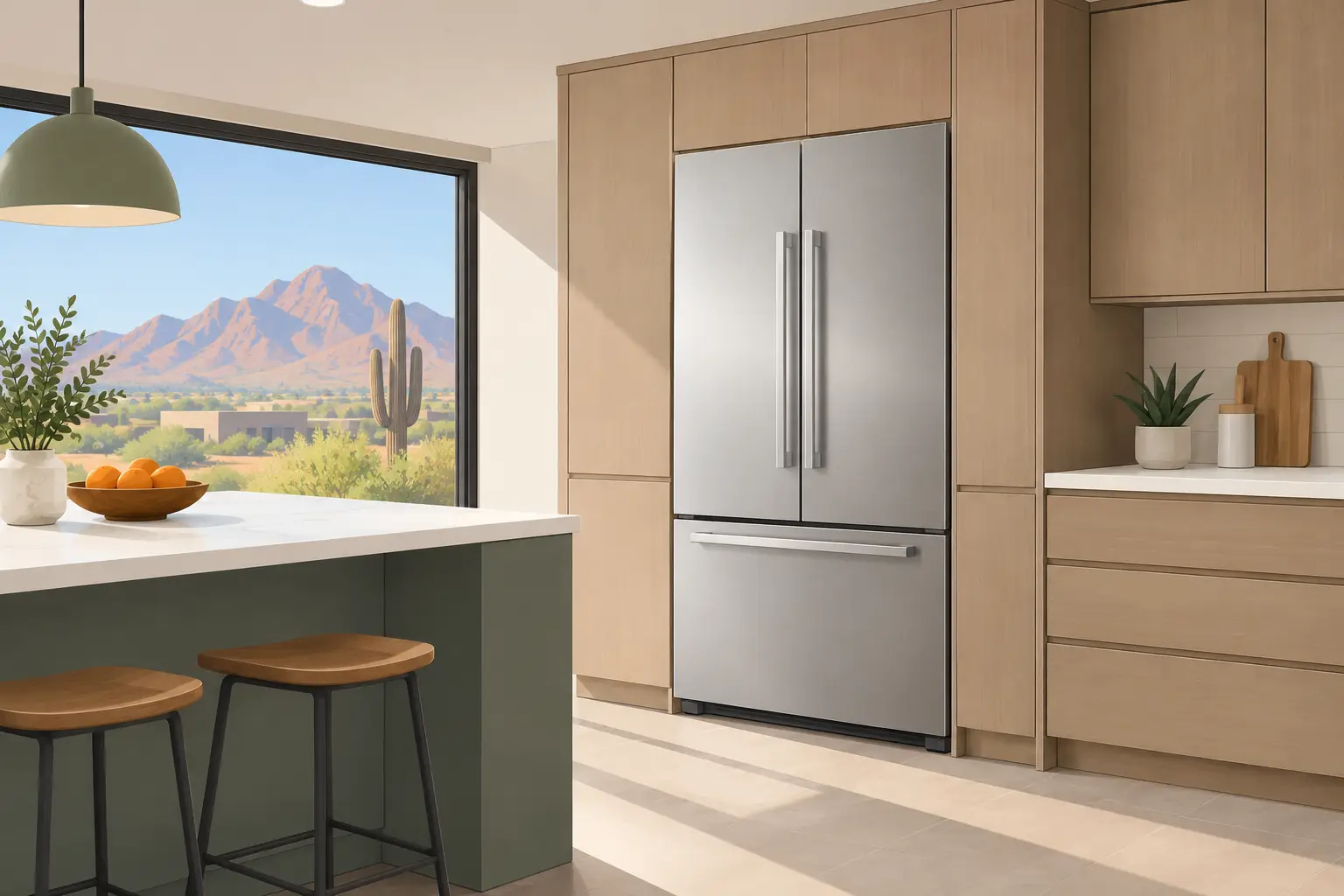
A built-in refrigerator is not just a cold box tucked into cabinetry. It is part of the kitchen itself, often custom-paneled, carefully fitted, and relied on every day. This guide to built in refrigerators explains what makes these units different, what to consider before buying or remodeling, and when a repair call can protect a major kitchen investment.
For Phoenix homeowners, dependable cooling matters even more during long stretches of high heat. A refrigerator that is running warmer than normal, making new noises, leaking, or producing little ice should be checked before food loss and a larger repair become part of the problem.
What Makes a Refrigerator Built In?
A true built-in refrigerator is designed to sit nearly flush with surrounding cabinets and run from floor to ceiling or close to it. Unlike a standard freestanding refrigerator, it is typically installed in a dedicated enclosure with specific requirements for airflow, electrical supply, water connections, and door clearance.
Many built-in models are 24 inches deep at the cabinet box, allowing doors and handles to extend beyond the cabinets without the appliance protruding into the kitchen. They are available as bottom-freezer units, French-door configurations, side-by-side columns, and separate refrigerator and freezer columns. Brands such as Sub-Zero, Thermador, Bosch, Viking, Gaggenau, Monogram, KitchenAid, Café, Electrolux, and True offer different approaches to this category.
A counter-depth freestanding refrigerator can create a similar appearance, but it is not automatically a built-in. Counter-depth models usually remain visible at the sides or top, have different ventilation needs, and are generally easier to replace. That distinction matters when planning cabinetry, selecting panels, or estimating service and replacement costs.
Choosing the Right Built-In Refrigerator Layout
The best layout depends on how your household uses the kitchen. A single, integrated refrigerator may be the practical choice for a standard family kitchen. Separate columns offer more flexibility, especially for households that entertain often, store fresh food in larger quantities, or want freezer space in a different location.
All-Refrigerator and All-Freezer Columns
Columns are popular in luxury kitchen designs because they can be installed side by side, separated by cabinetry, or placed in different parts of the room. An all-refrigerator column gives fresh food plenty of room, while a separate freezer column provides dedicated frozen storage.
The trade-off is complexity and cost. Two columns mean two appliances, two cooling systems, and potentially two future service needs. They also demand precise installation. A cabinet opening that is slightly out of square can affect panel alignment, door operation, and the overall finished look.
French Door and Bottom-Freezer Units
French-door and bottom-freezer built-ins combine refrigeration and freezer storage in one appliance. They can be an efficient use of space and feel familiar to homeowners replacing a standard refrigerator. Make sure the doors can open fully without striking an island, wall, or adjacent cabinet.
Interior organization matters as much as exterior size. Adjustable shelves, deli drawers, humidity-controlled crispers, and ice-maker placement can make one model a better fit than another, even when two units share similar dimensions.
Panel-Ready or Stainless Steel
Panel-ready refrigerators accept custom cabinet panels for a concealed, furniture-like appearance. Stainless steel makes more of a statement and may simplify a future style update because it does not require matching custom panels.
Panel-ready installations require accurate panel weight, dimensions, and hardware. A panel that is too heavy or incorrectly balanced can strain hinges and cause doors to sag or fail to close correctly. If your refrigerator doors have begun rubbing, sitting unevenly, or popping open, address it early rather than forcing the door into position.
Ventilation Is Not Optional
Built-in refrigerators are engineered to release heat through specific vent locations, often at the top grille, bottom area, or rear of the unit. Those clearances are not cosmetic. Restricted airflow makes the compressor work harder, can raise operating temperatures, and may shorten the life of cooling components.
During a remodel, it is easy for trim, crown molding, insulation, or cabinetry changes to interfere with required ventilation. The refrigerator may still run, but it can run longer than it should. In Arizona, where kitchen temperatures can climb quickly, poor ventilation puts extra stress on an already hard-working system.
Keep the grille and accessible vents clean, and avoid blocking them with decorative items or stored materials. If you notice excessive heat around the unit, constant compressor operation, or a refrigerator that cannot hold its set temperature, professional diagnosis is the safer next step. Built-ins use tightly integrated components, and guessing at a cooling problem can create a more expensive repair.
Measure More Than the Opening
A built-in refrigerator must fit the opening, but width and height are only part of the measurement process. Before selecting a model, account for cabinet depth, finished flooring, trim, upper cabinetry, water line placement, electrical access, and ventilation space specified by the manufacturer.
Door swing is another common oversight. A refrigerator can fit beautifully in its opening yet become frustrating if the doors cannot open far enough to remove shelves or access crisper drawers. On a panel-ready model, the hinge system may need additional clearance so the panel does not scrape adjacent cabinets.
For a replacement, measure the existing appliance and the cabinet opening separately. Older built-ins may have been installed before current models changed dimensions or ventilation designs. Do not assume a same-brand replacement will fit exactly without confirming the manufacturer specifications.
Common Built-In Refrigerator Problems
Because built-in refrigerators are closely integrated with cabinetry, small symptoms deserve attention. A light film of water under a unit can come from a blocked defrost drain, a water filter housing issue, or a loose water connection. Frost buildup can point to an air leak, a door gasket problem, a defrost-system failure, or a circulation issue.
Temperature problems are especially urgent. Food that feels warmer than expected, soft frozen items, frequent cycling, or a freezer that works while the refrigerator section warms up may indicate airflow, fan, sensor, control, or sealed-system concerns. An ice maker that stops producing ice may be dealing with a water supply issue, frozen fill tube, faulty valve, temperature problem, or an ice-maker component failure.
Other warning signs include clicking sounds, a loud or inconsistent fan, a door that will not seal, error codes, or visible condensation around the unit. These symptoms do not always mean replacement is necessary. Many are repairable when diagnosed before a minor component failure affects the cooling system.
Repair or Replace? Consider the Full Picture
Built-in refrigerators are designed to be long-term appliances, and repair is often worth evaluating before replacement. The cabinetry, custom panels, installation labor, and matching finishes around the refrigerator can make replacement far more involved than replacing a freestanding model.
The right decision depends on the appliance age, condition, repair history, availability of parts, and diagnosis. A failed fan motor, ice maker component, gasket, sensor, drain issue, or control-related problem may be a sensible repair. A major sealed-system failure on an older unit requires a more careful cost comparison, particularly if the model has had repeated cooling repairs.
Avoid deciding based on appearance alone. A built-in refrigerator can look dated but remain mechanically sound, while a newer unit with recurring temperature issues needs immediate attention. A qualified technician can identify the failed component, check whether the unit is holding proper temperatures, and explain the practical repair options.
Protecting Your Refrigerator Between Service Calls
Basic care helps built-in refrigerators perform as intended. Keep door gaskets clean so they seal fully, replace water filters on the recommended schedule, and do not overload shelves or bins beyond their intended capacity. Make sure food containers are not preventing doors from closing.
If the unit has a visible condenser area or grille that can be safely accessed according to the manufacturer instructions, keep it clear of dust and debris. Do not attempt sealed-system repairs, electrical repairs, or control-board work yourself. These appliances can have complex electronics, water connections, and specialized refrigeration components.
When a built-in refrigerator needs service in the Greater Phoenix area, a technician familiar with luxury and standard residential brands can make a meaningful difference. Hillside Appliance Services diagnoses and repairs built-in refrigeration concerns with attention to the appliance, the cabinetry around it, and the disruption a failed refrigerator causes at home.
A built-in refrigerator should disappear into your kitchen design, not into the background of your to-do list. When it starts showing signs of trouble, acting promptly can help keep dinner plans, groceries, and the rest of the household routine where they belong.