
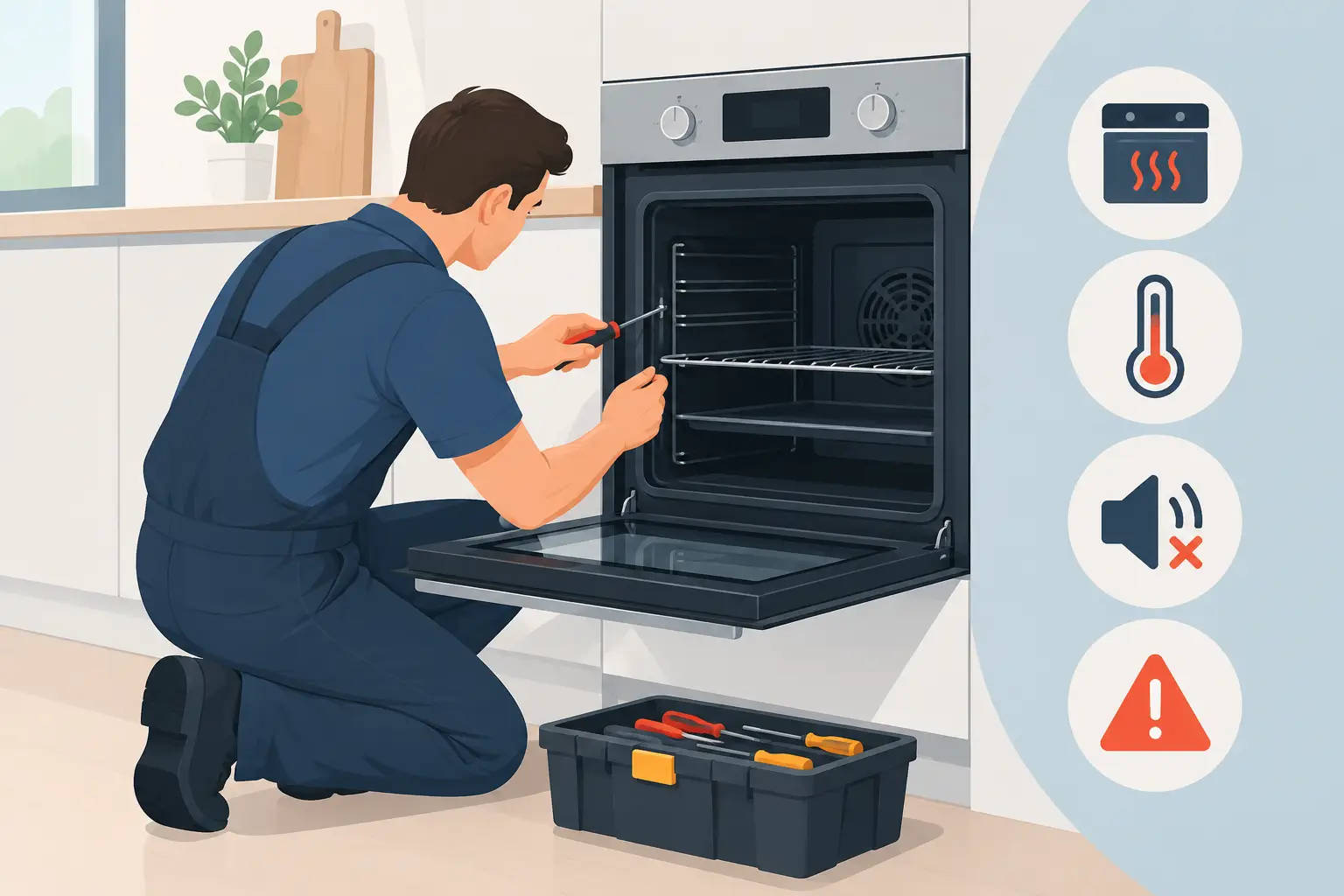
Dinner plans can come to a stop when a built-in oven will not heat, burns food on one side, or flashes an error code just before guests arrive. This guide to built-in oven repair explains what those symptoms can mean, which basic checks are safe to make, and when a qualified technician should take over.
Built-in ovens are not simply slide-in appliances with a different look. They are installed into cabinetry, connected to dedicated electrical circuits or gas lines, and often paired with electronic controls, wall-mounted cooling systems, or smart features. That design gives the kitchen a clean, high-end finish, but it also makes diagnosis and removal more involved.
Why Built-In Oven Problems Need a Different Approach
A freestanding range can sometimes be moved for access. A built-in wall oven is secured inside a cabinet opening, frequently hardwired, and may be part of a double-oven setup. Removing it without the right procedure can damage cabinetry, strain wiring, or create a safety hazard.
Many Phoenix homes also have premium built-in equipment from brands such as Thermador, Bosch, Gaggenau, Viking, KitchenAid, Monogram, Café, Electrolux, and Sub-Zero’s kitchen lines. These ovens can use brand-specific control boards, temperature sensors, door latch systems, and diagnostic codes. A repair that appears simple on the surface may require an accurate model-specific diagnosis before any part is replaced.
Heat is another factor. Arizona kitchens already work hard during warmer months, and an oven with a failing cooling fan, loose door seal, or inaccurate thermostat can add unnecessary heat while increasing cooking times and energy use.
Common Built-In Oven Failures and What They Mean
The oven will not heat
If the display turns on but the oven stays cold, the problem may be a failed bake element, broil element, igniter, relay, thermal fuse, temperature sensor, or electronic control board. In an electric oven, a damaged element may show blistering, cracks, or visible burn spots. Do not touch or test internal components unless power has been fully disconnected.
For a gas built-in oven, a weak or failed igniter is a common cause. You may hear the oven attempt to start without seeing a flame, or smell gas briefly before the safety system shuts the cycle down. If you smell a persistent gas odor, turn the oven off, avoid switches or open flames, ventilate the area if it is safe to do so, and contact the gas utility or emergency services as appropriate. Do not attempt a gas repair yourself.
The oven heats, but the temperature is wrong
A 350-degree setting that behaves more like 300 or 425 is frustrating because the oven still seems to work. Common causes include a failing temperature sensor, worn heating element, faulty control board, poor airflow, or a door gasket that no longer seals properly.
Start with an oven thermometer placed in the center of the oven and allow the unit to cycle several times. One brief temperature swing is normal. A consistent difference of 25 degrees or more, uneven browning, or frequent overcooking suggests the oven needs calibration or repair. Some models allow a limited temperature offset through the settings menu, but calibration will not solve a damaged sensor or failing control.
One oven in a double wall oven has stopped working
Double ovens can share certain electrical connections and controls while using separate heating components. If the upper oven works but the lower oven does not, the issue may be isolated to one cavity. If both ovens lose heat, trip the breaker, or display errors at the same time, the cause may be a power supply issue, wiring connection, main control failure, or overheating protection problem.
Avoid assuming that one working oven rules out an electrical concern. A built-in oven can have enough power for lights and displays while still lacking the voltage required for proper heating.
The oven door will not unlock after self-cleaning
The self-clean cycle uses extreme temperatures and can expose weak parts that were already near failure. A door that remains locked afterward may have a failed latch motor, damaged latch switch, overheating issue, or control fault. Forcing the door open can break the latch assembly or damage the door.
Let the oven cool completely first. If the lock remains engaged after the unit has cooled and power has been reset at the breaker, service is usually the safest next step. Because self-cleaning places significant stress on electronics and components, many homeowners choose a manual cleaning method for routine maintenance instead.
The display is blank, flickering, or showing an error code
A blank display may be as simple as a tripped breaker, but it can also point to a failed control board, power supply problem, wiring issue, or blown thermal fuse. Check the home electrical panel and reset the dedicated oven breaker once if it has tripped. If it trips again, leave it off. Repeated breaker trips are not a reset problem – they need diagnosis.
Error codes are useful clues, especially on luxury ovens, but they are not always a final diagnosis. A code may identify a sensor circuit, fan fault, door latch issue, or communication problem between controls. Recording the exact code, when it appeared, and what the oven was doing helps a technician narrow the repair efficiently.
Safe Checks Before Scheduling Built-In Oven Repair
A few observations can save time without putting your home or appliance at risk. Confirm that the clock and control lock are not affecting operation, check whether the breaker is on, and make sure the oven door closes fully. If food is cooking unevenly, look for damaged racks, heavy foil blocking airflow, or a loose door gasket.
Pay attention to the symptom pattern. Does the oven fail in bake mode but work in broil? Does it heat only after several attempts? Does the cooling fan run constantly, make a grinding noise, or fail to run after cooking? These details matter because they point to different components.
Do not remove oven panels, pull a wall oven from its cabinet, bypass a door switch, or attempt to repair a gas connection. Built-in ovens are heavy, and their wiring is not safely accessible by simply unplugging the appliance. Even a switched-off oven may remain connected to a live circuit if the correct breaker has not been shut off.
When a Professional Repair Is the Better Choice
A professional diagnosis is appropriate whenever an oven will not heat, reaches unsafe temperatures, trips a breaker, smells of gas or burning insulation, locks unexpectedly, or displays recurring error codes. It is also the practical choice when the unit must be removed from cabinetry to access components.
Repair versus replacement depends on the oven’s age, the cost and availability of parts, the condition of the controls, and the value of the appliance. Replacing a bake element or igniter can be a sensible repair. A major control failure on an older unit may require a more careful cost comparison. Premium built-in ovens often justify repair because replacement involves not only the appliance price, but cabinet fit, trim, electrical requirements, and installation work.
A qualified technician should verify the failure before recommending parts. Replacing components based only on a symptom can become expensive quickly, particularly with electronic control systems. Hillside Appliance Services provides built-in oven diagnosis and repair for standard and luxury residential brands across Greater Phoenix, with attention to safe access, accurate troubleshooting, and respectful work inside the home.
Help Your Built-In Oven Last Longer
Use the self-clean function cautiously and only when the manufacturer recommends it. Wipe spills after the oven cools, keep door seals clean, and avoid lining the oven floor or vents with foil unless the owner’s manual specifically permits it. Foil can trap heat, interfere with airflow, and contribute to uneven cooking or damaged surfaces.
If the oven begins taking longer to preheat, cooking unevenly, or making new fan noises, schedule service before a complete failure interrupts a holiday meal, family gathering, or busy weeknight. A small change in performance is often the best time to address a developing problem – before it becomes an oven that will not turn on when you need it most.