
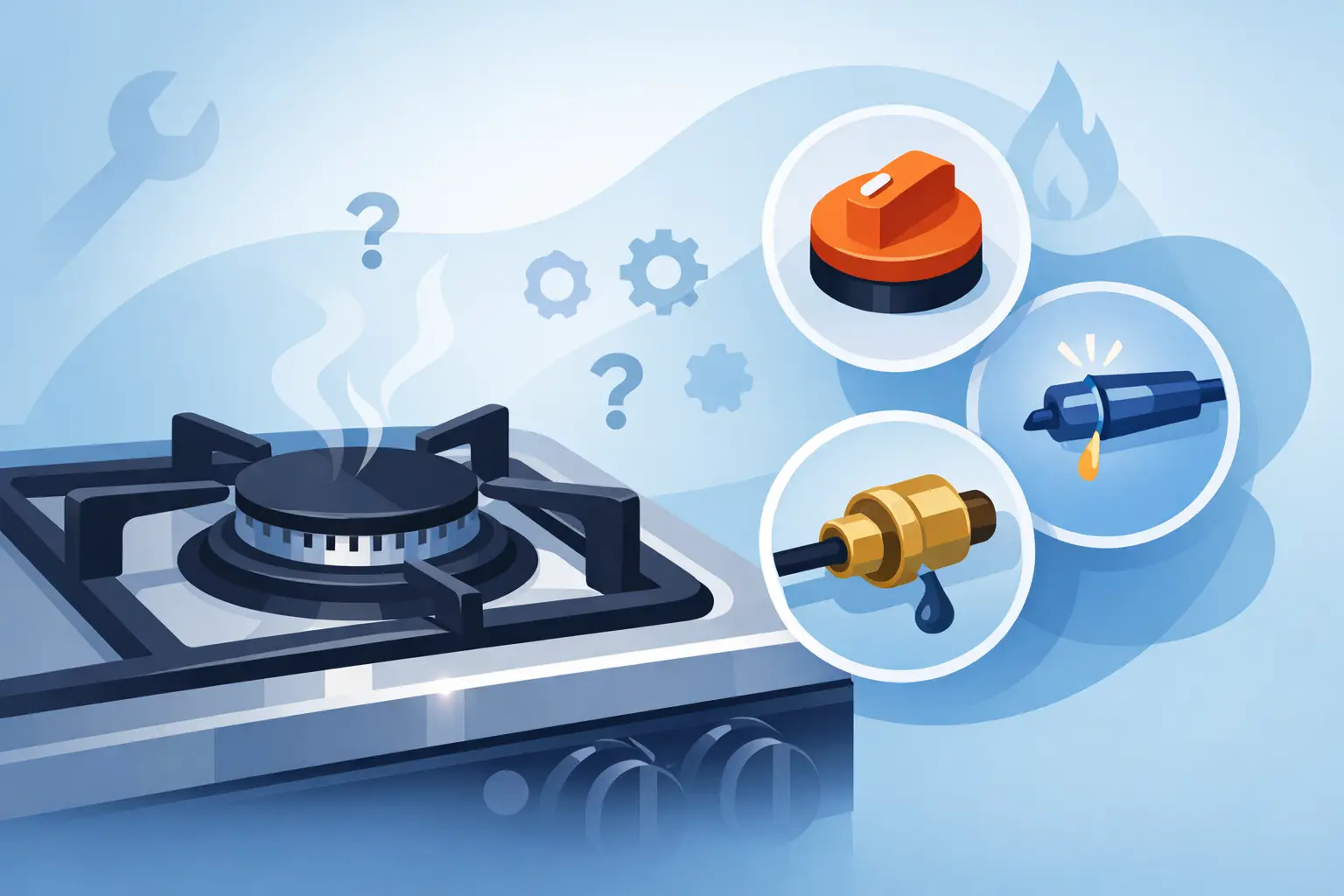
A gas range burner not lighting is more than an inconvenience when dinner is on the stove and the rest of the household is waiting. The problem may be as simple as a wet burner cap after cleaning, or it may point to a failed igniter, blocked burner ports, or a gas supply issue. The right response starts with safety: if you smell gas, hear a steady hiss, or suspect a leak, turn off the burner, avoid switches and flames, leave the area, and contact your gas utility or emergency services.
If there is no gas odor and the issue is limited to one burner, a few safe checks can often identify what is happening. For anything involving electrical components, gas valves, or disassembly, a qualified appliance technician is the safer choice.
Start With the Burner Cap and Burner Head
Most modern gas ranges use sealed burners. Each burner has a cap resting on a burner head, with small ports around the edge that distribute gas into an even flame. If the cap is off-center, upside down, cracked, or installed on the wrong burner, gas may not flow correctly across the igniter.
Let the cooktop cool completely, then remove the grate and check that the burner cap sits flat and securely on the burner head. It should not wobble. On ranges with different cap sizes, make sure each cap is matched to its correct location.
Spills and cleaning residue are another frequent cause. Boil-overs can clog the tiny flame ports, while excess water can sit around the igniter and prevent a spark from reaching the gas. Wipe the area dry with a soft cloth. A nonmetal brush or wooden toothpick can gently clear visible debris from burner ports. Do not force anything into the openings or enlarge them, since that can affect flame performance.
After the parts are fully dry and correctly positioned, try the burner again. If it lights with a steady blue flame, the issue was likely moisture, debris, or alignment.
What the Clicking Sound Can Tell You
The sound your range makes is a useful clue. When you turn the knob to the lighting position, the igniter should click rapidly while creating a visible spark near the burner. That spark ignites the gas.
The burner clicks but will not light
When a burner clicks but does not ignite, the spark may be weak, misplaced, or unable to reach gas at the burner ports. Food residue, grease, moisture, and a misaligned cap are the first things to rule out. A dirty or damaged ceramic igniter can also prevent reliable ignition.
If other burners light normally but one clicks without lighting, the problem is often isolated to that burner assembly or its igniter. This is common on heavily used burners, especially the front burners used for daily cooking.
Do not continue clicking the burner repeatedly for long periods. Unburned gas can build up around the cooktop. Turn the knob off after an unsuccessful attempt, wait for the area to clear, and investigate only when there is no gas odor.
The burner does not click at all
A burner that does not click may have an electrical issue. Gas ranges need electricity for electronic ignition, even though they cook with gas. A tripped breaker, a loose power cord, or an outlet issue can stop all burners from sparking.
First, check whether the range has power. Is the clock or display working? Do other burners click? If the entire range is unresponsive, check the breaker and confirm the appliance is plugged in securely. Avoid using extension cords with a range.
If only one burner fails to click while the others work, the likely cause may be a faulty ignition switch, damaged wiring, or a failed igniter. These components are located beneath or inside the cooktop and should be tested and repaired by a technician.
All burners click continuously
Continuous clicking, even after the knobs are turned off, usually means moisture or residue has reached an ignition switch or the spark system. This can happen after a large spill or an aggressive cooktop cleaning. Disconnect power to the range at the outlet or breaker if it is safe to do so, and allow the cooktop to dry thoroughly.
If clicking returns after drying, the ignition switch harness or spark module may need service. Repeated clicking is not a problem to ignore, particularly if it occurs alongside erratic burner operation.
Check for a Gas Supply Problem
When no burners light and there is no clicking issue, consider whether gas is reaching the appliance. A recently moved range may have a partially closed shutoff valve. A utility interruption or a propane tank issue can also affect ignition.
Check whether other gas appliances in the home are working, but do not disconnect the range or attempt to adjust the gas connection yourself. If no gas appliances are operating, contact the gas provider. If other gas appliances work but the range does not, the range’s regulator, valve system, or internal components may require professional diagnosis.
A gas range burner can also light slowly when the burner valve is restricted or when the gas pressure is not correct. This is not a situation for trial-and-error adjustments. Proper gas pressure and combustion are essential for safe operation.
Why One Burner Fails While the Others Work
A single gas range burner not lighting usually narrows the diagnosis. The appliance is receiving power and gas, but that specific burner is not creating the right combination of fuel and spark. The most common causes are a clogged burner head, a wet or damaged igniter, a poorly seated cap, or a failed burner switch.
Luxury ranges from Viking, Thermador, Wolf, Monogram, and other premium manufacturers may use specialized burner assemblies, dual-ring burners, or more complex ignition systems. These models benefit from brand-specific diagnosis. A replacement part that looks similar may not be the correct part, and improper burner setup can create uneven flames or repeat ignition failures.
Standard residential gas ranges can have the same underlying problems. The difference is often access to components, part availability, and the correct testing procedure. A technician can determine whether cleaning and adjustment are enough or whether a component has reached the end of its service life.
Safe Steps to Try Before Scheduling Repair
If there is no gas smell or suspected leak, you can safely do a few basic checks. Let the cooktop cool, then confirm the burner cap and head are clean, dry, and seated correctly. Check for obvious food debris around the igniter and burner ports. Make sure the range has electrical power, then try a different burner to see whether the issue is isolated.
Avoid several common shortcuts. Do not use a match or lighter to keep testing a burner that is not functioning normally. Do not spray cleaning products directly into the ignition area. Do not remove gas lines, disassemble valves, or probe electrical connections. These actions can create a greater safety risk and make the original repair more complicated.
If a burner lights manually only with a match but will not spark on its own, stop using that workaround as a long-term solution. The ignition system needs repair. A burner that lights but produces tall yellow flames, uneven flames, popping sounds, or soot also needs professional attention.
When to Call for Gas Range Repair
Schedule service when cleaning and reseating the burner cap does not solve the problem, when an igniter will not spark, or when the burner lights inconsistently. Prompt repair is especially worthwhile if you rely on the range every day, manage a rental property, or operate a commercial kitchen where downtime affects customers and staff.
Call for immediate professional guidance if you smell gas, see damaged wiring, notice flames coming from areas other than the burner ports, or experience repeated ignition problems after spills. These symptoms can involve more than a simple dirty burner.
Hillside Appliance Services helps Greater Phoenix homeowners, property managers, and foodservice operators diagnose gas range ignition problems accurately. A trained technician can inspect the burner assembly, ignition components, electrical connections, and gas delivery system, then explain the repair clearly before work begins.
A burner that will not light rarely improves on its own. Addressing the problem early can restore a dependable kitchen routine and help prevent a small ignition issue from becoming a larger repair.