
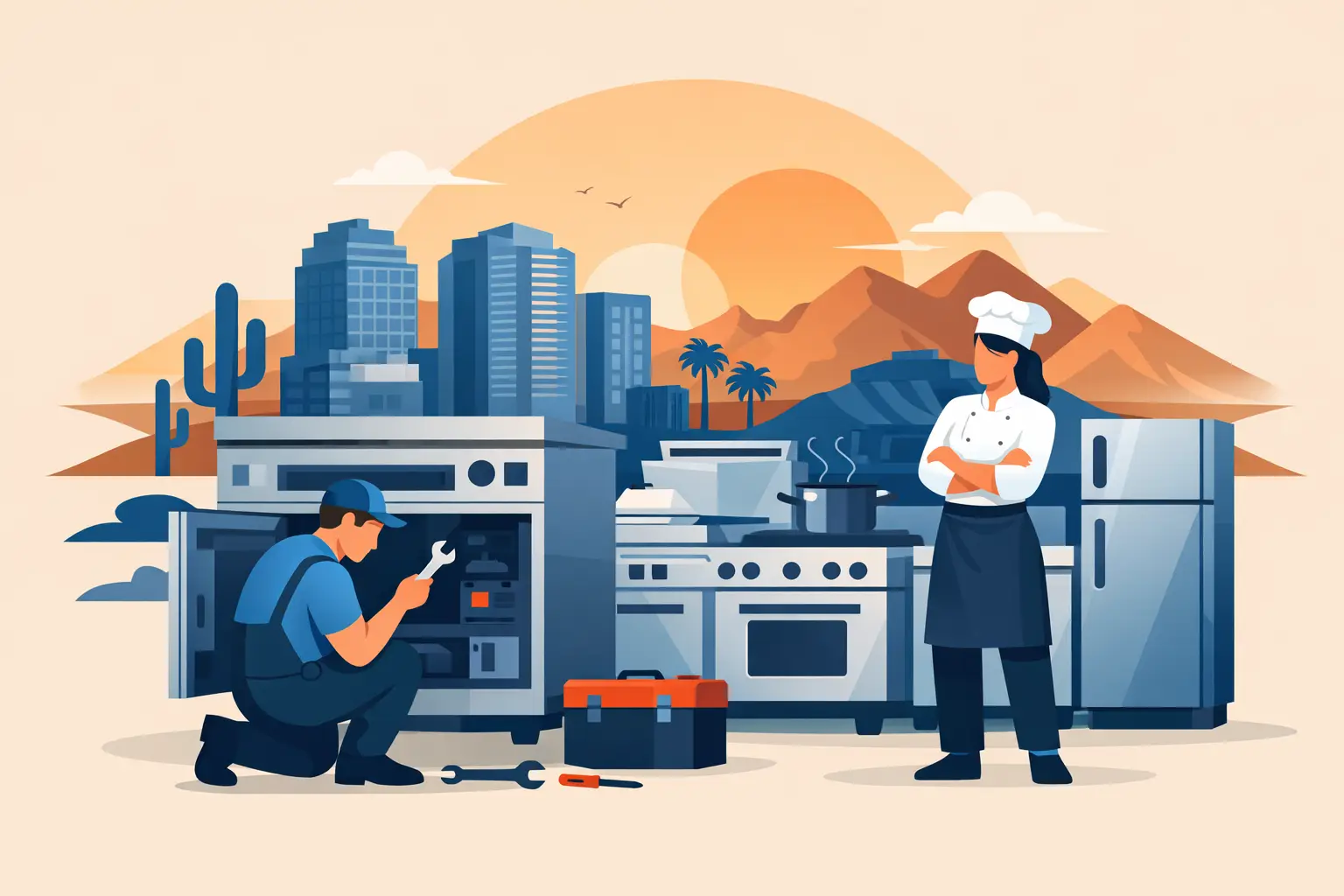
A failed reach-in cooler at 4 p.m. is not a minor inconvenience. It can put prep inventory at risk, slow the line before dinner service, and leave your team making decisions under pressure. Commercial restaurant appliance repair Phoenix businesses can rely on starts with accurate diagnosis, clear communication, and a technician who understands that downtime has a real cost.
Restaurants, bars, and foodservice kitchens depend on equipment that works hard for long hours in a demanding environment. Refrigeration runs continuously. Ovens and ranges handle repeated heat cycles. Ice machines, dishwashers, and ventilation equipment all have to keep pace with service. When one critical unit stops performing, a prompt repair can protect food, staff productivity, and the customer experience.
Commercial Restaurant Appliance Repair in Phoenix Starts With the Right Diagnosis
Commercial equipment problems are often easy to spot but not always easy to identify. A cooler may feel warm because of a dirty condenser coil, a failing fan motor, a control issue, a refrigerant-related problem, or a door that no longer seals properly. Replacing the wrong part wastes time and money while the underlying issue remains.
A qualified technician should inspect the equipment, listen to what changed, and test the components that control operation. That process matters especially with refrigeration and cooking equipment, where a symptom can have several possible causes. The goal is not simply to get the machine running for an hour. It is to find the failure that caused the interruption and make a repair that supports dependable operation.
For restaurant operators, a useful service visit also includes a straightforward explanation of what was found, what repair is recommended, and whether the equipment’s age and condition make repair a sensible investment. Not every unit should be repaired at any cost. But many failures – including worn gaskets, failed igniters, faulty thermostats, damaged belts, clogged drains, and failed motors – can be addressed before they turn into a larger interruption.
The Equipment Failures That Can Disrupt Service Fast
Refrigerators, Freezers, and Walk-In Support Equipment
Commercial refrigeration is often the most urgent call because product temperatures can change quickly. Warning signs include a cabinet that cannot hold temperature, excess frost, water on the floor, unusual clicking or buzzing, ice buildup around the evaporator, or a compressor that runs constantly.
Some issues develop gradually. A door gasket may be torn, letting warm kitchen air enter the cabinet and forcing the system to work harder. A blocked defrost drain can create water leaks and ice accumulation. Dirty coils can limit heat transfer and cause poor cooling performance. Other problems, such as a failed fan motor or control component, can appear suddenly.
Keep a close eye on temperature logs and do not rely on a quick touch test of the cabinet interior. If temperatures are moving outside your safe operating range, move product according to your food safety procedures and arrange service promptly. Waiting overnight can turn a repairable problem into an inventory loss.
Ice Makers and Bar Refrigeration
A bar can feel the impact of an ice maker failure immediately, particularly during a busy weekend shift. Low production, small or misshapen cubes, water leaks, unusual noise, or a machine that stops cycling are all reasons to have the unit checked. The cause may involve water flow, drainage, a sensor, a pump, a valve, or a refrigeration component.
Under-counter refrigerators, back-bar coolers, and wine storage units also need attention when they begin running warm or cycling excessively. These units are often installed in tight spaces where dust buildup and restricted airflow create extra strain. A technician can identify whether the problem is maintenance-related, mechanical, or electrical instead of guessing at a quick fix during service.
Ovens, Ranges, Cooktops, and Gas Equipment
Cooking equipment failures can create both operational and safety concerns. An oven that heats unevenly can affect consistency and ticket times. A range burner that will not ignite may bring a station to a stop. A gas odor, delayed ignition, popping flame, or burner that will not stay lit should be treated seriously and checked by a qualified professional.
Common causes include worn igniters, failed heating elements, faulty temperature sensors, damaged switches, control problems, or burner components that need attention. The right repair depends on the appliance type and fuel source. Gas and electrical equipment should never be treated as interchangeable, and shortcuts can create a bigger problem than the original failure.
Dishwashers and Ventilation Equipment
A commercial dishwasher that will not fill, drain, heat, or complete a cycle creates a fast bottleneck in any kitchen. Leaks, standing water, poor cleaning results, and error codes may point to drainage restrictions, pumps, valves, heating components, or controls. Because dishwashing affects sanitation and table turnover, prompt diagnosis is worth the call.
Ventilation equipment matters just as much, even though it is often overlooked until performance drops. Excess smoke, heat, odors, rattling sounds, or poor airflow can make a kitchen uncomfortable and may affect safe operation. Fan motors, switches, belts, and related components need inspection when the system no longer performs as it should.
When to Call for Commercial Restaurant Appliance Repair Phoenix Service
A restaurant does not need to wait for complete equipment failure before scheduling repair. Calling early is often the more affordable choice, particularly when a unit is still operating but showing clear warning signs. Repeated temperature swings, recurring breaker trips, new leaks, excessive frost, longer cook times, and unusual sounds are all signs that something needs professional attention.
It depends on the equipment and the symptom, but a unit that is still partially functional can give a technician more useful information about an intermittent failure. It may also allow repair to be scheduled before a major service period rather than during one. Of course, refrigeration that cannot hold temperature, a suspected gas issue, or an electrical smell calls for immediate action.
Before the technician arrives, it helps to have the make, model number, and a description of the issue ready. Note when the problem began, whether it is constant or intermittent, and whether anyone has seen error codes or noticed changes in temperature, noise, or performance. This information can shorten diagnosis and help your team get back to normal sooner.
Repair or Replace? Make the Decision With the Full Picture
Replacement is sometimes the right choice, especially when equipment has repeated major failures, lacks support, or requires repairs that no longer make financial sense. However, replacement also brings equipment costs, installation coordination, potential ventilation or utility considerations, and time away from normal operation.
A repair is often the practical answer when the appliance is otherwise in good condition and the failure is isolated. Premium and specialty equipment, including brands such as True, Viking, Sub-Zero, Thermador, Bosch, and Electrolux, can require brand-specific knowledge to diagnose correctly. The decision should be based on the actual condition of the unit, the repair needed, and how the equipment fits your operation – not simply its age.
Protect Equipment Between Service Calls
Daily kitchen demands make preventive care easy to postpone, but a few habits can reduce avoidable breakdowns. Keep refrigeration doors closed as much as possible, inspect gaskets for damage, and make sure airflow around equipment is not blocked. Clean up water leaks quickly so they do not become slip hazards or damage nearby components.
Kitchen staff should also report small changes instead of working around them. A cooler that sounds different, an oven that takes longer to preheat, or a dishwasher that leaves water behind may still complete the shift, but those symptoms rarely improve on their own. Early attention can prevent an emergency call during your busiest hours.
Hillside Appliance Services brings 22 years of Valley-area experience to commercial foodservice equipment as well as residential appliances. For restaurant operators, the focus is simple: diagnose the issue correctly, make the needed repair, and help restore the equipment your staff depends on.
When an appliance starts showing signs of trouble, schedule service before the next rush turns a manageable repair into a full kitchen disruption.