
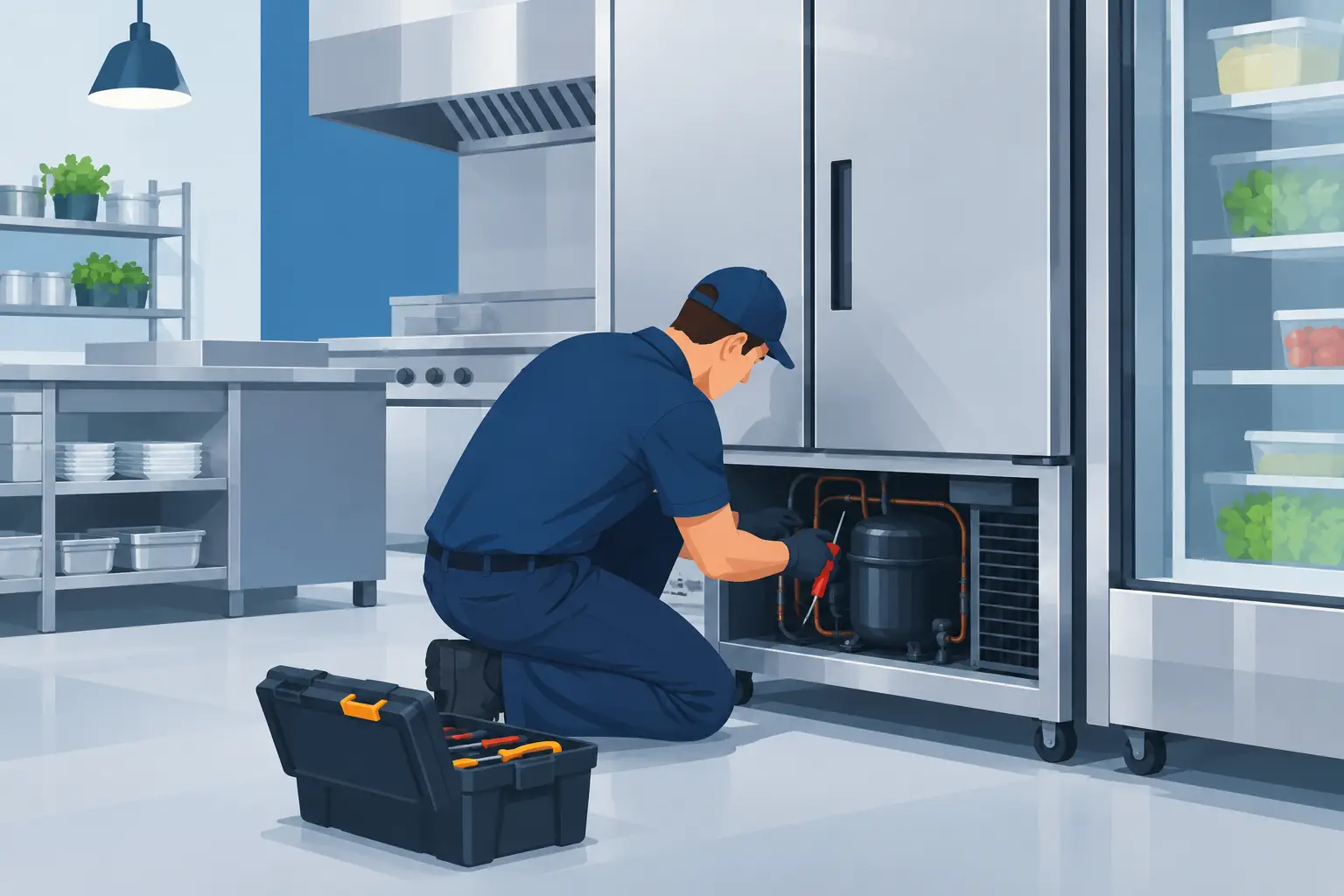
When commercial refrigeration stops holding temperature, a small problem can turn into lost inventory, disrupted service, and an expensive day for a restaurant, bar, or managed property. A reach-in cooler that feels only slightly warm, an ice machine producing less ice, or a freezer running constantly may be signaling a failure that needs prompt attention.
Commercial refrigeration equipment works hard in the Phoenix area. High ambient temperatures, frequent door openings, heavy loading, and long operating hours place real demands on compressors, fans, door seals, and controls. Knowing what to watch for can help you protect your product and avoid an emergency shutdown during a busy shift.
When Commercial Refrigeration Needs Service
The most obvious warning sign is a temperature problem. Coolers should maintain the temperature required for the food and beverages they hold, while freezers need to remain consistently cold enough to protect frozen inventory. If the display temperature climbs, varies widely, or does not match a separate thermometer inside the cabinet, do not assume the issue will correct itself.
Some failures are less obvious at first. You may notice condensation around the door frame, excessive frost on interior panels, water on the floor, unusual clicking, a louder-than-normal fan, or a compressor that seems to run without stopping. Ice buildup can restrict airflow. A worn door gasket can allow warm air into the cabinet. A clogged drain can create a leak that becomes both a cleanup issue and a slip hazard.
Product quality is another clue. Soft ice cream, sweating bottled drinks, melted frost on frozen packaging, or food that does not feel properly chilled should be taken seriously. Turning the thermostat colder may not solve the underlying cause. In some cases, it makes the system work harder while the actual problem – such as poor airflow, a failing fan motor, or a sealed-system issue – continues to worsen.
Common Causes Behind Cooling Problems
Commercial units are built for demanding use, but they still depend on several components working together. Dirty condenser coils are a common cause of poor performance, especially where equipment sits near cooking areas or accumulates dust and grease. When coils cannot release heat efficiently, the compressor may overwork and cabinet temperatures can rise.
Airflow problems are also frequent. Blocked vents, overpacked shelves, failed evaporator fans, or frost-covered evaporator coils can prevent cold air from circulating where it is needed. The cabinet may feel cold near one area and warm in another, leaving some products at risk.
Door gaskets, hinges, and self-closing mechanisms matter more than many operators realize. If a door does not close squarely, warm humid air enters the cabinet each time the unit cycles. That can lead to frost, excess moisture, longer run times, and unnecessary strain on the refrigeration system.
Electrical and control failures can create their own set of symptoms. A faulty temperature sensor, defrost timer, control board, relay, or capacitor may cause inconsistent cooling, repeated cycling, or a unit that will not start. These issues require a proper diagnosis because similar symptoms can have very different causes.
Why Fast Refrigeration Repair Protects Your Business
For a foodservice operation, refrigeration is not a convenience. It supports food safety, inventory control, prep schedules, beverage sales, and customer service. Waiting until a cooler completely fails can mean moving product at the last minute, closing part of the kitchen, or disposing of inventory that can no longer be safely served.
The right response depends on the situation. If a unit is clearly warming, transfer temperature-sensitive products to reliable refrigeration when possible and monitor temperatures with an independent thermometer. Keep doors closed as much as possible. Avoid repeatedly loading the unit with warm items or opening it to check on it every few minutes, since each opening adds more warm air.
A leaking unit should not be ignored, either. Water may come from a blocked defrost drain, a drain pan issue, excessive condensation, or another cooling problem. Cleaning up the water is necessary, but it does not repair the cause. The same is true of excessive ice: removing visible frost may help temporarily, but recurring frost usually points to an airflow, defrost, or door-sealing concern.
For bars and restaurants, a fast professional diagnosis can make the difference between a targeted repair and a larger system failure. Hillside Appliance Services works with commercial foodservice environments and understands that a refrigeration problem affects more than the equipment itself. It affects the pace of the entire operation.
Commercial Refrigeration Maintenance That Pays Off
Routine care cannot prevent every breakdown, but it can reduce avoidable strain. Staff should keep air vents clear and avoid packing products so tightly that air cannot move through the cabinet. Doors should be closed firmly, and damaged gaskets should be addressed before they become a constant source of heat gain.
Condenser cleaning is especially important in a busy commercial setting. The proper schedule depends on the equipment location and the amount of dust, grease, and traffic around it. A unit located near a cooking line may need more frequent attention than one in a clean, low-traffic storage area. Cleaning should be performed carefully because bent coil fins, damaged wiring, or incorrect reassembly can create new problems.
Temperature logs are practical, not excessive. They help identify a pattern before a failure becomes obvious. If the same cooler begins drifting warmer at certain times of day, after deliveries, or during peak service, that information can help a technician narrow down the cause more quickly.
Pay attention to changes in sound and run time as well. A compressor that suddenly runs continuously, a fan that rattles, or a unit that cycles on and off more often than usual deserves attention. Equipment often provides warnings before it stops cooling altogether.
Repairs That Should Be Left to a Technician
Basic operating checks are reasonable: confirm that the unit has power, verify that the door is closing, make sure vents are not blocked, and check the displayed temperature against a thermometer. Beyond that, commercial refrigeration repairs should be handled by a qualified technician.
Refrigerant systems, high-voltage electrical components, compressors, and control circuits require the right training and equipment. Trying to bypass a control, replace an electrical part without testing, or force a frozen component can cause greater damage and may create a safety issue. A correct diagnosis identifies whether the problem is a simple airflow restriction, a defrost failure, an electrical fault, or a more involved sealed-system repair.
This matters with premium equipment as well as standard commercial units. Brands such as True and Sub-Zero use model-specific components and controls that need to be assessed carefully. Replacing a part based only on a symptom can waste time and money if the actual cause has not been confirmed.
Choosing the Right Time to Schedule Service
Schedule service promptly when temperatures are unstable, frost keeps returning, water appears around the unit, or the equipment is running louder or longer than normal. If the unit cannot hold a safe temperature, treat it as urgent. The cost of early repair is often far lower than the cost of product loss, business interruption, or a failed compressor.
When calling for service, have the model number available if possible, along with the temperature reading, the type of unit, and a description of what changed. Mention whether the issue began suddenly or gradually and whether there has been a power interruption, recent cleaning, or unusual loading. Those details help speed up the diagnosis.
A dependable commercial refrigeration system lets your team focus on customers rather than cabinet temperatures. Acting on the first signs of trouble gives you the best chance of keeping food protected, service moving, and your equipment working when it is needed most.