
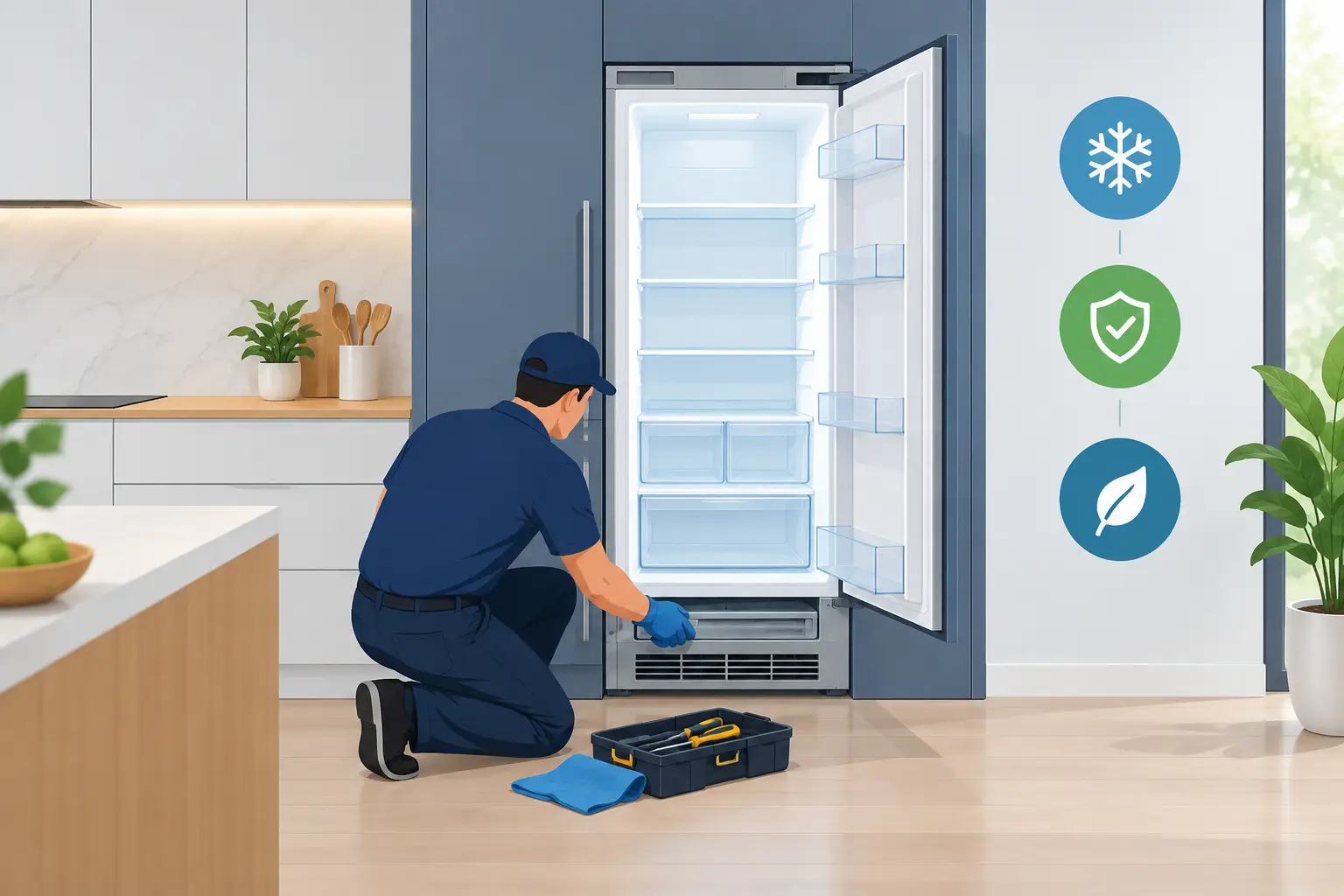
A built-in refrigerator is designed to disappear into the kitchen, but that does not mean its maintenance needs should disappear too. Built-in refrigerator maintenance protects the food, cabinetry, and investment behind a premium appliance. When a unit is enclosed by custom panels and cabinetry, restricted airflow, a small water leak, or declining cooling performance can become an expensive problem faster than it would with a standard freestanding refrigerator.
For Phoenix-area homeowners, dust and long periods of high heat add another reason to stay ahead of refrigerator care. Whether you own a Sub-Zero, Thermador, Bosch, Viking, KitchenAid, Monogram, Café, Gaggenau, or another built-in model, a few routine checks can help reduce avoidable service calls. Just as important, knowing when to stop and call a qualified technician can prevent damage to a complex sealed cooling system or a finished kitchen.
Why Built-In Refrigerator Maintenance Is Different
Built-in refrigerators are not simply standard refrigerators with a decorative front. They are engineered to fit tightly within a cabinet opening, often with separate refrigerator and freezer columns, concealed hinges, custom panels, electronic controls, and dedicated ventilation paths. Their installation is part of their performance.
A freestanding refrigerator can sometimes tolerate a little dust behind it or extra space around its sides. A built-in unit generally cannot. It relies on air moving through a specific grille, toe-kick, or top vent. If that airflow is blocked, the compressor and condenser may run longer, temperatures can become inconsistent, and energy use can rise.
The trade-off is clear: the clean, integrated look homeowners want also makes the appliance less forgiving when maintenance is delayed. Accessing components may require removing a grille, panel, or trim piece. That is why routine homeowner care should stay focused on accessible areas, while electrical, refrigeration, and internal water-system repairs should be left to a technician familiar with the brand.
A Practical Built-In Refrigerator Maintenance Routine
Most maintenance does not require special tools or a complicated schedule. The goal is to keep airflow clear, maintain a clean interior, and catch early warning signs before the refrigerator stops protecting food.
Keep vents and grilles clear
Start with the ventilation area specified for your model. It may be at the top of the refrigerator, behind a toe-kick, or in a lower front grille. Do not store cookbooks, trays, decorative items, or cleaning supplies where they can cover vents. Even a partial blockage can force the appliance to work harder.
In a dusty home, inspect the grille monthly and gently vacuum visible dust with a brush attachment. Never force a vacuum tool into the appliance or remove panels that are not intended for customer access. Some luxury built-ins have condenser assemblies that are easy to reach after removing a grille; others require service access and model-specific procedures.
Clean the door gaskets
The soft gasket around each refrigerator and freezer door creates the seal that keeps cold air inside. Food residue, grease, pet hair, and dust can prevent that seal from closing properly. The result may be moisture around the door, frost in the freezer, longer run times, or warm spots inside the compartment.
Wipe gaskets with a soft cloth, warm water, and mild dish soap, then dry them thoroughly. Avoid abrasive pads, harsh degreasers, bleach, or petroleum-based cleaners that can damage the rubber. Look for cracks, tears, sections pulling away from the door, or a door that needs to be pushed firmly to latch. Those issues deserve professional attention, particularly on a heavy custom-panel door where alignment matters.
Protect the interior from spills and blocked airflow
Food storage affects refrigerator performance more than many people realize. Do not pack containers tightly against interior vents or place warm leftovers directly next to a temperature sensor. Allow air to circulate around shelves and bins, especially in models with separate cooling zones.
Clean spills promptly, including beneath drawers. A sticky spill can interfere with drawer movement, create odors, and make it harder to notice water collecting where it should not. Use a mild cleaner approved for appliance interiors, and avoid saturating electronic controls or light assemblies.
Replace the water filter on schedule
If your built-in refrigerator has a dispenser or ice maker, follow the manufacturer’s filter replacement interval. For many models, that is about every six months, though household water usage and local water conditions can affect the schedule. A neglected filter can reduce water flow, slow ice production, affect taste, or contribute to dispenser problems.
Use the correct filter for the model. A filter that appears to fit but is not designed for the refrigerator may leak, fail to seat correctly, or restrict water flow. After replacement, flush the amount of water recommended in the owner’s manual and check the filter housing for drips over the next day.
Check the ice maker and drain area for early clues
A few irregular ice cubes, water under a produce drawer, or frost near the freezer door may be the first indication of a larger issue. Ice makers can be affected by low water pressure, a clogged filter, a failing inlet valve, a frozen fill tube, or a control issue. Water inside the fresh-food section may point to a blocked defrost drain, a drain-pan issue, or a water-line connection concern.
Do not chip ice with sharp tools or pour boiling water into an ice maker or drain area. Those shortcuts can damage plastic parts, liners, and concealed components. If frost or standing water returns after basic cleaning, schedule service rather than repeatedly treating the symptom.
What Homeowners Should Not Try to Repair
Built-in refrigerators are expensive appliances surrounded by expensive finishes. A well-intended repair can create more downtime if it damages a panel, hinge system, water line, or electronic board. It is best to call for help when the work involves components beyond normal cleaning and filter changes.
Professional diagnosis is especially appropriate when you notice any of the following:
- The refrigerator is warm, the freezer is thawing, or temperatures fluctuate despite correct settings.
- The unit runs nearly constantly, makes new clicking or grinding sounds, or repeatedly trips a breaker.
- Water is leaking from the refrigerator, collecting inside compartments, or reaching the floor or cabinetry.
- An ice maker has stopped producing ice, overfills, leaks, or makes unusually small or hollow cubes.
- Frost returns quickly, doors do not align or close correctly, or an error code remains on the display.
These symptoms can have several causes. A warm refrigerator may be related to airflow, but it can also involve a failed fan, defrost problem, sensor, control board, compressor, or sealed-system concern. Replacing parts based on a guess is rarely the affordable route.
The Warning Signs That Matter Most
Temperature is the most useful measure of refrigerator health. A fresh-food compartment should generally hold near 37 to 40 degrees Fahrenheit, while a freezer should stay near 0 degrees Fahrenheit. Built-in control displays are helpful, but an independent refrigerator thermometer gives you another way to confirm actual conditions.
Pay attention to changes, not just outright failure. Milk spoiling sooner than expected, soft ice cream, condensation on packages, an increasingly loud fan, or a refrigerator that seems to run all day are worth investigating. So are moisture stains near the toe-kick or cabinet edges. Catching a minor leak early can protect flooring and custom cabinetry.
Power interruptions deserve attention as well. After an outage, give the refrigerator time to stabilize and verify that it returns to normal temperature. If a display continues to show an alarm or the unit does not cool properly after power is restored, service may be needed.
Maintenance Helps, but Age and Use Still Matter
Good care extends the useful life of a built-in refrigerator, but it cannot eliminate normal wear. Door gaskets, fans, ice-maker components, water valves, controls, and compressors all have service lives. A heavily used family kitchen, frequent door openings, a busy entertaining schedule, or a rental property with changing occupants can put more demand on the appliance.
That does not automatically mean replacement is the answer. Many built-in refrigerator problems are repairable when diagnosed correctly, and repair can make particular sense because the appliance is integrated with cabinetry and often costly to replace. The right decision depends on the model, age, condition, repair needed, and availability of parts.
If your built-in refrigerator is showing warning signs, a qualified local technician can identify the actual cause and help you make a practical repair decision. Hillside Appliance Services provides experienced service for premium built-in refrigeration throughout Greater Phoenix, with the goal of getting your kitchen back to normal without unnecessary disruption.