
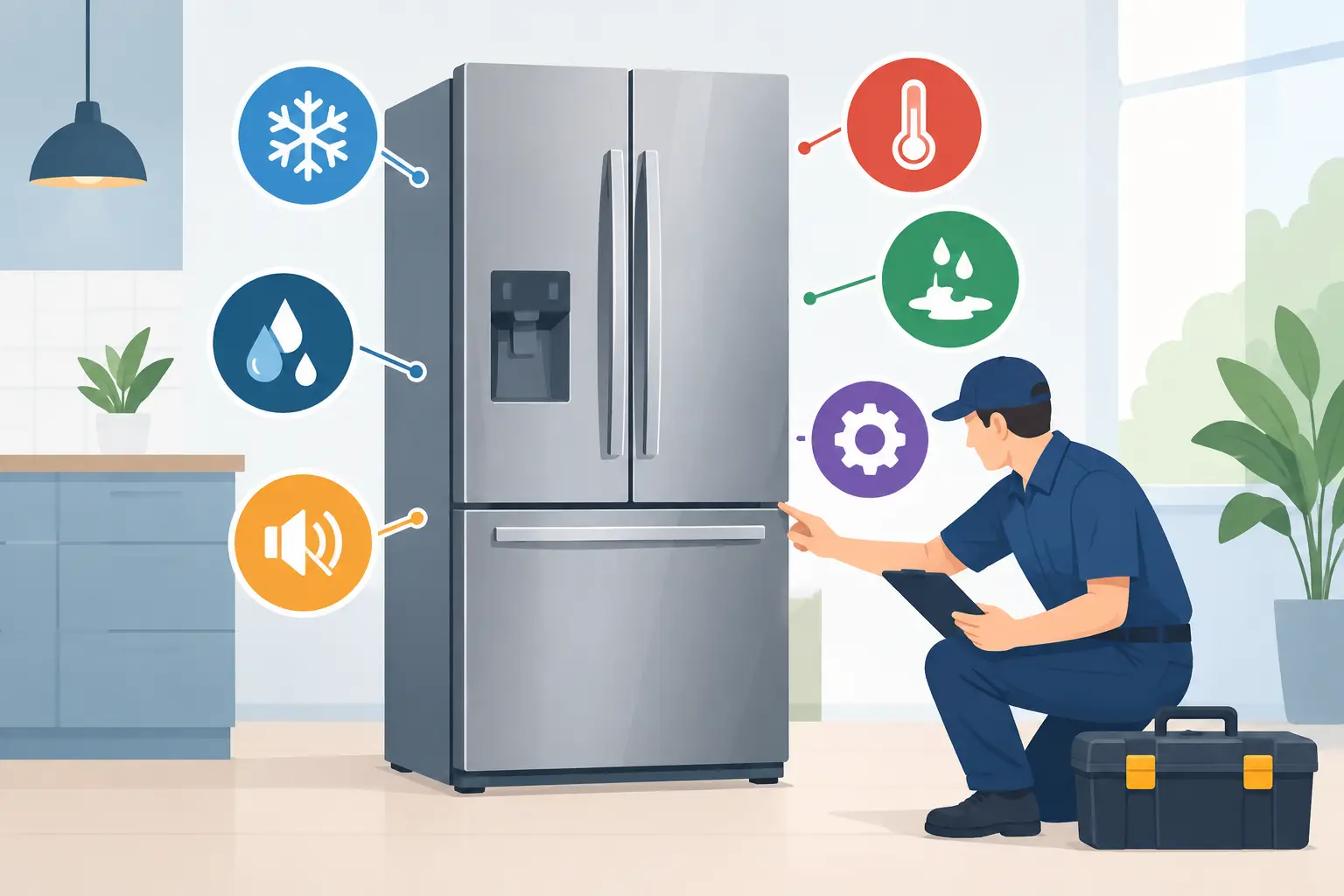
A refrigerator usually gives you a warning before it quits completely. The carton of milk that is not quite cold, puddles near the base, or a compressor that suddenly sounds much louder than usual can all point to a developing problem. Knowing the best signs your refrigerator needs repair can help you protect your groceries, avoid a larger breakdown, and get your kitchen routine back on track sooner.
For Phoenix-area households, timing matters. High outdoor temperatures can put extra strain on refrigerators, especially units in garages, laundry rooms, or kitchens that run warm. A small cooling issue that might be easy to overlook can turn into spoiled food quickly.
Best Signs Your Refrigerator Needs Repair
1. Food is warm or temperatures are inconsistent
This is the symptom to take most seriously. Your refrigerator compartment should generally hold food at 40°F or below, while the freezer should stay at 0°F. If drinks feel lukewarm, leftovers spoil faster than expected, or some shelves are cold while others are not, the unit is not maintaining temperature correctly.
The cause could be something relatively straightforward, such as dirty condenser coils, a failed evaporator fan, worn door gaskets, or blocked air vents. It could also involve a faulty thermostat, sensor, control board, compressor, or sealed-system issue. The exact repair depends on the model and what the diagnosis shows.
Do not assume turning the temperature control colder will solve the problem. If the refrigerator is already struggling, forcing it to run longer can add stress without restoring safe temperatures. Move perishable food to another working refrigerator or a cooler with ice while the issue is addressed.
2. The refrigerator runs constantly
A refrigerator normally cycles on and off throughout the day. It may run longer after groceries are loaded, the doors have been opened frequently, or the room is hot. But if it seems to run almost nonstop, even overnight, that is a sign the appliance is working too hard.
Start with the simple checks. Make sure the doors close fully, food packages are not holding a door open, and the temperature settings have not been turned too cold. Dust-covered condenser coils can also prevent heat from escaping efficiently. On many models, especially built-in units, coil access and cleaning should be handled carefully to avoid damaging components or restricting airflow.
If those basics do not resolve the issue, a technician should inspect the fan motors, defrost system, sensors, and compressor performance. Constant running raises energy use and can shorten the life of expensive refrigeration components.
3. Frost is building up in the freezer
A light layer of frost can happen when a freezer door has been left open. Thick frost on the rear wall, around food packages, or inside the ice maker is different. It often indicates that moisture is entering the compartment or that the automatic defrost system is not doing its job.
Common causes include a torn freezer gasket, a defrost heater failure, a bad defrost sensor, or a control issue. As frost builds, it can cover the evaporator coils and block the airflow that cools both the freezer and refrigerator sections. You may notice frozen food in the freezer but warm food in the fresh-food compartment.
Defrosting the appliance may temporarily restore cooling, but it does not correct the failed part behind the frost buildup. If the frost returns, repair is the better next step.
4. Water is pooling under or inside the unit
Water on the kitchen floor deserves prompt attention. It can damage flooring, create a slip hazard, and signal a refrigerator issue that will get worse if ignored. Sometimes the source is a loose water line or a leaking connection at the back of the appliance. In other cases, a clogged or frozen defrost drain sends melting water into the bottom of the refrigerator or onto the floor.
Water around the ice maker or dispenser can also come from a cracked fill tube, faulty inlet valve, damaged filter housing, or an ice maker that is overflowing. Because several different systems can cause a leak, simply wiping up the water is not enough. Unplug the unit if water is near electrical connections, protect the area around it, and arrange for a proper diagnosis.
5. The refrigerator is making unusual noises
Most refrigerators make a low hum, occasional clicks, fan noise, and the sound of ice dropping into a bin. What is not normal is a loud grinding, persistent rattling, squealing, buzzing, or repeated clicking that is paired with poor cooling.
A rattle may be as simple as a unit that is not level or an item vibrating against the back wall. Grinding or squealing often points to a fan motor. Repeated clicking can occur when a compressor start device is failing, although it can also indicate a more serious compressor-related concern.
The sound alone does not always tell the full story, especially on premium built-in refrigerators from Sub-Zero, Thermador, Bosch, Monogram, Viking, or Gaggenau. These systems have model-specific fans, controls, and airflow designs. An accurate diagnosis helps prevent replacing the wrong part.
6. Ice maker problems keep coming back
An ice maker that stops producing ice, makes tiny cubes, freezes into one solid block, or leaks should not be dismissed as a minor annoyance. Ice maker trouble can stem from low water flow, a clogged filter, a faulty inlet valve, a damaged water line, a frozen fill tube, or a failed ice maker assembly.
If the refrigerator is also warm or the freezer temperature is unstable, the ice maker may only be showing the first visible sign of a larger cooling problem. Ice production depends on the freezer reaching and holding the right temperature. Replacing the ice maker without checking the freezer performance can waste time and money.
7. The door does not seal securely
A refrigerator door gasket should make consistent contact all the way around the frame. If the gasket is cracked, loose, dirty, or flattened, cold air can escape and warm, humid air can enter. That leads to excess moisture, frost, constant running, and uneven cooling.
You may notice condensation around the door frame or feel that the door pops open instead of closing firmly. A refrigerator that is not level can also prevent a door from sealing or closing properly. On a French-door or built-in model, door alignment may require more than a quick adjustment because the panels, hinges, and cabinet fit must remain properly balanced.
8. You smell burning, see damage, or notice frequent breaker trips
Electrical symptoms call for caution. A burning odor, scorch marks near a cord or outlet, sparking, or a refrigerator that repeatedly trips the breaker should be treated as urgent. Turn off power to the appliance if it is safe to do so, and do not keep resetting the breaker to make it run.
The problem may involve wiring, a relay, a compressor component, or another electrical failure. These are not do-it-yourself repairs. A trained technician can evaluate the appliance safely and determine whether repair is practical.
When a Refrigerator Repair Makes Sense
Repair is often the right choice when the refrigerator is otherwise in good condition and the problem is isolated to a replaceable part, such as a fan motor, gasket, drain issue, sensor, inlet valve, or defrost component. This is particularly true for quality built-in and luxury models, where replacing the appliance can involve cabinetry work, panel fitting, and significant expense.
There are trade-offs. If an older standard refrigerator has a major compressor or sealed-system failure, repair costs may need to be weighed against the unit’s age, condition, and efficiency. A professional diagnosis gives you the information to make that decision based on the actual fault, not guesswork.
Hillside Appliance Services helps homeowners, property managers, and local foodservice operations identify refrigerator problems clearly and restore dependable cooling as quickly as possible. If your refrigerator is showing one of these warning signs, scheduling service before it stops cooling completely can save groceries, reduce disruption, and protect the appliance you rely on every day.