
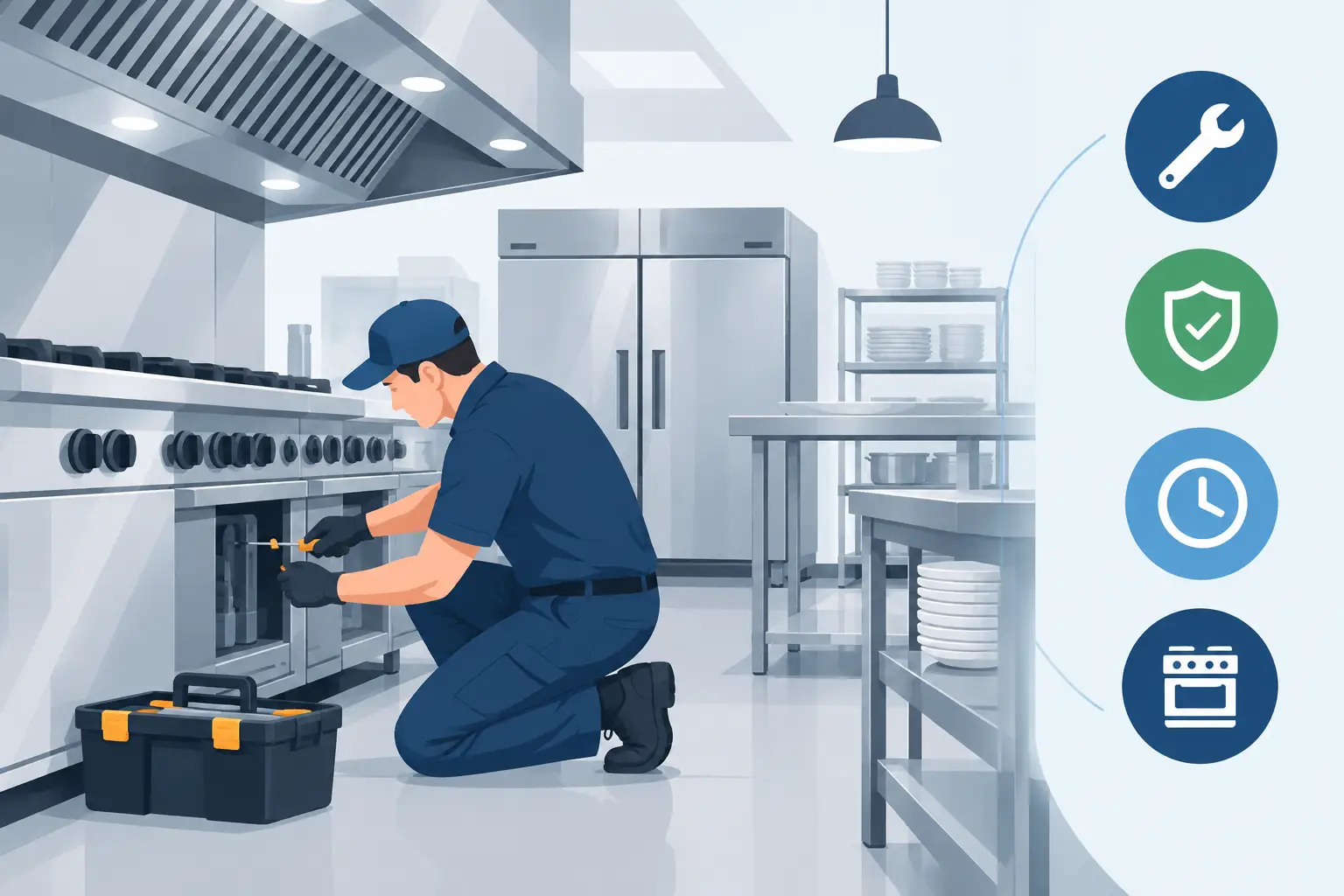
A walk-in cooler that starts running warm during dinner service, a range burner that will not ignite, or a dishwasher that leaves standing water can stop a kitchen faster than a busy shift ever could. Commercial kitchen maintenance is the practical work of catching those problems early, before they turn into food loss, safety concerns, missed sales, and an emergency repair call.
For restaurants, bars, and other foodservice operations, maintenance is not about making equipment look good. It is about protecting the equipment your staff relies on every hour: refrigeration, ice production, cooking equipment, dishwashing, and ventilation. A consistent plan also gives technicians better information when service is needed, which can shorten diagnosis and help prevent repeat breakdowns.
Start With the Equipment That Can Stop Service
Every kitchen has a few pieces of equipment that create an immediate operational problem when they fail. Refrigerators, freezers, walk-ins, ice machines, gas ranges, ovens, fryers, dishwashers, and hood ventilation deserve the closest attention because their failure can affect food safety, cooking capacity, sanitation, or fire safety.
Make a simple equipment list that includes the model, serial number, installation date, service history, and the person responsible for daily checks. This is especially helpful when a property manager, kitchen manager, and maintenance team all share responsibility. It also saves time when a technician arrives and needs to identify the correct unit or locate previous repair information.
Prioritize based on consequence, not just age. An older prep refrigerator that is holding temperature and has been properly serviced may be less urgent than a newer ice machine with intermittent production during peak season. Equipment condition, usage volume, water quality, ventilation, and repair history all matter.
Commercial Kitchen Maintenance for Refrigeration
Refrigeration maintenance is where prevention pays off most quickly. A cooler may still feel cold even when it is struggling to maintain a safe temperature. By the time staff notices warm product, the compressor may have been running excessively for days and inventory may already be at risk.
Record temperatures at the beginning of each shift and whenever a unit seems unusual. Look for changes rather than waiting for a dramatic failure. Longer run times, frost buildup, water on the floor, a loose door gasket, unusual fan noise, or temperatures that fluctuate are all reasons to schedule service before the unit stops cooling.
Keep condenser coils clean and the surrounding area clear. Grease, dust, cardboard, and poor airflow force refrigeration systems to work harder, raising energy use and putting extra strain on compressors and fans. In Greater Phoenix, where high ambient temperatures can make equipment work harder for much of the year, clear airflow around self-contained refrigeration equipment is particularly important.
Door gaskets need regular attention as well. A torn or flattened gasket lets warm air into the cabinet, leading to excessive frost, temperature problems, and higher utility costs. Clean gaskets with a mild cleaner, check that doors close fully, and avoid propping them open during prep or stocking.
Ice machines deserve the same attention. Watch for reduced output, thin or misshapen ice, cloudy ice, leaks, or an unusual taste or odor. The right cleaning interval depends on water conditions and equipment use, but delayed cleaning can affect both performance and sanitation. Manufacturer-approved cleaning procedures matter here, since improper chemicals or methods can damage components.
Protect Cooking Equipment From Grease and Wear
Cooking equipment often gives warnings before it fails. A gas burner that clicks without lighting, an oven that heats unevenly, a range with a weak flame, or a fryer that takes too long to recover is telling you something needs attention.
Train staff to report symptoms promptly instead of working around them. Using only the burners that still light, repeatedly resetting an oven, or ignoring a gas odor can create a larger repair and a bigger interruption later. Any suspected gas leak, persistent gas smell, sparking issue, or electrical burning odor should be treated as an immediate safety concern. Turn off the equipment if it is safe to do so, keep staff away from the area, and contact the appropriate emergency or service professional.
Daily cleaning is not cosmetic. Grease buildup can interfere with ignition, clog burner ports, create uneven flames, and increase fire risk. Let equipment cool before cleaning, follow the manufacturer instructions, and avoid soaking electrical components or forcing debris into gas openings. Staff should handle routine cleaning, while internal gas, electrical, ignition, thermostat, and control repairs belong with qualified technicians.
For ovens and ranges, pay attention to door hinges and seals. Heat escaping through a damaged gasket or misaligned door can cause slow cooking, uneven results, and longer cycle times. That may look like a recipe or staffing problem when the actual cause is worn equipment.
Do Not Let Dishwashing Problems Become Sanitation Problems
Commercial dishwashers need clear drainage, correct water supply, properly functioning pumps, and consistent heating to do their job. If dishes are coming out dirty, cloudy, greasy, or wet, do not assume the detergent is the only issue. A blocked filter, clogged spray arm, worn wash pump, drainage restriction, or heating problem may be involved.
Have staff remove food debris from filters and inspect spray arms as part of closing procedures. Keep an eye on water pooling at the bottom of the machine, slow draining, leaks, and cycle times that suddenly change. These are common early signs that a drain line, pump, float, or other component needs professional attention.
Avoid running the machine when it is clearly not draining or heating correctly. Continuing to operate it can increase water damage, strain the pump, and leave the kitchen without dependable sanitation when volume is highest.
Ventilation Needs More Than a Quick Wipe Down
Kitchen ventilation is easy to overlook because the hood may still appear to be working. But reduced airflow, excess smoke, lingering odors, heat buildup, or dripping grease can point to a problem with filters, fans, ductwork, or the overall hood system.
Clean accessible grease filters on the schedule appropriate for your cooking volume, and make sure they are fully dry and correctly installed before use. Keep the area around hood controls and exhaust equipment free of clutter. Professional hood and duct cleaning should follow local requirements and the needs of the operation, especially in high-grease cooking environments.
If exhaust fans become noisy, airflow drops, or smoke does not clear as it should, do not wait for the next routine cleaning. Ventilation affects employee comfort, cooking conditions, equipment temperatures, and fire safety.
Build a Schedule Staff Can Actually Follow
The best maintenance plan is one that fits the pace of the kitchen. An overcomplicated checklist gets skipped during a busy week. Give staff clear daily and weekly tasks, then reserve deeper inspections and technical service for scheduled maintenance visits.
Daily responsibilities typically include temperature checks, cleaning spills, checking for leaks, clearing debris from accessible filters, and reporting unusual noises or performance changes. Weekly tasks may include inspecting door gaskets, checking for frost, cleaning accessible condenser areas where appropriate, and looking over drain areas. Monthly or quarterly service should be based on the equipment type, manufacturer recommendations, usage level, and repair history.
Keep a log with the date, observation, action taken, and person who reported it. A note such as “prep cooler cycling constantly after 3 p.m.” is far more useful than “cooler acting up.” It helps identify patterns tied to hot weather, delivery schedules, loading practices, or recurring component failures.
Know When to Call for Service
Some maintenance prevents problems. Other situations require a technician now. Call for professional help when refrigeration will not hold temperature, an ice machine stops producing, a dishwasher leaks or will not drain, an oven will not heat correctly, a burner will not ignite, or equipment trips electrical protection repeatedly.
It is also time to call when the same issue keeps returning. Replacing a worn gasket is one thing; repeated frost, recurring water leaks, or a refrigerator that runs constantly may point to an underlying airflow, defrost, drain, fan, or sealed-system issue. Continued temporary fixes can cost more than a proper diagnosis.
Hillside Appliance Services helps commercial foodservice operators throughout the Phoenix area address refrigeration, cooking, dishwashing, and ventilation equipment problems with experienced diagnosis and dependable repair. Prompt service can help protect inventory and get the kitchen back to normal operation with less disruption.
A well-maintained kitchen does not have to be perfect to stay productive. It simply needs a team that notices small changes, acts before equipment fails completely, and brings in qualified service when the job moves beyond routine cleaning and inspection.