
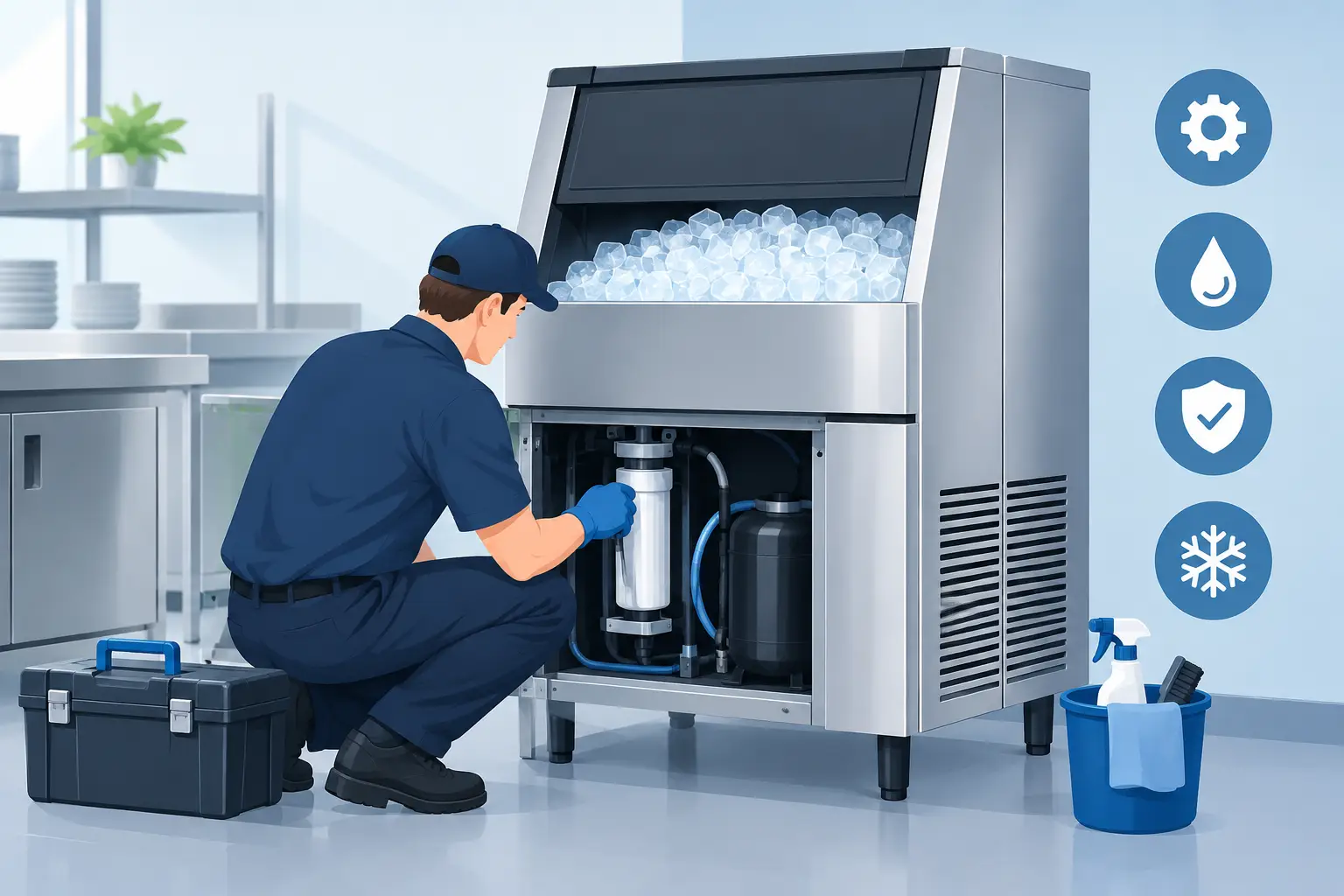
A commercial ice machine can look like it is working normally right up until a lunch rush, happy hour, or weekend event exposes the problem. Ice production slows, cubes come out soft or misshapen, or the bin is suddenly empty. The best commercial ice machine maintenance is not just about avoiding an inconvenient breakdown. It protects ice quality, controls water and energy waste, and helps a restaurant or bar keep serving customers without interruption.
For Phoenix-area foodservice operations, hard water, heat, dust, and long operating hours can put extra strain on ice equipment. A simple maintenance routine catches many problems early, before scale buildup, clogged airflow, or a failing component turns into lost revenue.
Why Commercial Ice Machines Need More Attention
Ice is food. That means the machine needs cleaning practices that address both mechanical performance and sanitation. A unit may continue making ice even when mineral scale has formed on its water system or residue has developed in the food zone. The result can be cloudy cubes, reduced output, off odors, or a health inspection concern.
Commercial machines also depend on several systems working together: incoming water, water filtration, pumps, evaporator plates, refrigeration components, drain lines, fans, and condenser coils. When one area is neglected, the machine often compensates by running longer. That raises utility costs and adds wear to parts that were not the original problem.
The right schedule depends on the machine type, water quality, daily ice demand, and whether the unit is air-cooled or water-cooled. A high-volume bar with a busy patio season will need more frequent attention than a lightly used office break-room unit. There is no single calendar that fits every operation, but there are core tasks no commercial kitchen should skip.
Best Commercial Ice Machine Maintenance Starts With Daily Habits
Daily checks take only a few minutes and give staff a chance to spot changes before the ice supply is affected. At opening or closing, look at the ice in the bin. Cubes should be clear or consistent with the machine’s normal cube style, with no unusual odor, slime, discoloration, or excessive melting.
Keep the bin scoop clean, stored outside the ice, and handled by the grip rather than the scoop end. Never use a glass or food container to collect ice. A cracked glass in an ice bin creates a serious contamination and cleanup problem, while food debris can introduce bacteria and odors.
Staff should also make sure the area around the machine stays clear. Boxes, towels, and supplies stacked near intake vents restrict airflow, especially on air-cooled units. In a hot Phoenix kitchen, poor airflow can quickly reduce production and force the compressor to work harder than it should.
Listen for new sounds as well. Repeated clicking, grinding, loud fan noise, water that will not stop running, or an unusually long harvest cycle are worth reporting. A machine does not need to be completely down before it needs service.
Clean and Sanitize the Food Zone on Schedule
Cleaning and sanitizing are related but different jobs. Cleaning removes mineral scale and buildup. Sanitizing reduces microorganisms on clean surfaces. Performing only one step leaves part of the problem behind.
Most commercial ice machine manufacturers provide a specific cleaning procedure and approved cleaner concentration for each model. Follow that procedure rather than substituting household chemicals. The wrong product can damage nickel-plated evaporators, plastic components, seals, or internal surfaces. It can also leave residue where ice is made.
For many operations, cleaning and sanitizing every three to six months is a reasonable starting point. Businesses with very hard water, visible scale, heavy production, or warm and dusty conditions may need it more often. If the machine makes thin ice, takes longer to freeze, has white mineral deposits, or produces inconsistent cubes, do not wait for the next scheduled cleaning.
During a proper service cleaning, the food zone may include the water trough, distribution tubes, curtain or damper, float components, evaporator surface, bin liner, and other removable parts. These pieces must be reassembled correctly. A misaligned water curtain or blocked distribution hole can cause poor harvests and irregular ice formation even after the machine has been cleaned.
Watch for Slime, Scale, and Mold
Pink, black, or dark residue inside the bin or water system should be treated as a sanitation warning, not a cosmetic issue. It may point to missed cleaning intervals, standing water, poor drain conditions, or contamination from handling practices. Mineral scale, meanwhile, often looks white, chalky, or crusted. It can interfere with water flow and heat transfer.
If buildup returns unusually fast, review the water filtration plan. A filter helps reduce sediment and certain water contaminants, but it is not a substitute for cleaning. A neglected filter can restrict water flow and create its own production problems.
Protect Water Supply, Filtration, and Drainage
A commercial ice machine needs adequate water pressure and a clean, reliable supply. Check the water line and fittings periodically for drips, corrosion, or kinks. Even a small leak can damage flooring, cabinetry, nearby equipment, or walls over time.
Replace water filters according to the filter manufacturer’s rated capacity and the machine’s actual usage. A busy restaurant may reach that capacity well before a date printed on a maintenance sticker. If ice production drops after a filter change, confirm that the filter was installed in the correct flow direction and that the supply valve is fully open.
Drainage deserves equal attention. A slow or blocked drain can cause standing water, overflow, odors, and sanitation issues. Floor drains should remain clear, and drain lines should have the proper routing and air gap required for the installation. Do not pour grease, food scraps, or cleaning debris into a nearby drain and assume the ice machine is unaffected.
Keep Condenser Coils and Airflow Clean
The condenser is one of the most overlooked parts of commercial ice machine care. On air-cooled units, it releases heat so the refrigeration system can make ice efficiently. Dust, grease, lint, and airborne kitchen debris can coat the coil and reduce that heat transfer.
When the condenser cannot breathe, the machine may make less ice, run hotter, use more electricity, and eventually shut down on a safety limit. In restaurants, the coil should be inspected regularly and cleaned as needed. The right interval might be monthly in a greasy or dusty environment and less frequent in a clean, well-ventilated location.
Use care when cleaning coils. Their fins bend easily, and aggressive brushing or high-pressure water can cause damage. Disconnect power when appropriate, follow the equipment manual, and call a qualified technician if access requires removing panels around electrical or refrigeration components.
Water-cooled units have different concerns. They do not rely on room airflow in the same way, but they can develop scale in their water circuits and may have higher water use. Their maintenance should follow the manufacturer’s requirements and the building’s water-management practices.
Know When a Service Call Is the Better Choice
Some upkeep belongs with trained staff. A commercial ice machine should be professionally inspected when it has recurring low production, leaks, error codes, noisy operation, incomplete harvest cycles, warm ice, freezing in the wrong areas, or repeated sanitation buildup. These symptoms can involve a failing water inlet valve, pump, float switch, fan motor, bin control, thermostat, sensor, drain pump, or refrigeration issue.
Do not try to compensate for low output by changing control settings without understanding the cause. More aggressive settings may not solve a water-flow or condenser problem, and they can make the equipment work harder. Likewise, refrigerant work, electrical diagnosis, and sealed-system repairs require proper tools and certification.
A technician can verify water flow, check harvest performance, inspect electrical connections, clean components safely, and identify worn parts before a full failure. That is especially valuable for property managers and operators with several machines or multiple foodservice locations. Keeping service records also makes it easier to spot repeat issues and plan maintenance around slower business hours.
Build a Maintenance Routine Your Team Will Actually Follow
The most effective plan is simple enough that it does not get skipped. Assign daily visual checks to opening or closing staff, keep cleaning dates documented, and designate one person to track filter changes and professional service. If several employees assume someone else is handling the machine, routine care is usually the first thing lost during a busy week.
A practical record should include the cleaning date, sanitizer or cleaner used, filter replacement date, visible concerns, and service performed. This is helpful for internal accountability and can be useful when diagnosing a recurring issue. It also gives new managers or staff a clear starting point rather than relying on memory.
Hillside Appliance Services helps Greater Phoenix restaurants, bars, and property managers address commercial ice machine problems with dependable diagnosis and repair. When output is dropping or sanitation concerns keep returning, prompt service can prevent a small maintenance issue from becoming a costly interruption.
A clean, properly maintained ice machine is easy to overlook because it works quietly in the background. Give it consistent attention, and it will be far more likely to be ready when every drink ticket and food order depends on it.