
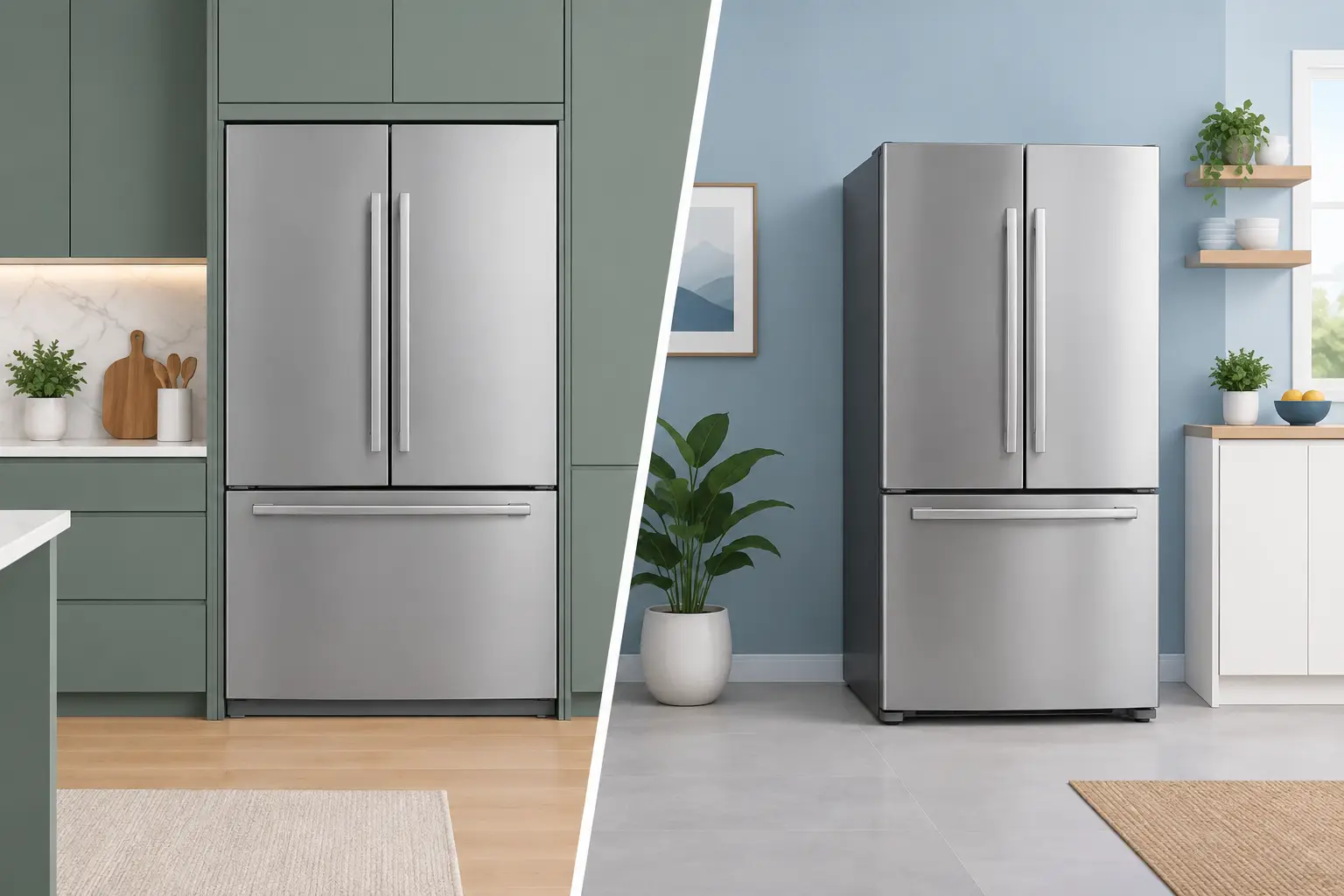
A refrigerator can look like a simple kitchen decision until it stops cooling, begins leaking, or will not fit through the opening you planned for. When comparing built in versus freestanding refrigerators, the right choice comes down to more than appearance. Installation, ventilation, repair access, capacity, and the expected life of the kitchen all matter.
For Phoenix-area homeowners, refrigeration also works hard. High outdoor temperatures can put extra demands on a refrigerator’s cooling system, especially when the appliance is installed in a warm garage, enclosed kitchen, or poorly ventilated space. A unit that fits your home and has room to release heat has a better chance of cooling efficiently and avoiding unnecessary strain.
Built-In Versus Freestanding Refrigerators: The Main Difference
A freestanding refrigerator is designed to stand independently in a standard kitchen opening. It has finished sides, usually extends beyond the surrounding cabinets, and can be moved or replaced with relatively little remodeling. Most top-freezer, side-by-side, French-door, and bottom-freezer models are freestanding.
A built-in refrigerator is designed to sit nearly flush with cabinetry. Many are taller and shallower than freestanding models, creating a custom, integrated appearance while keeping food within easier reach. Built-in units may be panel-ready, meaning cabinet-matching panels cover the doors, or they may have a stainless-steel front. Brands such as Sub-Zero, Thermador, Bosch, Monogram, Viking, Gaggenau, and KitchenAid offer built-in or integrated refrigeration options.
The distinction matters because these appliances are built, installed, and serviced differently. A built-in refrigerator is not simply a standard refrigerator pushed farther back into a cabinet opening.
When a Freestanding Refrigerator Makes Sense
Freestanding refrigerators work well for households that want flexibility, more interior volume for the price, and a simpler replacement path. They are available in a broad range of widths, finishes, configurations, and price points. If you need a refrigerator quickly after an unexpected failure, a freestanding model is often easier to source and install.
They also offer a practical advantage for homeowners who expect to update their kitchen later. Replacing a freestanding refrigerator usually does not require modifying cabinets, countertops, or decorative panels. As long as the new model fits the opening and has proper clearance, the change is straightforward.
Capacity is another reason many families choose freestanding units. Because they are commonly deeper than built-ins, they can provide more cubic feet of storage at a lower purchase cost. That extra depth can be useful for large households, meal prep, entertaining, or frequent grocery trips.
The trade-off is that a standard-depth refrigerator may project several inches beyond the cabinets. It can make a narrow kitchen feel more crowded, and open doors may interfere with traffic flow. Counter-depth freestanding models reduce that projection, but they still require the manufacturer’s specified clearance around the sides, back, and top.
Why Homeowners Choose Built-In Refrigerators
Built-in refrigerators are usually chosen for a designed kitchen rather than just for cold storage. Their shallow depth aligns with cabinet fronts, creating clean sightlines and preserving walkway space. In a high-end kitchen, that flush installation can be a major visual benefit.
Built-ins are often tall, with organized compartments and separate refrigerator and freezer columns available in some configurations. A homeowner can choose a full-height refrigerator column, a full-height freezer column, or a paired set. This is especially appealing in custom homes and major kitchen remodels where every cabinet dimension is planned in advance.
There is a durability consideration as well. Many premium built-in models are made for long-term installation and may be supported by specialized service networks. That does not mean they never need repair. Ice makers, evaporator fans, sealed-system components, door seals, electronic controls, water valves, and defrost systems can all fail over time. But a properly maintained built-in unit can remain part of the kitchen for many years.
The primary drawback is commitment. A built-in refrigerator is tied to its cabinet opening, trim, panels, and ventilation design. Replacing it with another model may require careful measurements and, in some cases, cabinet modifications. The initial purchase and installation costs are also typically much higher than for a freestanding refrigerator.
Built-In Does Not Always Mean Panel-Ready
These terms are often used together, but they are not identical. A built-in refrigerator describes how the appliance installs in relation to cabinetry. Panel-ready means it accepts custom panels that match the kitchen cabinets.
A built-in unit can have a visible stainless-steel front. A panel-ready unit can be built-in or integrated, depending on the model and installation design. Before ordering a replacement, confirm the exact model number, door style, hinge requirements, overall depth, and panel dimensions. Small measurement errors can turn a refrigerator replacement into a cabinet project.
Installation and Ventilation Are Not Optional Details
Refrigerators remove heat from inside the cabinet and release it through the condenser system. If airflow is restricted, the compressor may run longer, temperatures may become inconsistent, and energy use can rise. In severe cases, poor ventilation contributes to premature component failure.
Freestanding models usually need clearance behind and around the cabinet, though requirements vary by manufacturer. Many modern models use a bottom-front condenser area, but they still need adequate airflow. Never assume a refrigerator can be pushed tight against the wall because it appears to fit.
Built-in models use more specific ventilation paths, often through a top grille, bottom grille, or designed cabinet channel. Decorative trim, stored items, or remodel changes should never block these areas. If a built-in refrigerator seems warm around the front grille, that can be normal. If it is constantly running, failing to hold temperature, or displaying temperature alarms, it needs attention.
In Arizona, garages deserve special caution. Most residential refrigerators are intended for conditioned indoor spaces. Extreme garage heat can make cooling performance unreliable, reduce ice production, and strain the compressor. Check the appliance specifications before installing any refrigerator in a garage.
Repair Access Changes the Service Experience
A freestanding refrigerator is usually easier to pull forward for diagnosis and repair. Technicians can often access the rear panel, water connections, condenser area, and power supply with less preparation. That can make certain service calls faster, although the actual repair still depends on the failed part and model design.
Built-in refrigeration requires more planning. The appliance may be heavy, secured to cabinetry, connected to custom panels, or surrounded by trim. Some units must be carefully pulled out on rollers or lifted from an anti-tip bracket before components can be reached. This is why brand-specific knowledge matters, particularly with premium built-in models.
Homeowners can help by clearing the area in front of the refrigerator before service and sharing the model number when scheduling. If the unit has a temperature display, error code, water leak, unusual noise, or ice-maker issue, mention that as well. Those details help a technician arrive prepared to diagnose the problem efficiently.
Cost: Look Beyond the Purchase Price
A freestanding refrigerator generally has the lower upfront cost, and replacement is often less complicated. It is the practical choice for many homes, rental properties, and kitchens where a standard opening already exists.
A built-in refrigerator costs more because the appliance, installation, cabinetry coordination, and future replacement requirements are all more specialized. For a homeowner planning a luxury remodel or preserving a custom kitchen, that investment may be worthwhile. For someone who values easy replacement and maximum storage per dollar, freestanding is usually the better fit.
Repair costs also depend on the issue, not just whether the refrigerator is built-in. A simple door gasket or water valve repair is very different from a compressor, control board, or sealed-system concern. Built-in units can involve more labor because of access, and premium parts may cost more. Still, repair can be a sensible option when the refrigerator fits a custom kitchen and the rest of the unit is in good condition.
How to Choose for Your Kitchen
Start with the opening, not the showroom photo. Measure width, height, depth, door swing space, nearby walls, and the route into the home. Measure more than once, including baseboards, trim, overhead cabinets, and the depth of handles.
Then consider how you use the kitchen. A busy family may prefer the deeper storage and lower cost of a freestanding French-door model. A homeowner completing a custom kitchen may value the clean fit and long-term design consistency of built-in refrigeration. Property managers may prioritize readily available replacement options, while a luxury-home owner may need a technician experienced with a specific built-in brand.
Most importantly, leave room for the refrigerator to breathe and plan for future service access. A well-chosen refrigerator should support your daily routine, not turn a warm kitchen or a spoiled grocery run into an emergency. If cooling becomes unreliable, ice production slows, or water appears on the floor, prompt professional diagnosis can protect the food, the appliance, and the kitchen around it.