
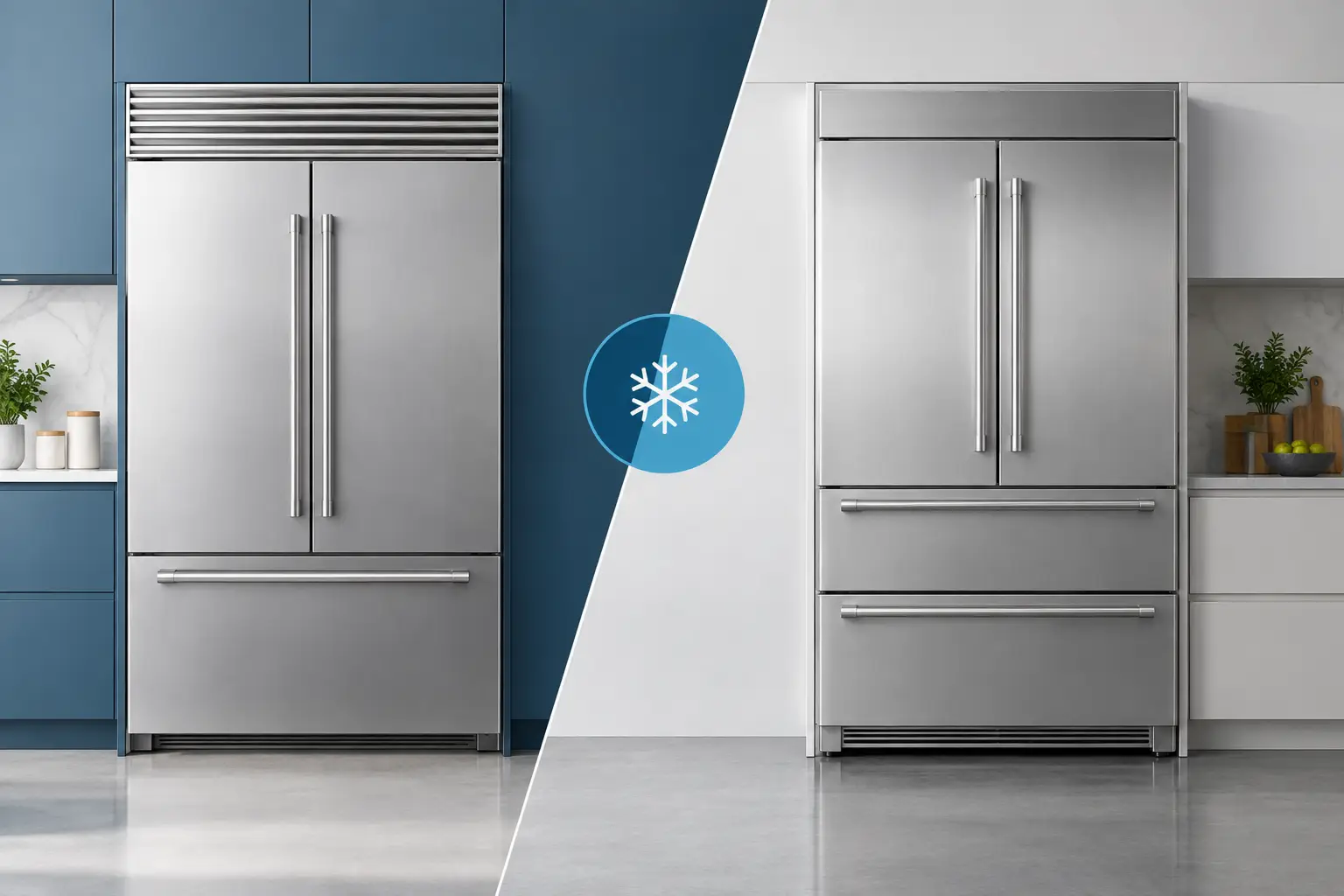
A built-in refrigerator is not a casual kitchen purchase. It becomes part of the cabinetry, carries a premium price, and is expected to protect hundreds of dollars in fresh food every week. When homeowners compare Sub-Zero versus Viking refrigerators, the right choice usually comes down to more than appearance. Cooling design, available space, cooking habits, installation quality, and long-term service expectations all matter.
Both brands have a place in high-end Phoenix kitchens. Both offer statement-making built-in options and refrigeration designed for homeowners who care about food storage. But they approach the job differently, and those differences become especially clear after years of daily use.
Sub-Zero versus Viking Refrigerators: The Core Difference
Sub-Zero has built its reputation around food preservation and integrated refrigeration. Its classic built-in units are known for dual refrigeration systems, with separate cooling systems for the refrigerator and freezer compartments. The goal is to keep refrigerator air humid enough for fresh produce while keeping freezer air cold and dry. Many models also use an air-purification system intended to reduce odors and slow spoilage.
Viking is better known to many homeowners for professional-style ranges, but its refrigerator line gives a kitchen the same commercial-inspired look. Viking offers built-in, column, French door, bottom-freezer, and other configurations depending on the product series and year. The brand often appeals to buyers who want a coordinated Viking cooking suite and a bold professional aesthetic.
That does not make one brand automatically better. Sub-Zero is often the more preservation-focused choice. Viking can be a strong fit for a homeowner who prioritizes kitchen design, a particular layout, or matching appliances. The exact model matters far more than the badge on the door.
Food Preservation and Temperature Control
For households that buy fresh produce, specialty meats, seafood, or prepared meals in quantity, Sub-Zero’s refrigeration approach is a meaningful advantage. Separate refrigerator and freezer systems reduce air transfer between compartments. In practical terms, freezer odors are less likely to migrate to refrigerated foods, and temperature recovery can be more controlled after frequent door openings.
Sub-Zero also places a strong emphasis on maintaining stable temperatures. That matters in a busy household where the refrigerator is opened repeatedly, particularly during meal preparation or when kids are home from school. Stable cooling is not just a luxury feature. It can reduce food waste and make the appliance easier to trust.
Viking refrigerators can also provide dependable cooling when the unit is properly installed and maintained. However, features vary more by model line. A Viking French door refrigerator may serve a family very differently than a Viking column or a fully built-in model. Compare the actual temperature controls, air management design, capacity, and warranty rather than assuming every Viking refrigerator has the same performance characteristics.
Phoenix heat adds another practical consideration. The temperature inside a conditioned kitchen should remain manageable, but inadequate ventilation, a hot garage-adjacent wall, or a failed condenser fan can place extra strain on any refrigerator. Premium equipment still needs clear airflow and correct installation to perform as designed.
Built-In Appearance and Kitchen Layout
Sub-Zero is a natural choice for homeowners planning a truly integrated kitchen. Its built-in and column refrigerators are designed to sit flush with cabinetry and accept custom panels on many configurations. The finished result can be nearly invisible or intentionally architectural, depending on the panel and handle choices.
Viking often leans more visibly professional. Stainless doors, substantial handles, and a commercial-inspired presence can pair especially well with a Viking range or range hood. For homeowners remodeling a kitchen around a restaurant-style cooking area, that cohesive look can be a deciding factor.
Measure carefully before choosing either brand. A refrigerator labeled as 36 inches wide may require specific cabinet opening dimensions, electrical placement, water-line routing, door clearance, and ventilation space. Built-in refrigeration is not forgiving of guesswork. Incorrect leveling or restricted ventilation can lead to noisy operation, poor cooling, excess frost, and premature component wear.
Capacity and Everyday Use
The best configuration depends on how your household uses the kitchen. Columns offer flexibility because the refrigerator and freezer can be installed side by side, separated, or sized differently. They work well for homeowners who entertain often, store a lot of fresh food, or want a dedicated freezer location.
French door models place the most-used refrigerator compartment at eye level and generally provide wide shelving for platters and large containers. Bottom-freezer designs can suit households that reach for fresh ingredients more often than frozen items. Side-by-side models offer narrow door swing clearance, which can help in tighter kitchen layouts, although shelves may not accommodate wide serving dishes.
Do not judge capacity by cubic-foot numbers alone. Shelf layout, drawer depth, ice-maker location, and door-bin design affect usable space every day. If possible, bring a list of the items you regularly store: sheet pans, meal-prep containers, tall beverage bottles, bulk groceries, or oversized produce bins. That simple exercise often reveals which configuration will feel practical after the excitement of a remodel wears off.
Reliability and Repair Considerations
Luxury refrigerators are repairable appliances, not disposable ones. That is one reason many homeowners invest in Sub-Zero or Viking. Still, every refrigerator has wear items and components that can fail over time, including evaporator fans, condenser fans, door gaskets, ice makers, water valves, sensors, control boards, compressors, and defrost-system parts.
Sub-Zero’s long-standing built-in product line has a substantial installed base, so experienced luxury-appliance technicians see many common service patterns. A unit that is warm in one compartment, frosts excessively, runs constantly, leaks water, makes unusual fan noise, or stops producing ice needs a proper diagnosis. Replacing a part without identifying the underlying airflow, defrost, drainage, or control issue can waste time and money.
Viking repair needs also depend heavily on the specific model and age of the refrigerator. Some problems are straightforward, such as a worn door gasket or clogged defrost drain. Others require model-specific knowledge and accurate testing, particularly when electronic controls or sealed-system cooling are involved. Before authorizing a major repair, ask for a clear explanation of the failed component, the recommended repair, and whether the appliance has any related underlying concerns.
For Phoenix homeowners, professional installation and timely service are particularly valuable. A refrigerator that is only slightly warm can move from an inconvenience to spoiled food quickly in a warm climate. Hillside Appliance Services works on luxury refrigeration, including Sub-Zero and Viking, with technicians focused on identifying the cause of the problem rather than treating the symptom.
Cost: Purchase Price Is Only Part of the Decision
Sub-Zero typically sits at the higher end of the luxury refrigeration market. Its price reflects its preservation features, built-in specialization, panel-ready options, and established service life expectations. For a homeowner building a long-term kitchen, that investment can make sense when food preservation and integrated design are top priorities.
Viking pricing varies widely by configuration and series. In some cases, it may offer a more accessible path to a premium-looking refrigeration setup, especially for buyers already selecting Viking cooking appliances. A lower purchase price, though, should not be the only comparison point. Consider the installation requirements, future service access, available local expertise, and the cost of a prolonged outage if the refrigerator fails.
The better value is the refrigerator that fits your kitchen and habits while remaining practical to maintain. A feature-packed model that is difficult to access for service or poorly ventilated by surrounding cabinetry may cost more over time than a simpler unit installed correctly.
Which Brand Fits Your Kitchen?
Choose Sub-Zero when food preservation, integrated cabinetry, flexible column configurations, and long-term built-in refrigeration are your priorities. It is especially compelling for homeowners who want a refrigerator to disappear behind custom panels or who place a premium on separate refrigerator and freezer cooling.
Choose Viking when you want a professional-style kitchen, plan to match a Viking range or cooking suite, or find a specific Viking configuration that fits your storage needs and budget. Review the individual model carefully, because Viking’s refrigerator offerings are not all built around the same design or feature set.
Before making the final call, confirm your cabinet opening, ventilation plan, electrical and water connections, and service access. A well-chosen refrigerator should make daily life easier, not create a costly problem behind beautiful cabinetry. If your current luxury refrigerator is struggling, prompt diagnosis can often protect your food, preserve the appliance, and get your kitchen routine back on track.