
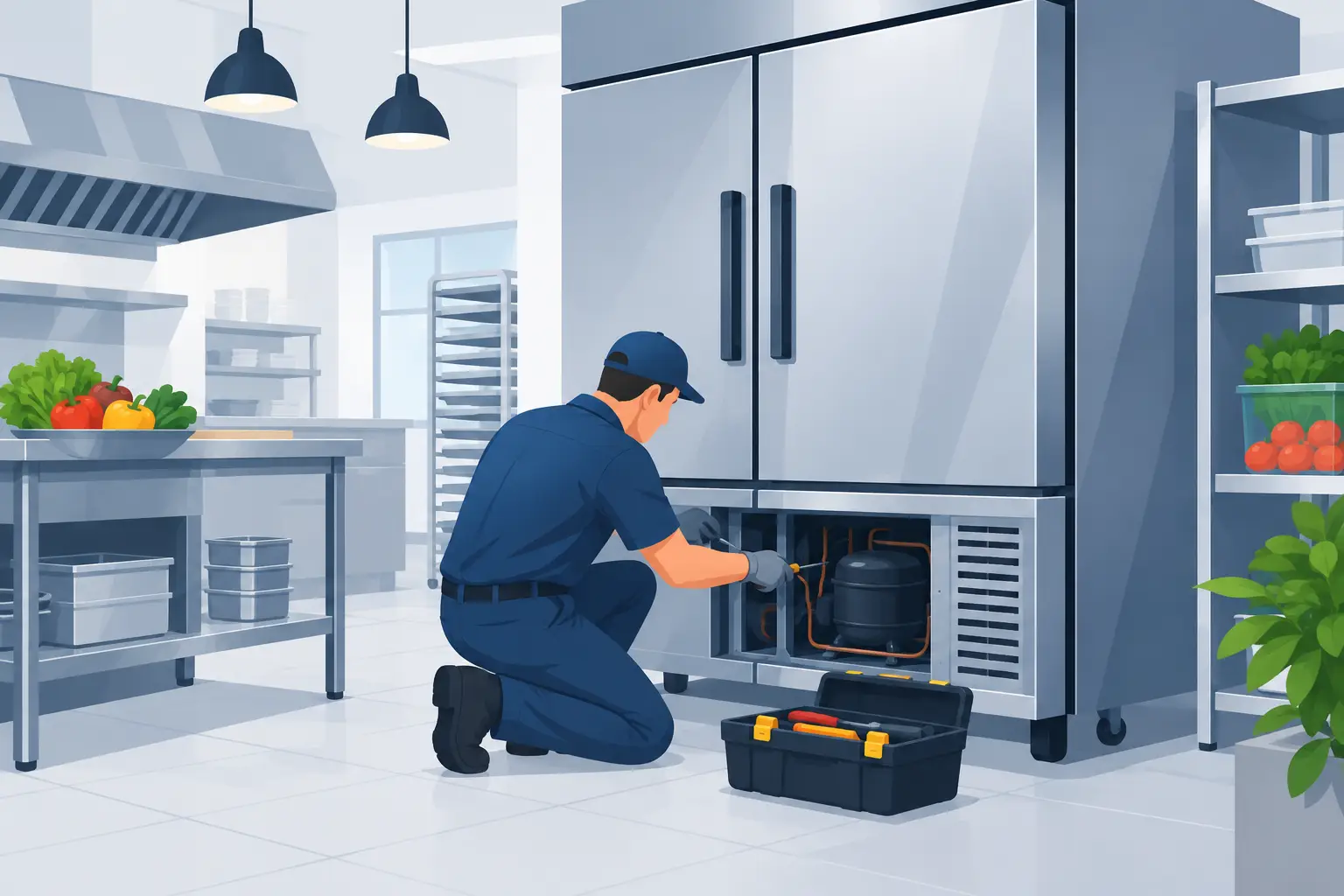
A reach-in cooler that runs a few degrees warm can turn a busy dinner shift into a food-loss problem before anyone notices. Ice buildup, dirty condenser coils, worn door gaskets, and blocked drains often start as small issues, then force equipment to work harder until it cannot hold temperature. This guide to restaurant refrigeration maintenance helps restaurant owners, bar managers, and kitchen teams catch those problems early.
Commercial refrigeration has a demanding job in a Phoenix kitchen. Doors open constantly, hot pans move through prep areas, and ambient heat puts added pressure on compressors and condensers. A consistent maintenance routine protects inventory, supports food safety, reduces emergency repair calls, and gives your equipment a better chance of lasting as intended.
Start With Temperature Control
Temperature is the clearest sign of whether a refrigerator, freezer, prep table, walk-in, or undercounter unit is doing its job. Check and record temperatures at the start of each shift, not only when an inspector is expected or a unit begins alarming. Built-in displays are useful, but an independent thermometer placed in the food zone provides an important second reading.
As a general rule, refrigerated food storage should remain at 41°F or below, while freezers should stay at 0°F or below. The exact operating range can vary by equipment type and manufacturer, so follow the unit’s specifications as well. A temperature that rises after a heavy rush may be normal if the door has been opened repeatedly, but it should recover promptly once traffic slows.
If a unit stays warm, do not assume turning the thermostat lower will solve the problem. The cause could be restricted airflow, a failing evaporator fan, dirty coils, a bad door seal, a defrost issue, or a sealed-system problem. Moving high-risk food to a functioning unit and arranging a professional diagnosis quickly is safer than hoping the temperature corrects itself.
Guide to Restaurant Refrigeration Maintenance by Schedule
A reliable plan separates simple daily habits from the deeper cleaning and inspection work that needs to happen weekly, monthly, and seasonally. The schedule should fit your kitchen’s volume. A high-traffic bar or restaurant may need more frequent attention than a small operation with limited service hours.
Daily: Keep Air Moving and Doors Closing
At opening and closing, verify temperatures and listen for changes in normal operation. New rattling, grinding, clicking, or unusually loud fan noise deserves attention, especially if it occurs with poor cooling. Also look for water on the floor, condensation around doors, frost inside the cabinet, or food packages blocking interior vents.
Keep product organized so cold air can circulate. Overloading shelves or pressing containers against evaporator vents prevents even cooling and can freeze some items while leaving others too warm. Let hot food cool according to safe food-handling practices before placing it in refrigeration. Loading a large amount of hot product into a small reach-in can overwhelm the system.
Wipe spills from door gaskets and door frames. Sticky residue keeps gaskets from sealing tightly and lets warm, humid kitchen air enter the cabinet. That moisture contributes to frost, longer run times, and higher energy use.
Weekly: Inspect Seals, Drains, and Airflow
Check every door gasket for tears, gaps, brittleness, or sections that have pulled away from the door. A simple paper test can help: close the door on a strip of paper and gently pull. If it slides out easily at multiple points, the gasket may not be sealing well. A damaged gasket is a relatively straightforward repair compared with the strain it can place on a compressor.
Inspect drain pans and drain lines where accessible. Standing water, slime, foul odors, or recurring puddles can point to a clogged drain. Do not force sharp tools into a drain line or chip away ice with a knife. Both can damage components and create a larger repair issue.
Look around exterior vents and louvers for grease, cardboard, dust, or stored supplies. Refrigeration equipment needs room to reject heat. Blocking the airflow around a condenser makes the system run longer, and in a hot commercial kitchen, that extra strain adds up quickly.
Monthly: Clean Condenser Coils Carefully
Condenser coil cleaning is one of the most valuable maintenance tasks, particularly in restaurants where grease and airborne debris collect quickly. The coils may be behind a grill, under the unit, or located on top depending on the model. When coils cannot release heat, the compressor works harder to maintain temperature, increasing power use and the risk of failure.
Turn off or unplug the unit when appropriate and follow the manufacturer’s cleaning instructions. Use a vacuum with a soft brush attachment or a coil brush designed for the equipment. Work gently. Bent coil fins reduce airflow, and aggressive cleaning can cause damage. In kitchens with heavy grease exposure, coils may require professional cleaning more often than a standard monthly schedule.
While you are there, check for visible oil residue, damaged wiring, unusual vibration, and a condenser fan that is not turning properly. These are not items to ignore until the next scheduled service. A technician can determine whether a fan motor, capacitor, compressor component, or refrigerant system needs repair.
Do Not Overlook Ice Machines and Bar Equipment
Ice makers have their own maintenance requirements, and neglected units can affect drink service, food presentation, and sanitation. Clean and sanitize them on the schedule recommended by the manufacturer. Mineral scale is especially common in Arizona water and can interfere with water flow, sensors, and ice production.
Keep the surrounding area clean and make sure the machine has adequate ventilation. Slow ice production, thin or hollow cubes, cloudy ice, water leaks, and unusual harvest cycles are all reasons to schedule service. Avoid using the ice bin for food storage or placing items on top of an ice machine where airflow may be restricted.
Wine coolers, back-bar refrigerators, keg coolers, and undercounter units also deserve regular checks. They are often installed in tight spaces, where heat buildup and blocked vents can go unnoticed. Their smaller size does not make temperature problems less serious, particularly when they hold high-value products.
Train Staff to Recognize Early Warning Signs
The best maintenance program works when the people using the equipment know what to report. Give opening and closing staff a short checklist and make reporting easy. A minor concern reported early is often less disruptive and less expensive than a complete equipment failure during service.
Ask staff to report four common warning signs: temperatures that do not recover, excessive frost or condensation, water leaks, and changes in sound or cycling behavior. They should also mention doors that do not self-close, loose hinges, cracked gaskets, and unusual odors. These details help a technician diagnose the problem more efficiently.
It also helps to keep service records for each piece of equipment. Record the model and serial number, installation date, maintenance dates, temperature logs, repairs, and recurring symptoms. This is particularly useful for multi-unit kitchens and property managers overseeing several foodservice locations.
Know When Cleaning Is Not Enough
Some maintenance work belongs with your team, but electrical, sealed-system, compressor, and refrigerant repairs require trained service. Repeated breaker trips, a burning smell, warm cabinets with a running compressor, severe ice buildup, or a unit that short-cycles should be addressed promptly. Continuing to operate failing equipment can damage food inventory and turn a repairable issue into a replacement decision.
The age and condition of the unit matter too. A newer commercial refrigerator with a worn gasket, failed fan motor, or dirty condenser is usually a strong repair candidate. An older unit with repeated refrigerant leaks, compressor trouble, extensive corrosion, or frequent temperature failures may require a more careful repair-versus-replacement discussion.
Hillside Appliance Services helps Greater Phoenix restaurants and bars diagnose and repair commercial refrigeration problems with the urgency a working kitchen requires. Certified technicians can identify the actual cause of poor cooling rather than treating the symptom and hoping it holds through the next rush.
A few minutes of routine attention can protect far more than the equipment itself. It protects the ingredients your team prepared, the service your guests expect, and the calm of knowing your kitchen is ready when the doors open.