
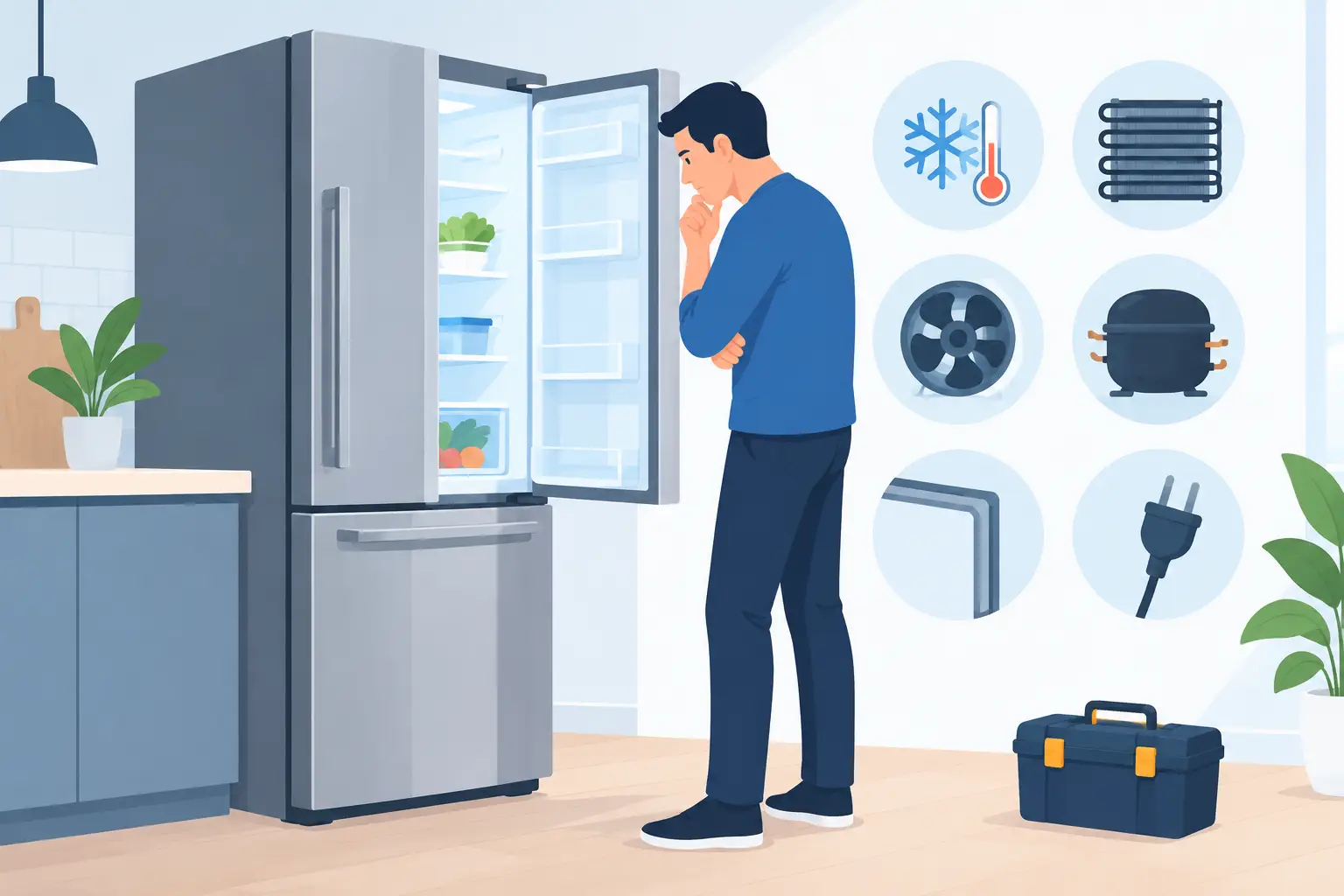
A refrigerator that is running but not keeping food cold creates a problem fast. If you are asking why refrigerator is not cooling, start by protecting your groceries, then check a few simple conditions that can cause poor performance. A warm refrigerator can be something as straightforward as a blocked air vent, but it can also point to a failed fan, defrost problem, control issue, or sealed-system repair that needs a certified technician.
Food safety comes first. Perishable food should be kept at 40°F or below. If the refrigerator has been above that temperature for several hours, move meat, dairy, leftovers, and other perishable items to a working refrigerator or a cooler packed with ice. Do not rely on a refrigerator light being on as proof that the unit is cooling correctly.
Check the easy causes before assuming the worst
Before pulling the refrigerator away from the wall or removing panels, look at the controls and how the compartments are loaded. A temperature setting may have been changed accidentally, especially after cleaning, a power interruption, or children using the dispenser controls. Set the refrigerator section near 37°F and the freezer near 0°F, then give the appliance up to 24 hours to stabilize after an adjustment.
Next, make sure the doors are closing completely. A container, drawer, or shelf that is slightly out of position can prevent a good door seal. Look over the gasket for tears, gaps, sticky residue, or hardened areas. Warm room air entering through a poor seal brings moisture with it, which can lead to frost buildup and make the refrigerator work much harder.
Air circulation also matters. Food packed tightly against the back wall or over the interior vents can block the cold air moving from the freezer into the fresh-food section. This is especially common in side-by-side and French-door refrigerators, where one blocked damper or vent can leave one section warm while the other still seems normal.
If the refrigerator was recently installed, moved, or loaded with a large amount of warm food, it may simply need recovery time. But if it has been running for a full day and temperatures are still unsafe, it is time to look beyond the basics.
Why a refrigerator is not cooling even though it runs
Hearing the compressor or fans run does not necessarily mean the appliance is producing enough cold air. Refrigerators depend on several systems working together: airflow, defrost, electronic controls, fans, compressor operation, and refrigerant circulation. A failure in any one area can affect cooling.
Dirty condenser coils are making the system work too hard
Condenser coils release heat from the refrigerator. On many models, they are located beneath the unit or behind a lower rear panel. Dust, pet hair, and kitchen debris can coat the coils and restrict heat release. The refrigerator may run longer than usual, feel hot around the cabinet, and struggle to maintain temperature.
If your model allows safe access, unplug it and gently vacuum visible dust from the coil area and toe-kick grille. Avoid bending coils, damaging wiring, or forcing tools into tight spaces. Built-in refrigerators from brands such as Sub-Zero, Thermador, Bosch, Viking, and Monogram may have model-specific airflow and access requirements, so a professional inspection is often the safer choice.
A failed evaporator fan can leave the refrigerator warm
The evaporator fan circulates cold air across the evaporator coil and into the refrigerator compartment. When that fan fails, the freezer may be somewhat cold while the fresh-food section becomes warm. You may also notice no airflow from the refrigerator vents, a fan blade rubbing against ice, or an unusual buzzing noise.
A fan can stop because its motor has failed, but frost buildup can also trap the blade. Removing ice without diagnosing the reason it formed may only provide temporary relief. The underlying issue could be a defrost failure, a drain problem, or a door that has been leaking warm air.
Frost is blocking airflow because the defrost system has failed
Modern frost-free refrigerators periodically melt frost from the evaporator coil. If the defrost heater, thermostat, sensor, control board, or wiring fails, ice can build up behind the freezer panel. Eventually, air can no longer pass through the coil effectively.
A common sign is a freezer back wall covered in frost, combined with a refrigerator compartment that is too warm. Another clue is that cooling improves briefly after the unit is unplugged and thawed, then declines again days later. A manual thaw can prevent immediate damage to food, but it does not repair the failed component causing the frost.
The condenser fan, compressor, or start device has a problem
Many refrigerators use a condenser fan near the compressor to move heat away from the system. If it is not operating, the compressor may overheat and cooling can weaken or stop. You may hear clicking, repeated attempts to start, or no sound other than an occasional click.
The compressor and its start components require proper diagnosis. Electrical testing and sealed-system work are not homeowner repairs. A technician can determine whether the problem is a relay, inverter board, control issue, compressor failure, or a refrigerant-related fault without replacing parts based on guesswork.
A control board, sensor, or damper is not directing cold air correctly
Electronic refrigerators use sensors and control boards to decide when to run fans, open air dampers, and cycle the compressor. A bad sensor can report the wrong temperature. A stuck damper can keep cold air from reaching the fresh-food compartment, or allow too much cold air into one area and freeze produce.
This type of issue often looks inconsistent: the freezer may be fine, the refrigerator may turn warm at certain times, or temperatures may swing widely. Because the symptoms overlap with fan and defrost failures, proper testing matters more than replacing a control board first.
What not to do when your refrigerator stops cooling
Avoid turning the temperature controls to their coldest setting and expecting a faster recovery. This can make some models run improperly or freeze items near the vents without correcting the actual fault. Do not chip ice from interior panels with a knife or sharp tool, since puncturing an evaporator coil can turn a manageable repair into a major sealed-system issue.
It is also wise not to repeatedly unplug and restart a clicking refrigerator. If the compressor is struggling to start, repeated cycling can add stress to components. Keep the doors closed as much as possible, protect your food, and arrange diagnosis if basic checks do not restore normal cooling.
When to schedule refrigerator repair
Call for service when the refrigerator is warm after 24 hours of correct settings and clear airflow, when the freezer is frosting heavily, when the unit clicks or hums without cooling, or when you see water leaking from a blocked defrost drain. Built-in and luxury refrigeration deserves prompt attention because cabinetry, custom panels, and specialized cooling systems can make access and diagnosis more involved.
For homeowners, property managers, and foodservice operators in Greater Phoenix, Hillside Appliance Services can diagnose standard and premium refrigerator brands with the urgency a cooling failure requires. A clear diagnosis helps separate a simple maintenance concern from a fan, defrost, electronic, compressor, or sealed-system repair.
A refrigerator does not need to be completely silent or frost-free in every corner to work properly, but it should hold safe temperatures consistently. If it cannot, protect the food first and let a qualified technician identify the cause before a small cooling issue becomes a full refrigerator emergency.