
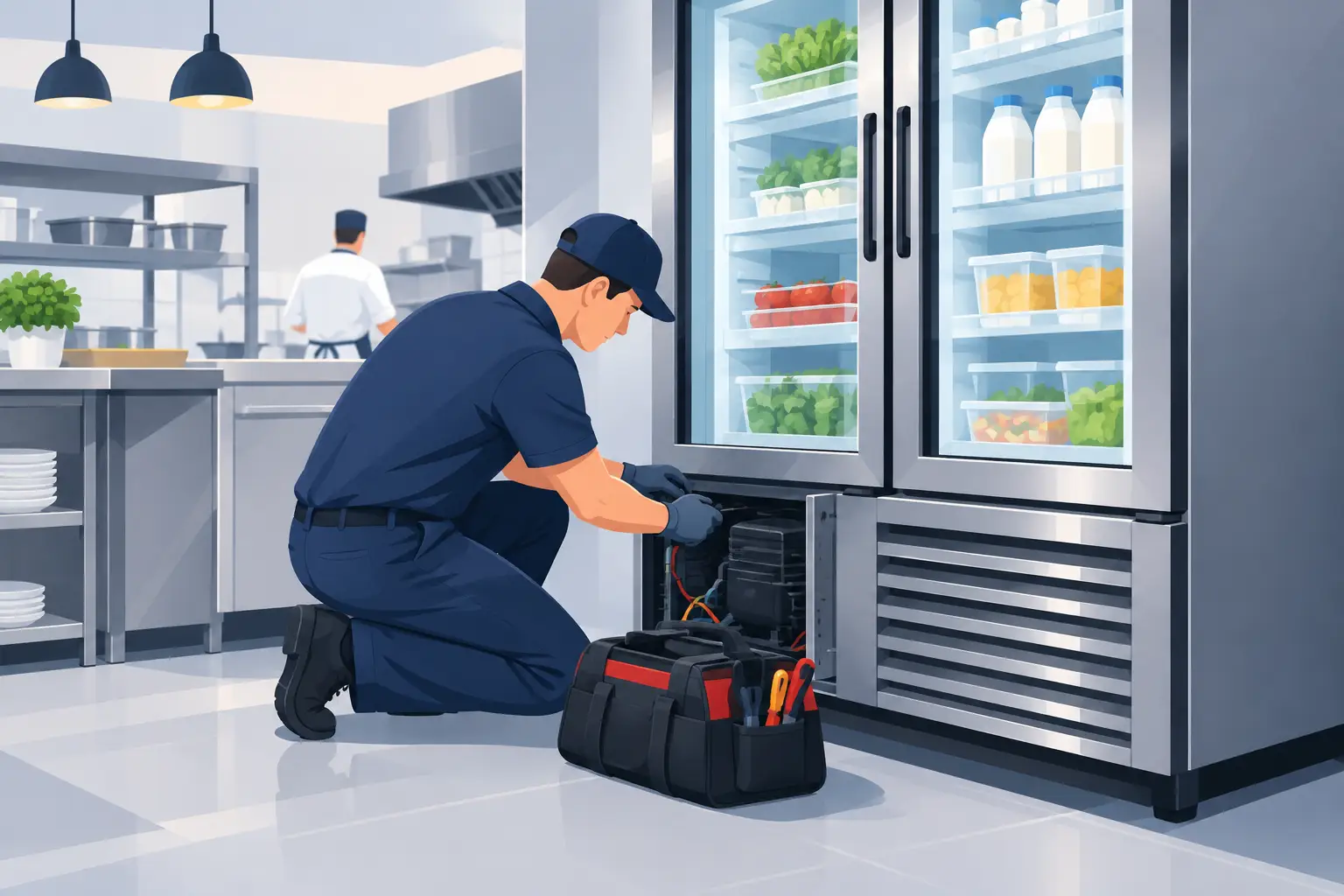
A restaurant cooler that is a few degrees too warm can turn a normal shift into a costly emergency. Restaurant cooler repair is about more than getting cold air back – it protects perishable inventory, keeps staff working efficiently, and helps you maintain safe food temperatures when customers are counting on you.
A reach-in cooler, undercounter unit, bar refrigerator, or prep table rarely fails at a convenient time. It may start with condensation on the doors, an unfamiliar fan noise, or product that no longer feels properly chilled. Acting early can sometimes prevent a complete breakdown. Waiting can mean spoiled food, disrupted service, and a repair that becomes more involved than it needed to be.
When Restaurant Cooler Repair Is Urgent
Temperature is the clearest warning sign. Refrigerated food generally needs to be held at 41°F or below, so a cooler that cannot stay within a safe range needs immediate attention. Do not rely on the cabinet feeling cool when you open the door. Use a calibrated thermometer, check the actual product temperature, and record what you find.
A cooler that runs continuously without reaching its set temperature also deserves a prompt service call. The issue may be as straightforward as restricted airflow around the condenser, but it can also point to a failing evaporator fan, defrost problem, damaged door gasket, control failure, refrigerant issue, or compressor trouble. The longer the system runs under strain, the greater the risk of further damage.
Other warning signs include water pooling near or inside the unit, heavy frost on the evaporator area, a door that will not seal, repeated tripping of a breaker, burning odors, or loud clicking and grinding sounds. These symptoms are not all equally serious, but none should be ignored in a working foodservice environment.
If product temperatures are rising, move food to another properly operating refrigerated unit as quickly as possible. Follow your food safety procedures and local requirements for evaluating whether inventory can be retained or must be discarded. A repair technician can restore equipment operation, but safe handling decisions should be based on verified temperatures and your established food safety plan.
What to Check Before Calling for Service
A short, safe inspection can give a technician useful information and may identify a simple operational issue. Start by confirming that the cooler has power. Check that the plug is secure, the outlet is functioning, and no breaker has tripped. If a breaker trips again after being reset, leave it alone and arrange professional service rather than repeatedly resetting it.
Next, look at the controller display and compare its reading with an independent thermometer placed inside the cabinet. A display that says 38°F while product is warmer may indicate an airflow problem, a sensor issue, or an inaccurate reading. Note when the temperature began changing and whether it rises mostly during busy periods, after closing, or all the time.
Make sure the doors are closing fully. Boxes, sheet pans, and overfilled shelves can prevent proper closure or block interior air circulation. A torn, hardened, or loose gasket lets warm kitchen air enter the cabinet, creating condensation and forcing the refrigeration system to work harder.
Check the outside of the unit for blocked ventilation. Dust and grease buildup on condenser coils can reduce heat transfer, especially in busy kitchens and bars. Only clean areas that are safely accessible and follow the manufacturer’s maintenance instructions. Do not remove panels, puncture frost with sharp tools, or attempt electrical or refrigerant repairs. Those shortcuts can damage the equipment and create a larger problem.
When you call, have the make, model number, current temperature, error codes, and a description of the symptoms ready. Let the technician know whether the unit is a reach-in, walk-in component, prep table, back-bar cooler, or another commercial refrigeration system. That information helps make the visit more efficient.
Common Causes of Commercial Cooler Failures
Commercial coolers operate in demanding conditions. Kitchen heat, frequent door openings, grease in the air, crowded storage, and long operating hours all affect performance. The right diagnosis matters because similar symptoms can come from very different causes.
Dirty Coils and Poor Airflow
A condenser coil releases heat from the refrigeration system. When it is coated with dust, lint, or grease, the unit cannot shed heat efficiently. The cooler may run longer, struggle to pull down temperature, and eventually overheat. Regular professional cleaning and adequate clearance around the unit can reduce this risk.
Inside the cabinet, blocked evaporator airflow creates its own set of problems. Product packed too tightly against vents can lead to warm zones, frost buildup, and inconsistent temperatures. A failed evaporator fan can produce similar results, often with reduced airflow or unusual noise.
Defrost and Drain Problems
Most commercial coolers use an automatic defrost system. When a heater, timer, sensor, control, or drain system fails, frost can accumulate around the evaporator coil. Air can no longer move correctly through the cabinet, and temperatures begin to rise.
A clogged or frozen drain may cause water to collect beneath the unit or inside the cabinet. The visible water is frustrating, but the underlying issue may be a defrost failure that needs proper diagnosis. Simply mopping the water does not solve what caused it.
Door Gaskets, Hinges, and Cabinet Sealing
Door problems are easy to overlook because the cooler may continue operating for weeks. But a leaking gasket or misaligned door allows a steady stream of warm, humid air inside. That can cause sweating, excess frost, poor temperature recovery, and higher strain on the compressor.
Gasket replacement can be a practical repair when the rest of the equipment is in good shape. If hinges, door frames, or cabinet structure are damaged, the repair decision may depend on the unit’s age, condition, and role in your operation.
Electrical, Control, and Refrigeration-System Issues
Failed relays, contactors, fan motors, sensors, thermostats, and electronic controls can all stop a cooler from cycling correctly. A unit may short-cycle, run constantly, fail to start, or display an error code. These parts require testing because replacing components based on symptoms alone can waste time and money.
Refrigerant leaks and compressor problems are more serious possibilities. They are not the first explanation for every warm cooler, but they must be evaluated by a qualified technician. A correct diagnosis determines whether repair is sensible or whether replacement should be considered.
Repair or Replace: Making the Practical Call
Replacing a commercial cooler is not always the fastest or most economical answer. Many units can provide years of additional service after a fan motor, control, gasket, defrost component, or sealed-system issue is properly repaired. This is especially true when the cabinet, doors, insulation, and overall operation are otherwise sound.
Replacement becomes more reasonable when repairs are frequent, major components are failing repeatedly, the cabinet is damaged, or the unit cannot reliably hold temperature during normal demand. Energy use and parts availability also matter. An older cooler with a single repair need may be worth fixing; an older unit with recurring failures and growing downtime may not be.
For restaurant owners and managers, the best choice depends on the repair cost, the equipment’s age and condition, and the operational cost of another failure. A technician should explain the findings plainly so you can make a decision based on your business, not guesswork.
Preventing the Next Cooler Emergency
Preventive care is less dramatic than an emergency call, but it has a direct effect on uptime. Keep door seals clean, avoid overloading shelves, maintain clear airflow around vents, and have condenser areas cleaned on a schedule that fits your kitchen’s grease and dust levels. Staff should know that a warmer-than-normal cabinet, excess frost, or standing water is worth reporting immediately.
It also helps to keep a simple temperature log. A gradual change is easier to address than a total failure, and a record gives your repair technician a clearer picture of what the cooler has been doing. For busy kitchens, that small habit can protect inventory and prevent a rushed decision in the middle of service.
Hillside Appliance Services helps Greater Phoenix restaurants, bars, and foodservice operators address commercial refrigeration problems with experienced diagnosis and dependable repair. When your cooler is showing early warning signs, scheduling service before it stops completely gives you the best chance to protect product, staff workflow, and the next shift.