
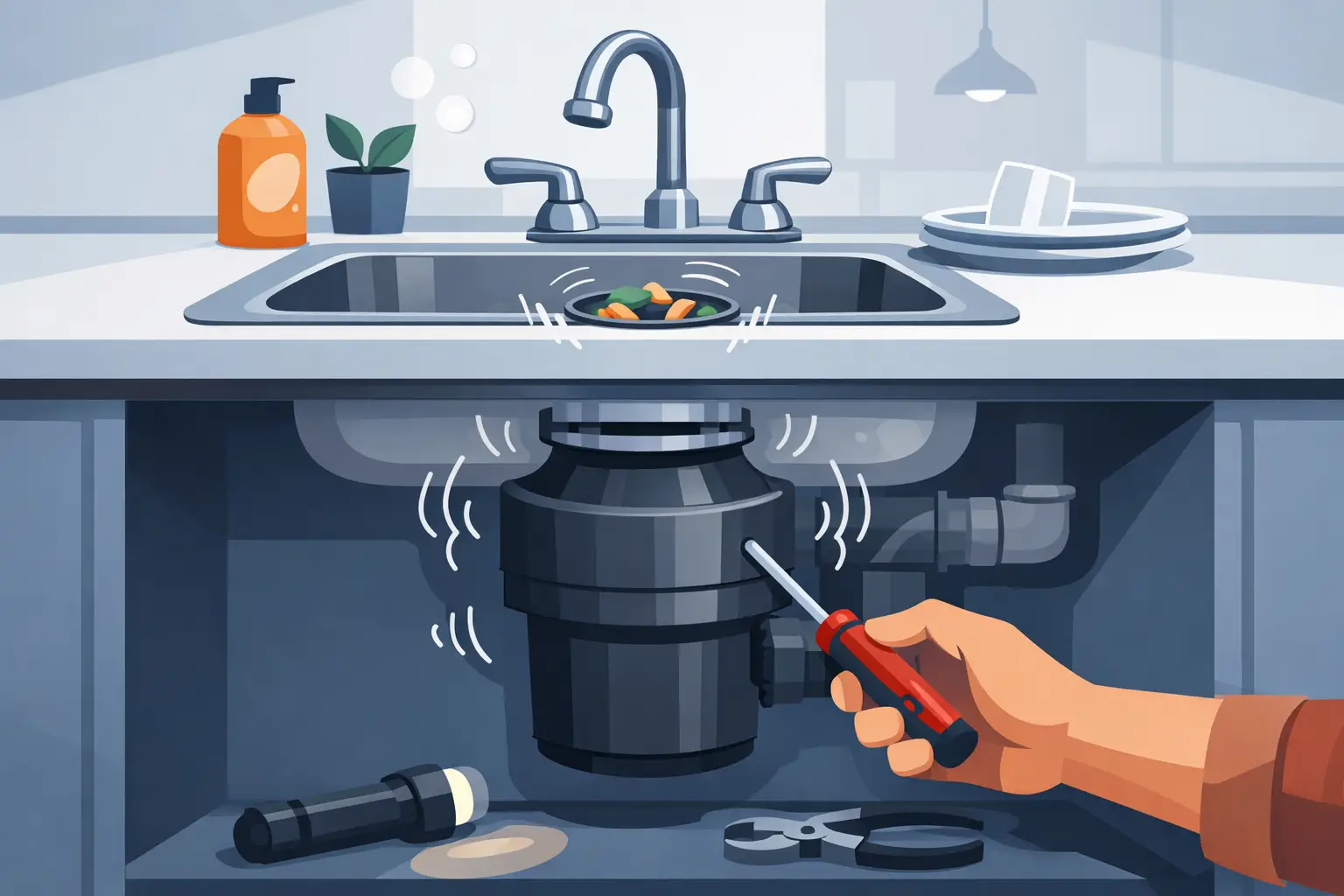
A garbage disposal that suddenly hums, leaks under the sink, or refuses to turn on can stop kitchen cleanup in its tracks. Garbage disposal repair is often straightforward when the issue is caught early, but the wrong DIY step can damage the unit, trip electrical components, or create a messy drain problem. Knowing what the symptoms mean helps you decide when a simple reset may work and when it is time for a professional diagnosis.
Start With the Symptom, Not the Switch
Garbage disposals do demanding work in a small space. Food waste, water, electrical connections, seals, and a high-speed grinding mechanism all operate beneath the sink. A failure can come from a jammed impeller, an overheated motor, a worn internal seal, a drain blockage, or an issue with the switch or electrical supply.
The symptom matters because not every disposal problem has the same fix. A disposal that hums is different from one that is completely silent. A leak at the sink flange calls for a different repair than water dripping from the bottom of the unit. Trying random fixes can turn a minor service call into a replacement decision.
The disposal hums but does not grind
A steady hum usually means the disposal is receiving power, but the grinding plate is stuck. Hard food debris, a small utensil, glass, a bone fragment, or another object may be lodged inside. Continued operation can overheat the motor and damage it.
First, turn the disposal off and disconnect power at the wall outlet or circuit breaker. Never put a hand into the disposal chamber, even when it appears to be off. Use a flashlight to look for an obvious object, and remove it only with tongs or pliers. Many models also have a manual turning socket underneath the unit that can be rotated with the correct disposal wrench to free a jam.
If the unit still hums after the obstruction is removed and the reset button is pressed, the motor or internal grinding components may need professional attention. Older units can seize from wear, especially if they have handled frequent heavy use.
The disposal will not turn on at all
No sound at all may point to a tripped reset button, a tripped breaker, a failed wall switch, a loose electrical connection, or a failed motor. Check the reset button, typically located on the bottom of the disposal, after allowing the unit to cool for several minutes. Then verify that the circuit breaker has not tripped.
If power is available but the disposal remains silent, do not remove electrical covers or attempt wiring repairs under the sink. Moisture and electricity do not belong in a quick kitchen fix. A technician can determine whether the problem is in the switch, wiring, control connection, or the disposal itself.
Common Garbage Disposal Repair Problems
A disposal does not need to be completely dead to need service. Changes in performance often signal that something is building up, loosening, or wearing out.
Slow draining or standing water in the sink
When the disposal drains slowly, the problem may be food buildup in the disposal, a blockage in the connected drain line, or an issue farther down the plumbing system. Grinding more food or repeatedly running the unit rarely solves the problem. It can compact the blockage and increase the chance of a backup.
A dishwasher that drains through the disposal connection can also be affected. If the disposal or drain line is restricted, dirty water may remain in the dishwasher or flow back into the sink. The source has to be identified before repair begins, because a drainage issue is not always a failed disposal.
Water leaking under the sink
The location of a leak offers a useful clue. Water near the top of the disposal can come from the sink flange, mounting assembly, or dishwasher drain connection. A leak from the side may involve the discharge pipe or gasket. Water coming from the bottom of the disposal is more concerning because it often indicates an internal seal failure.
External connections can sometimes be tightened or resealed. A leaking internal seal usually means replacement is the practical option. Once water reaches the motor area, a repair may not be dependable or cost-effective.
Loud grinding, rattling, or metal-on-metal noise
A disposal is never silent, but new or unusually harsh sounds deserve attention. Rattling may mean an object is caught inside. A scraping sound can indicate worn grinding parts or internal damage. If the sound continues after visible debris is removed, turn the unit off rather than forcing it to operate.
This is especially true in rental properties and busy kitchens, where a disposal may be used by several people and the cause is not always clear. Prompt service protects the sink drain system and helps avoid water damage in the cabinet below.
What Should Never Go Down a Disposal?
Even a quality disposal is not designed to process every kitchen scrap. The most common problems Hillside Appliance Services sees are often preventable with a few changes in daily use. Keep these items out of the disposal:
- Grease, cooking oil, and fatty food scraps
- Coffee grounds and large amounts of eggshell
- Fibrous foods such as celery stalks, corn husks, and onion skins
- Pasta, rice, bread, and other foods that swell with water
- Bones, fruit pits, seafood shells, and nonfood items
Run cold water before, during, and for several seconds after grinding small amounts of food. Cold water helps move waste through the line, while hot water can soften grease and allow it to coat the disposal and drain. Avoid harsh chemical drain cleaners. They can damage components, create hazardous fumes, and make a later repair more difficult for the technician.
When a Reset Is Reasonable – and When It Is Not
The reset button is helpful after a disposal overheats because of a temporary jam or overload. It is not a cure for recurring failures. If you find yourself resetting the unit more than once, the disposal is telling you something is wrong.
A single reset, after power has been safely shut off and an obvious jam has been cleared, is a reasonable homeowner step. Repeated resets, electrical burning smells, leaks, a tripping breaker, or a unit that only hums should move the problem out of the DIY category. Those symptoms can point to a failing motor, damaged wiring, or internal components that are no longer safe to operate.
Repair or Replace? The Answer Depends on the Unit
Garbage disposal repair makes sense when the problem is a jam, loose connection, replaceable gasket, switch issue, or accessible drain connection. It may not make sense when the motor is burned out, the internal housing is leaking, or the grinding assembly is badly worn.
Age and use matter as well. A lightly used disposal with a localized issue may have years of service left. A heavily used unit that has begun leaking, jamming, and tripping the reset button may cost less to replace than to repair repeatedly. A qualified technician can evaluate the condition of the disposal, check the drain and dishwasher connections, and explain the practical options before work begins.
For homes with premium kitchen equipment, careful diagnosis still matters. A disposal may be installed alongside Bosch, KitchenAid, Thermador, Cove, or other high-end kitchen systems, and the surrounding cabinet layout, dishwasher drain routing, and electrical setup can affect the repair approach. The goal is not just to make the unit spin again. It is to restore safe, reliable kitchen cleanup without creating another issue under the sink.
Get Back to a Kitchen That Works
A broken disposal is easy to ignore until dishes pile up, the sink will not drain, or a cabinet leak threatens the flooring. Addressing the first warning sign is usually less disruptive than waiting for a complete failure. For homeowners, property managers, and foodservice operators across Greater Phoenix, a careful diagnosis can bring the kitchen back to normal without guesswork. When the disposal is humming, leaking, or repeatedly shutting down, protecting your time and your home starts with the right repair.