
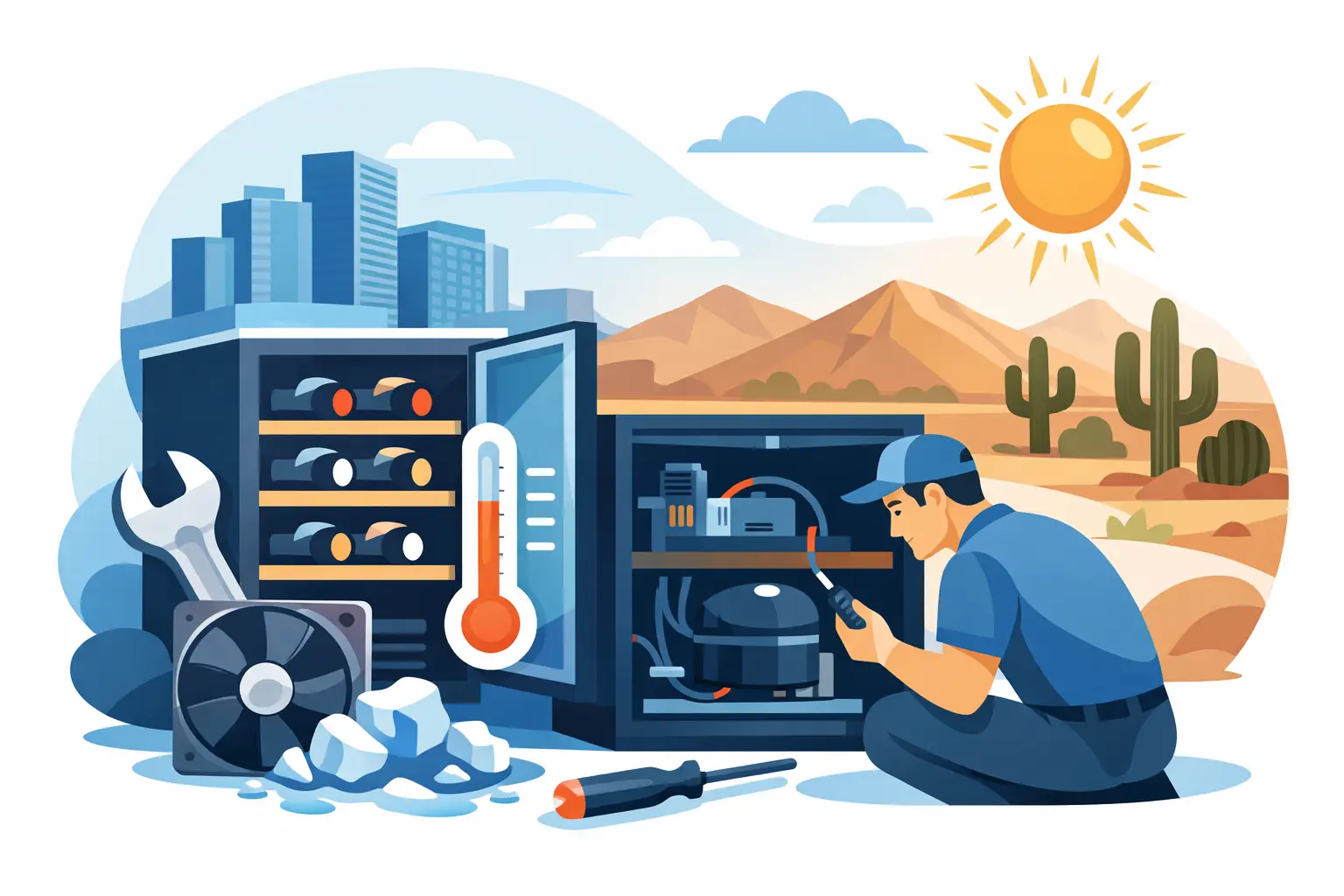
A wine cooler that runs warm can put more than a favorite bottle at risk. Temperature swings can change how wine ages, dry out corks over time, and turn a carefully planned collection into an expensive guessing game. For dependable wine cooler repair Phoenix homeowners can turn to, the first step is identifying whether the issue is simple airflow trouble or a refrigeration problem that needs a trained technician.
Wine coolers are smaller and more specialized than standard refrigerators. Many use thermoelectric cooling systems, while others have compressor-based sealed systems. They also rely on sensors, control boards, door seals, fans, and ventilation space to hold a stable temperature. That is why a unit may appear to be working while still failing to protect the bottles inside.
Signs Your Wine Cooler Needs Service
The most obvious warning sign is a cabinet that will not reach or maintain the selected temperature. If the display says 55 degrees but an appliance thermometer shows temperatures well above that point, the cooler is not doing its job. A unit that gets too cold can be just as concerning, especially when bottles are freezing near the back wall.
Unusual sounds deserve attention as well. A low compressor hum is normal on many models, but loud rattling, repeated clicking, buzzing that does not stop, or a fan scraping sound is not. These noises can point to a failing fan motor, a compressor start component, loose hardware, or an obstruction in the fan area.
Condensation on the glass door, water inside the cabinet, a blinking error code, or lights and controls that behave unpredictably are also service concerns. On dual-zone models, one compartment may stay cold while the other runs warm. That does not automatically mean the entire appliance has failed, but it does mean the temperature control system needs a proper diagnosis.
Common Wine Cooler Repair Phoenix Problems
Phoenix heat places extra demand on any refrigeration appliance, particularly a freestanding wine cooler installed in a warm kitchen, garage, patio area, or entertainment space. High surrounding temperatures do not cause every failure, but they can expose ventilation problems and worn cooling components faster.
Blocked Airflow and Dirty Condenser Coils
Compressor-style wine coolers release heat through condenser coils and ventilation openings. When dust, pet hair, or debris build up around those areas, heat cannot escape efficiently. The cabinet may run longer than usual, feel hot around the sides, or gradually lose its ability to cool.
Before calling for service, check that the unit has the clearance required by its manufacturer. A freestanding cooler pushed tightly into cabinetry can overheat because it cannot exhaust warm air. Built-in models use a different ventilation design, so installing one in the wrong location can create recurring performance issues.
Cleaning accessible exterior vents carefully can help, but avoid bending coils, removing sealed-system panels, or using sharp tools near wiring. If airflow is clear and the cooler still runs warm, the problem may be a fan, sensor, control board, compressor component, or sealed refrigeration issue.
Worn Door Gaskets and Door Alignment
A door that does not seal tightly lets warm Phoenix air and humidity enter the cabinet. The compressor then runs harder, interior temperatures fluctuate, and moisture can collect on the door or shelves. You may notice a gasket that is cracked, loose, flattened, or dirty enough to prevent a tight seal.
Make sure bottles and shelves are not keeping the door from closing. A gentle cleaning with mild soap and water may improve a dirty gasket, but torn or distorted seals generally need replacement. Door alignment can also be a factor, especially if the cooler was moved or the hinges have loosened over time.
Faulty Fans, Sensors, or Controls
Interior fans circulate air across the cabinet. When a fan fails, one area may feel colder than another, frost may develop in the wrong place, or the cooler may run constantly without reaching the setting. A condenser fan failure can cause the compressor area to become excessively hot.
Temperature sensors and electronic controls create another set of possibilities. A bad sensor may send incorrect information to the control board, causing short cycling, overcooling, or inadequate cooling. On premium units from Sub-Zero, True, Viking, Thermador, Bosch, Gaggenau, KitchenAid, Monogram, Café, and Electrolux, diagnosis should account for the model’s specific controls and refrigeration design rather than relying on a generic fix.
Compressor and Sealed-System Failures
If the lights work and fans operate but the cabinet remains warm, the compressor or sealed system may be involved. A technician may look for a failed start relay, electrical issue, refrigerant leak, restricted line, or compressor failure. These repairs require specialized equipment and should not be attempted as a do-it-yourself project.
A sealed-system repair can be worthwhile, but the decision depends on the cooler’s age, brand, capacity, condition, and repair cost. A quality built-in or premium wine storage unit often justifies a careful repair. For a lower-cost, older freestanding model with major compressor failure, replacement can sometimes be the more practical choice. A clear diagnosis gives you the information to make that decision without guesswork.
What to Do Before Scheduling Wine Cooler Service
Protect the collection first. If the cabinet is running warm, move bottles to another temperature-controlled location if possible. Wine can usually tolerate a short-term temperature change better than prolonged heat exposure, but avoid placing bottles in a freezer or leaving them in direct sunlight.
Then confirm the basics. Check that the outlet has power, the breaker has not tripped, and the temperature setting was not changed accidentally. Ensure the door closes completely and that the unit has ventilation clearance. If it has a removable air filter or easily accessible vent, inspect it for dust according to the owner’s manual.
Do not repeatedly unplug and restart the unit in an effort to force cooling. Compressor systems need time for pressures to equalize, and frequent cycling can make diagnosis harder. Avoid using a household fan to cool the compressor compartment or trying to add refrigerant. Those actions may mask the actual problem or cause further damage.
When you schedule service, have the brand, model number, approximate age, symptoms, and any error code ready. Let the technician know whether the unit is built in, freestanding, single-zone, or dual-zone. That information helps prepare for a more efficient visit.
Why Brand-Specific Diagnosis Matters
Wine coolers can look similar from the outside while operating very differently inside. A thermoelectric unit has no traditional compressor, so poor cooling may involve heat sinks, fans, a power supply, or the thermoelectric module. A compressor wine cooler uses a conventional refrigeration system, but its controls, airflow path, and component access vary by manufacturer.
Built-in luxury models deserve particular care because installation and ventilation are part of the appliance’s performance. Removing panels incorrectly, disturbing cabinetry, or replacing a part without testing the system can lead to repeat failures. Certified technicians can evaluate the full picture: electrical supply, control response, fans, door sealing, airflow, and refrigeration operation.
Hillside Appliance Services brings 22 years of Valley-area experience to residential wine coolers as well as the refrigeration needs of property managers, bars, and restaurants. The goal is straightforward: identify the actual cause, explain the repair clearly, and restore reliable temperature control without wasting your time.
When Fast Repair Makes the Most Sense
Schedule professional service promptly when the cooler is warm, leaks water, makes persistent abnormal noises, trips power, shows an error code, or has one zone that no longer cools. Prompt attention can prevent a smaller fan, gasket, or control problem from putting extra strain on the compressor.
For a cooler that seems only slightly off, use a separate thermometer and monitor the temperature over several hours before assuming the display is accurate. If the reading remains unstable after checking the door and ventilation, it is time for a diagnosis. Your wine storage should be quiet, consistent, and one less thing to worry about.